
To dethrone the thrones?
With an apparently seamless removal of one Emir and enthronement of another, one only marvels at Kano’s sanity side by side its insanity. Personally, my grief was only momentary. We all saw this coming. I don’t idealize, nor do I idolize, our traditional institutions. They should either be scrapped or redefined properly within our constitution. […]
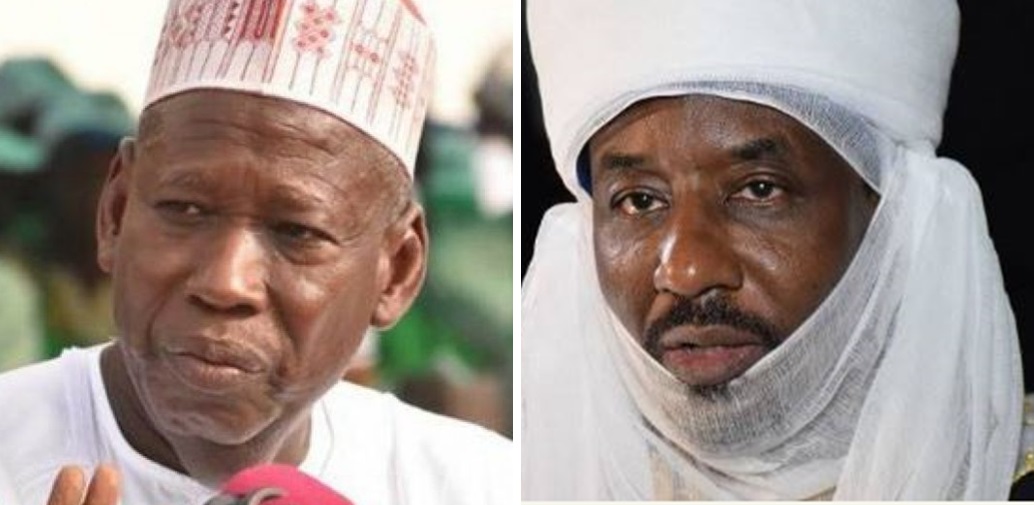
With an apparently seamless removal of one Emir and enthronement of another, one only marvels at Kano’s sanity side by side its insanity.
Personally, my grief was only momentary. We all saw this coming. I don’t idealize, nor do I idolize, our traditional institutions.
They should either be scrapped or redefined properly within our constitution. Else they remain simultaneously glorious history but odious misery, symbols of great culture but also state rupture, socially sacred yet some ethically naked, religiously painted but politically tainted.
Some started with orthodoxy then gradually morphed towards heterodoxy. Kano is the latest that’s shown us how vulnerable and deformed the institution is, and how badly in need of reform it is.
I have been a great admirer of Sanusi Lamido Sanusi since I started reading his essays at the beginning of this millennium. I find inspiration in his courage and his amazing intellectual prowess.
Sadly, when it comes to some (not most) of his public critiques, I wished he had used more sagacity, which is an indispensable attribute for any successful king.
That notwithstanding, I applaud him for his courage in speaking truth to power, as well as championing needed societal reforms, such as in women’s rights and dignity, education, our economic policy, reducing poverty, and the almajiri powder keg that Northern Nigeria currently sits on.
I am not looking at the dethronement of the 14th Fulani Emir of Kano from the sentimental point of view of my admiration for him, however. I would rather consider it from an institutional and slightly historical perspective. Sanusi is both a beneficiary and a victim of an illogical and paradoxical colonial indirect rule structure that the Nigerian State has chosen to maintain with almost no significant structural reform.
What sense does it make to maintain this emirate system when we now have local governments and state governments, or even a federal government? What real powers does an Emir have when he’s an employee of the local government or the state?
What prestige remains in this institution when a king as globally celebrated as Sanusi can be summarily dismissed absent clear due process and removed from the palace within a few hours? Imperial Britain left us with a messy situation, and we’ve chosen to uncritically continue on auto pilot.
What Governor Ganduje has done is widely seen as purely political vendetta. Creating four additional emirates, Ganduje cleverly made an earlier advance strike with an issue that would win popularity with those Kanawa that stood to benefit from the establishment or re-establishment of these additional emirates.
I believe that this helped to dilute any massive support for Sanusi, if there was. And along with the sentiment among many Kanawa that the deposed Emir violated traditional and cultural decorum, the balkanization of the emirate may have tactically dampened potential popular resistance to the Emir’s ouster.
The traditional institution needs to be reformed, given clear roles, responsibilities, as well as accountability, in the Nigerian constitution, or else be scrapped and let’s know that we don’t have echo governments within governments.
In reality, the emirate system remains an extension of the government, because traditional rulers continue to settle disputes, along with other functions that go largely unsung.
With the end of his reign as king, I trust that Sanusi will have much time for reflection. Now that he’s gotten off his royal horses and shed his royal robes, it would have been a delight to see him join progressive and determined Nigerians and run for President.
I would much rather a President Sanusi of Nigeria than a Sarki Sanusi of Kano.
I would only temper that hope with the reality that the political process in Nigeria is not welcoming of true reformers.
Moreover, in my assessment, he is not likely to join partisan politics. That said, I believe that we need more disruptors and agitators who will help to exert the critical mass of positive tension required to rescue Nigeria from its self-inflicted social, political, and economic calamities.
There is a lot more that Sanusi can contribute to Nigeria, rather than Kano alone. His is the case of a passionate reformer who had been born a prince then magnetically and willingly drawn to wear the king’s crown in the cultural prison that is life in the royal palace.
Such an environment and its trappings are a double-edged sword. Its advantages have helped to make Sanusi. And its inevitable idiosyncrasies and traditions had truly constrained and bound him. Yet the aristocrat is an advocate for the masses.
His paradox is that he craved this throne all his life. And when he assumed it, he lived its pomp with spectacular swagger. He has tasted it and gotten it out of his system now.
Sanusi’s dethroning should be liberation for him.
Perhaps this is his Buddha moment, when Siddhartha Gautama the prince leaves the palace to live a much simpler life as the Buddha, purely in pursuit of a path in search of meaning and true liberation.
The scholar-activist king has been inspiring a generation of Nigerians already. By his track record, it is clear that Sanusi’s path is that of championing social and economic justice, and a radical commitment to speaking truth, whatever the consequences.
Bashir Mundi, Department of Religion, University of Georgia, Athens, GA, USA.