
U.S., others playing politics with terrorism — Sen. Shehu Sani
In this interview, Comrade Shehu Shehu, known for his outspokenness on Boko Haram, non-state actors, the role of Nigerian security operatives and foreign interventions, offers his perspective on the allegations leveled against USAID A U.S. legislator recently accused USAID of allegedly funding Boko Haram, ISIS and other violent groups. What is your take on this? […]
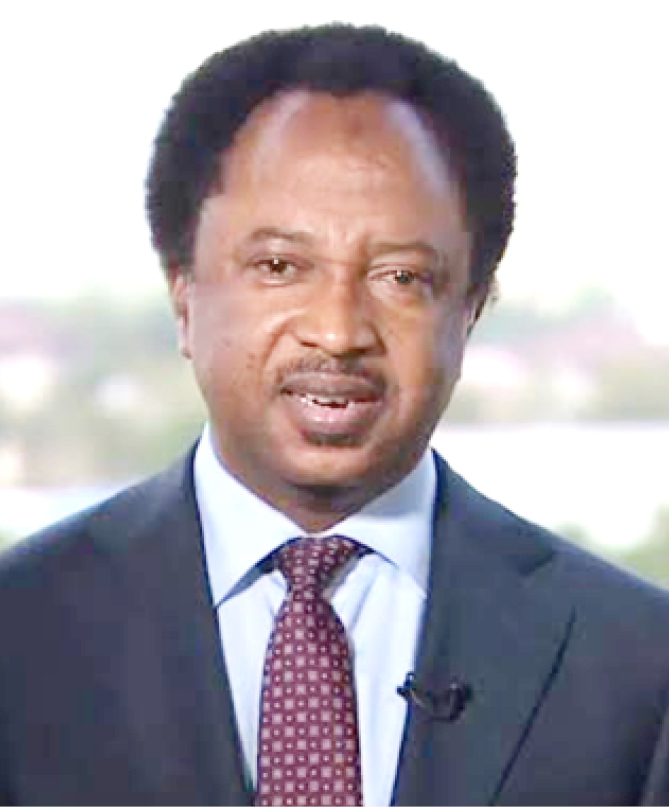
senator shehu sani
In this interview, Comrade Shehu Shehu, known for his outspokenness on Boko Haram, non-state actors, the role of Nigerian security operatives and foreign interventions, offers his perspective on the allegations leveled against USAID
A U.S. legislator recently accused USAID of allegedly funding Boko Haram, ISIS and other violent groups. What is your take on this?
First of all, it is important to distinguish between the activities of government-funded agencies like USAID and those of Western intelligence services. I do not believe that agencies like USAID would directly fund terrorist groups, knowing the grave implications for their own country. However, it is possible that they have inadvertently funded organisations without fully understanding their activities. This lack of due diligence could, indirectly, lead to problems arising from their financial contributions.
The accusation against USAID appears to be politically motivated, a form of vendetta against an institution perceived to be aligned with democratic values and, by extension, the Democratic Party (in the U.S). Its activities may not have favoured the Republican Party, which could be why some figures are targeting it.
- 5 months after: Probe of alleged B/Haram funding drags in N/Assembly
- Economists differ on Naira stability amidst $4.1bn CBN intervention
Curiously, the legislator who made the allegation avoided discussing the role of western intelligence agencies in relation to such terrorist groups. That remains shrouded in secrecy. For example, how can a U.S. government that claims to be leading the global fight against terrorism impose an arms embargo on Nigeria, a country grappling with terrorism? Why has the U.S. not provided Nigeria with the technical and technological tools to track terrorists? If America is truly committed to fighting terrorism, it should be offering Nigeria unconditional support, especially for the military and security forces. But this has not been the case.
So while I don’t believe aid agencies deliberately fund terrorists, some of their operations may inadvertently support individuals or groups whose true activities they do not fully understand. That is my submission.
Political leaders have also pointed to foreign funding as a factor fuelling insurgency, especially in the North-East. Even the Borno State governor recently suspended the activities of some NGOs, both local and international, over concerns they were indirectly fuelling the crisis. The Chief of Defence Staff (CDS) also recently said the roles of donor agencies should be interrogated. Is there a missing link in Nigeria’s fight against terrorism?
To me, most of these claims are speculative. If there were concrete evidence, we would be dealing with an incontrovertible case by now. How can people be killed and millions displaced for more than 15 years, yet we still don’t have definitive proof implicating any foreign-funded organisation? I believe that if there are any bodies with direct relationships with terrorist organisations, they are more likely to be intelligence agencies rather than aid-focused NGOs.
It is also plausible that some of these aid agencies are unwitting extensions of intelligence outfits. So, if there is any contact between an NGO and terrorist groups, it would not be beyond the knowledge of those intelligence services. This opens the door to all kinds of legitimate questions—for instance, from where do terrorists get their weapons and foreign currency? They don’t run any industries or businesses, yet they’re often caught with large sums of cash.
Clearly, their activities are being financed, but the identity and source of those financiers remain speculative. What we can say with confidence is that these terror groups cannot function without foreign support. That support could come from global terror networks or intelligence agencies. So yes, they are being funded, but those in power making the allegations need to come forward with facts instead of generalisations.
Not all aid organisations are complicit. The International Committee of the Red Cross and Red Crescent, UK aid, Norwegian aid agencies and others have done commendable work. It is wrong to tarnish them all with the same brush. Those in power must stop peddling rumours. If you cannot back a claim with facts, it remains speculation—if not outright falsehood. And it is disappointing when those in charge of security and intelligence speak as though they are uninformed outsiders.
Some locals we interviewed said they don’t believe international organisations are directly supporting insurgents. However, they argue that these groups often withhold crucial intelligence that could help Nigeria dislodge the insurgency. They believe the West has access to actionable intelligence but refuses to share it due to political or economic interests. Do you share this view?
Absolutely. Western intelligence agencies are not doing enough to help Nigeria or West Africa fight terrorism. They possess satellite and surveillance technology to track terrorist movements across the Sahel. Why aren’t they sharing this with us?
It is not far-fetched to say that the international community is playing politics with terrorism. If they were not, why are they not providing Nigeria with weapons and intelligence to confront these groups?
Here is another dimension: when a country like Nigeria, facing serious terror threats, seeks to purchase arms from Russia, China, Iran, or North Korea, it is immediately threatened with sanctions by the West. Meanwhile, Western nations sell us weapons with usage restrictions—saying they can only be used in the North-East and not the North-West, where banditry is rampant.
Even worse, they retain control over the software, passwords, and tracking systems of these weapons. And the moment we express interest in sourcing arms from outside the West, we face diplomatic hurdles.
So yes, the West is clearly playing politics with terrorism, and that has hampered our ability to adequately respond to the crisis.
Do you recall when Jordan attempted to transfer armoured tanks to Nigeria—possibly bought from the UK—and came under heavy scrutiny? Nothing was heard about the deal again.
Yes, I remember that.
It just shows that even when they sell technology to you, they impose strict conditions. How can you say I can only use it in a specific part of my country, when there’s insecurity in other regions as well? That’s unfair.
Take the Middle East, for example—Western intelligence agencies actively share information with Israel on missile threats or impending attacks. But they don’t do the same for us in Africa. That’s a clear double standard.
Now, we’re dealing with widespread insecurity—Nigeria, Burkina Faso, Niger, Mali, Chad, and northern Cameroon are all under threat. It almost feels as though the international community is comfortable with us being constantly distracted by terrorism. How can France be involved in Mali’s security architecture for over two decades, yet terrorist attacks persist?
In response, some African nations have turned to Russia—but that hasn’t solved the problem either. Russia has its own challenges.
Globally, terrorism and arms sales have become tools in the broader game of international politics. Let me explain. Outside our region, take the case of Russia and Iran. Russia won’t give Iran an aerial defence system to shield it from Israeli attacks because it wants Israel’s support in its conflict with Ukraine. At the same time, Israel refuses to help Ukraine militarily, so as not to provoke Russia. Likewise, Russia is not overtly assisting Iran to avoid further escalation.
This is the nature of today’s world: war has been politicised. The U.S. itself doesn’t want Iran completely wiped out, because the fear of Iran justifies the continued presence of American military bases in the Middle East. If Iran ceased to exist as a threat, those bases—and the billions of dollars they generate—would lose strategic value.
Consider Yemen. When the Houthis were launching missile attacks against Saudi Arabia, rather than see the Saudis retaliate, the U.S. sold them more defensive weapons. But when the Houthis attacked Israel, the U.S. intervened directly. That tells you everything.
Here in West Africa, the support we receive is mostly crumbs—just enough to keep us fighting. Instead of giving us advanced air navigation tools and surveillance technology to eliminate terrorist threats, they maintain this status quo.
This is how terrorism has become embedded in global power dynamics. It’s not just a regional crisis—it’s part of the international political economy.
So, in essence, you’re saying we have to look inward and solve our own problems?
Absolutely. We must fight our battles ourselves. The reality is, we’re caught in a trap. Sometimes, global powers prefer to see a country embroiled in conflict—it makes it easier to control and influence. A nation at peace is more independent, and that is not always in their interest.
Contributions from Hamisu Kabir Matazu (Maiduguri), Saawua Terzungwe, Itodo Daniel Sule & Idowu Isamotu (Abuja)