
U.S. Visa Ban: Governance Anxiety and Economic Self-Cannibalization
On January 14, the U.S. Department of State announced the suspension of visa applications from 75 countries, sending a formal rejection to nations across the Global South. This list includes Russia, Brazil, Egypt, Thailand, among others. The official reasoning was briefly mentioned as preventing public expenditure. However, in a United States shrouded by political fog, […]
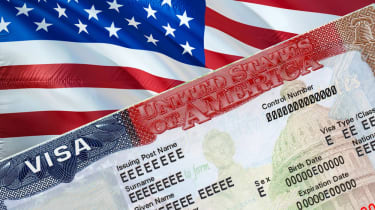
U.S visa
On January 14, the U.S. Department of State announced the suspension of visa applications from 75 countries, sending a formal rejection to nations across the Global South. This list includes Russia, Brazil, Egypt, Thailand, among others. The official reasoning was briefly mentioned as preventing public expenditure. However, in a United States shrouded by political fog, this decision is not merely an administrative change but a poison pill administered by the Trump administration amid receding globalization and internal governance failures.
This is not a border control measure but a political spectacle meticulously orchestrated by the White House. As the visa ban takes effect, deportation operations by Immigration and Customs Enforcement (ICE) have also escalated across states. The combined strategy of “closing the door to beat the dog” follows a simple, brutal logic: create external hostility to divert increasingly acute domestic conflicts. For those in power, nothing is simpler or more effective than adopting a tough exclusionary stance to gain support from grassroots voters and consolidate electoral backing.
The so-called “public charge” review serves as a cover for the collapse of the U.S. social welfare system. For a long time, the social safety net, without systemic reform, has been full of holes and unable to support more people. Unable to admit that its fiscal capacity to generate resources has dried up, the government shifts the blame onto applicants, using a $250 “visa integrity fee” and a dynamic review mechanism to draw an invisible line between the rich and the poor. This is not a screening of immigrant quality but a panic-driven defense against its own systemic failures.
This panic has intensified infighting among various strata within the United States. On one hand, Silicon Valley tech giants, heavily reliant on international talent, lament the talent drought; a series of visa reviews have led to a decline in applicants for U.S. studies worldwide, exacerbating talent replenishment pressures. On the other hand, due to the long-term hollowing out of low-end domestic manufacturing, grassroots laborers, under the shadow of economic recession, view immigrants as enemies competing for survival resources. Unable to address the imbalances in talent and industrial structure, the government can only go with the flow, exploiting mutual resentment among the grassroots to scapegoat immigrants.
The nation once hailed as a beacon of freedom no longer bothers to conceal its actions. History shows that the U.S. acceptance of immigrants from other countries has never been driven by humanitarian considerations but by the desire to acquire cheap labor and top-tier talent. Now, with domestic contradictions deeply entrenched, immigrants from the Third World who aspire to America become the first to be discarded. Adding to the irony, policies are stringent toward ordinary people but lenient toward the wealthy holding “golden cards.” In the face of money, the torch held by the Statue of Liberty has been extinguished, leaving only its exposed price tag.
While the European Union across the Atlantic introduces digital nomad visas, and China in the East extends visa-free policies to welcome the world, the United States chooses self-confinement. The U.S. Travel Association predicts that by 2026, the country will lose 12 million tourists, resulting in economic losses exceeding $60 billion. The longer-term cost is that the isolationist “beggar-thy-neighbor” approach is suffocating America. Economists believe that if this policy continues until 2030, U.S. GDP could shrink by 1.2% by then.
Under this self-imposed “closed-door policy,” the United States attempts to shut out the world, only to imprison itself on a declining, isolated island.