
Uba Sani Counsels For Collaboration Amongst Attorneys General
Governor Uba Sani of Kaduna State has advised the Body of Attorneys General to work harmoniously together, in order to conduct comprehensive legal reviews and appraisals of the country’s laws. The Governor who gave the counsel at the Body of Attorney Generals Conference on Wednesday, added that the Body should also identify inconsistencies, outdated provisions, […]
uba sani
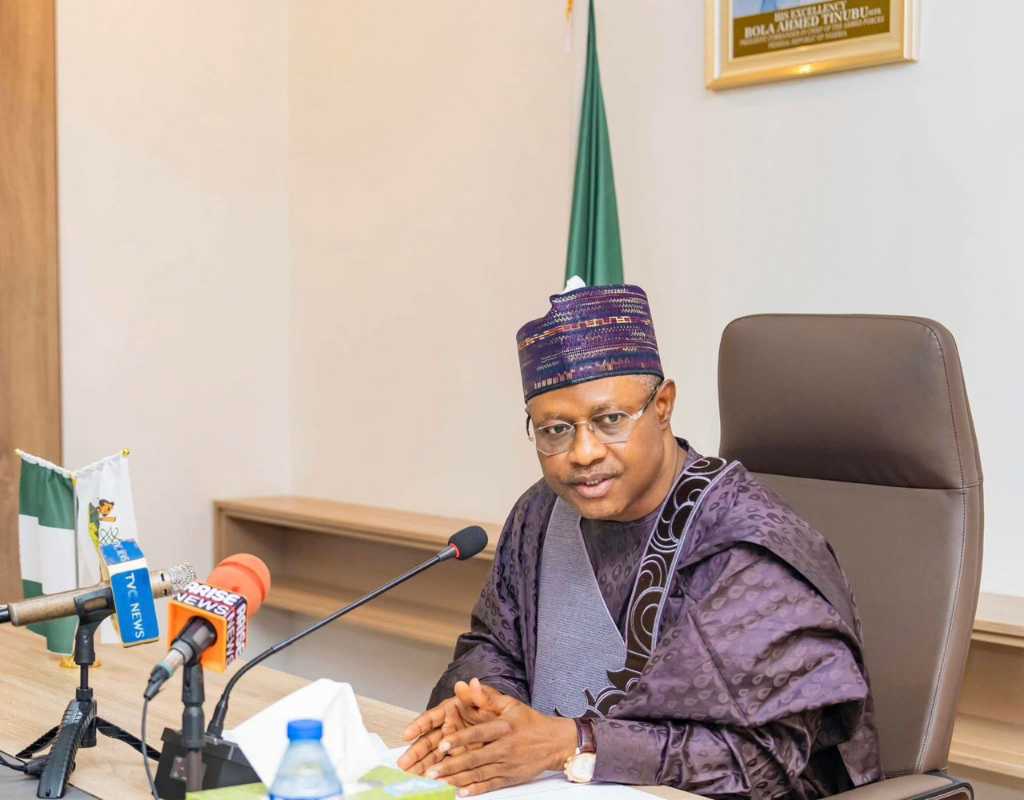
Governor Uba Sani of Kaduna State has advised the Body of Attorneys General to work harmoniously together, in order to conduct comprehensive legal reviews and appraisals of the country’s laws.
The Governor who gave the counsel at the Body of Attorney Generals Conference on Wednesday, added that the Body should also identify inconsistencies, outdated provisions, and areas where laws are simply silent.
He pointed out that this onerous task ‘’cannot be achieved by a single state or the federal government alone. It requires a collaborative effort to fund legal aid services, train community paralegals, and use technology to demystify the legal process for all.’’
‘’For too long, the administration of justice in our country has been hampered by a lack of coordinated action. We have seen jurisdictional conflicts, duplication of efforts, and a fragmentation of legal reforms that slow down progress and create confusion.
‘’ This approach, where federal and state authorities operate in isolation, is a significant gap in our current system. It is a gap that breeds inefficiency, frustrates citizens, and ultimately undermines public confidence in the rule of law,’’ he added.
According to the Governor, ‘’the time has therefore come to change this approach. We must establish a robust framework for continuous dialogue and cooperation between federal and state legal authorities.’’
Governor Uba Sani argued that ‘’this is not about one level of government ceding its authority to another. Rather, it is about creating a symbiotic relationship where we can share ideas and address critical gaps.’’
The Governor noted that ‘’every state is innovating to improve its justice system, from implementing new sentencing guidelines to leveraging technology for case management.’’
He argued that ‘’while these state-led initiatives are commendable, their impact is limited if they exist in a vacuum. A lack of harmonization can lead to a patchwork of legal standards across the country, creating disparities in how justice is administered.
“We must create a forum where we can share best practices, align our reform agendas, and develop model laws that can be adopted uniformly, while still allowing for local adaptation. Ultimately, all of our reforms must be judged by whether they improve access to justice for the average Nigerian,’’ he added.
Governor Uba Sani disclosed that Kaduna State ‘’committed to this vision of collaborative governance. We have initiated a comprehensive review of our state laws and are eager to partner with the Federal Ministry of Justice and other states to ensure our efforts contribute to a more coherent national legal framework.
‘’We recognize that our success is twined with the success of all states and the nation as a whole. The path forward is clear. We must institutionalize a mechanism for regular, productive engagement,’’ he added.
In his remarks, the Attorney General of the Federation and Minister of Justice, Chief Lateef Fagbemi(SAN) noted that ‘’one of the most persistent challenges besetting our legal system remains the protracted delays in court proceedings and the growing backlog of cases.
‘’These delays, often attributed to the shortage of judges, courtrooms, judicial personnel, and accessible legal services, severely strain the system and all its users — litigants, lawyers, judges, and court administrators alike,’’ he added.
According to the Minister, ‘’these systemic inefficiencies have grave societal consequences. Chief among them is the rising population of awaiting-trial inmates in our detention centres, a condition which exacerbates overcrowding and undermines efforts to rehabilitate and reform. We cannot continue to treat these symptoms without addressing the root causes.’’
He maintained that ‘’it is imperative that we begin to adopt forward-looking and innovative measures to address these structural deficits. The implementation of electronic case filing systems and the digitisation of court processes have already yielded tangible results in Lagos State and at the National Industrial Court. These examples demonstrate what is possible when vision is matched with execution.
‘’However, a piecemeal approach will not suffice. What is required is a national commitment — a unified strategy to mainstream technology as a core enabler of efficient justice delivery. As you return to your respective jurisdictions, I urge you to reflect critically on how to deploy digital solutions not just as tools of convenience, but as instruments of transformative change,’’ he added.