
UN vote against slavery, a moral triumph for humanity
On March 25, 2026 by a vote of 123 in favour, 52 abstentions and three against, the United Nations General Assembly passed a non-binding resolution declaring that the transatlantic slave trade was the ‘’gravest crime against humanity.” The motion was introduced by Ghana with strong support from the African Union and Caribbean group of countries, […]
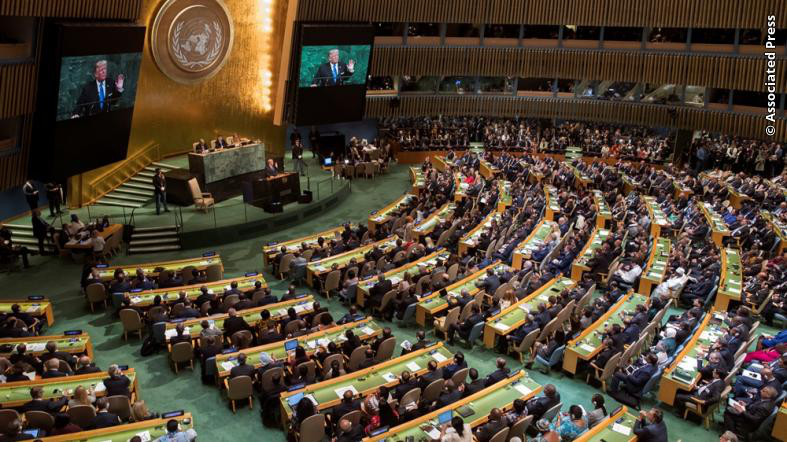
On March 25, 2026 by a vote of 123 in favour, 52 abstentions and three against, the United Nations General Assembly passed a non-binding resolution declaring that the transatlantic slave trade was the ‘’gravest crime against humanity.”
The motion was introduced by Ghana with strong support from the African Union and Caribbean group of countries, CARICOM. The United States of America, Israel and Argentina voted against the resolution. The abstentions were mostly from the EU with the United Kingdom and Canada joining.
The objective of the vote, which was canvassed by President John Dramani Mahama of Ghana, seeks to advance ‘’reparatory justice’’ with formal apologies, restitution of cultural artifacts and compensation for historical wrongs.
The vote, which had been long in coming, counts as a landmark achievement in the entire existence of the United Nations and a very significant development in human history.
The transatlantic slave trade involved the forcible capture and transfer of some 12 million Africans as chattels and commodities from various African locations to the Americas resulting in the depopulation of whole areas of Africa. While it lasted, the transatlantic slavery was characterised by horrendous barbarism meted out to Africans from the time they were captured through the passage to their eventual destinations in plantations right across the Americas. Of the estimated 12 million that were victims of slavery over the centuries, a great many died through torture and all kinds of brutality and diseases.
Slavery was a system that basically treated the Africans as animals without basic human rights. It stripped them of any regard as members of the human community and invested on their owners the right to inflict unlimited level of barbarism with impunity and without remorse. Slavery also fostered wars, poverty and underdevelopment by destabilising thousands of communities in Africa. It removed the youngest and fittest members of the various African communities resulting in the dearth of vibrant and skilled members of society on whom the future depended.
To say that slavery and the horrors it fostered had done incalculable damage to the psyche of Africans and people of African descent is stating the obvious. So damaging has slavery done that its effects continue to be felt among its victims in Africa and in the African diaspora to this day.
The documented records of atrocities committed during slavery and the need to recognise its victims had been canvassed in various international forums and platforms by advocacy groups and individuals without much appreciable progress over the years. We recall that Nigeria’s late Chief M.K.O Abiola had pursued a robust campaign for reparations which took him to many countries without much success.
That Ghana through President Mahama has been able to push through this to the highest level of global attention and action is a remarkable development for which he deserves our commendation for his doggedness and persistence to see it through. It is also a fitting tribute to his credentials as a pan-Africanist in the tradition of his late compatriot the Osagyefo and President of Ghana Kwame Nkrumah.
Conversely, it is regrettable that Nigeria which styles itself as the ‘’giant of Africa’’ and which is the country where Chief Abiola came from appeared not to have contributed much to this landmark development in African historical development. Indeed being the country whence the bulk of the slaves were sourced and shipped to the Americas, Nigeria ought to have led the vote vigorously. In many ways it is a sad commentary on how low Nigeria’s esteem has sunk in Africa that we have not made any meaningful contribution to this vote.
It should also be noted that America’s decision to go against the vote was a great disservice to the 50 million African Americans who are the descendants of slaves. America likes to tout itself as the great defender of human rights causes and a moral crusader for humanity dignity. This was an opportunity for America, which was the greatest beneficiary of slavery and where the greatest acts of injustice against African slaves were perpetrated, to signify its abhorrence. As the most powerful country in the world, America’s vote in favour would have given a great fillip to efforts to finally right the wrongs that still prevail in America against the descendants of slaves and in Africa.
With the passing of the resolution, what remains is now for African countries to follow up on the issues of reparations which it recommends. Although this cannot fully assuage the centuries of victimisation of slavery on the African psyche, it should be celebrated as a moral victory for all of humanity for summoning the courage to recognise and accept this sordid chapter in the history of mankind.