
Understanding the numbers of Nigerian pilgrims in 2018 Hajj
Why do we have fewer numbers of Nigerians going to Hajj in 2018 than in previous years? What are the causative factors? This year, Hajj fare hovered around N1.4 million while that of 2017 was above N1.5 million; then why do we still have a fewer number of pilgrims despite the above positive differences […]
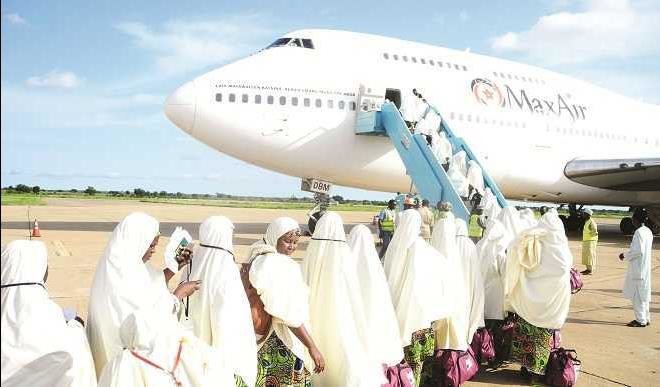
FILE PHOTO: NAHCON commences upgrade of Kaduna Hajj camp
Why do we have fewer numbers of Nigerians going to Hajj in 2018 than in previous years? What are the causative factors? This year, Hajj fare hovered around N1.4 million while that of 2017 was above N1.5 million; then why do we still have a fewer number of pilgrims despite the above positive differences in the monetary aspect?
Daily Trust newspaper seemed to have provided answers to this puzzle in its incisive lead story of Monday, July 30, 2018, titled “Hajj patronage drops despite lower fare.”
In 2017, over 70, 000 Nigerian pilgrims performed hajj through States Muslim Pilgrims’ Welfare Boards and Agencies leaving a shortfall of 6, 691 in the 75,000-allocation given to states pilgrims boards. The number of Nigerian pilgrims that will perform this year’s Hajj may likely fall within the range of 50,000 – 55,000. This is predicated on the assumption that, as at the time of writing this piece, some states are still registering pilgrims.
Reflectively, 2017 Hajj came with its challenges which affected the number of pilgrims transported to Saudi Arabia. The heated debate over the increase in 2017 Hajj fare; occasioned by the corresponding increase in the exchange rate almost prevented late registration of pilgrims.
Daily Trust further listed factors that led to the shortfall to include: “the compulsory payment of SR 2,000 introduced by Saudi Arabia for pilgrims who have performed Hajj in the last four years” because “according to statistics, over 70 percent of Nigerian pilgrims in the last five years are repeaters. A repeater in Nigeria this year will have to pay N1.7 million as opposed to N1.4 million paid by first-timers. The exchange rate of N360/$1, the minimum deposits of N800,000 and N1 million fixed by states pilgrims boards, halting of sponsorship by local, states and federal government and the farmer herders crises.”
Aside from the above factors, the number of pilgrims that performed Hajj has been on the decrease globally in the last 10 years. A report in the Saudi Gazette newspaper of September 16, 2016, said that: “The number of foreign and domestic pilgrims has come down during the past 10 years. In 2007, more than 1.7 million foreign and 746,511 domestic pilgrims performed Hajj, making a total of more than 2.4 million Hajj pilgrims. In 2012, more than 3 million pilgrims performed Hajj, the highest in the last 10 years.”
However, in 2016, 1,325,372 foreign and 537,537 domestic pilgrims performed Hajj, making a total of 1,862,909 pilgrims. This is the least number of pilgrims in the last 10 years.”
The above statistics have shown that the decrease in the number of Hajj pilgrims cut across 165 hajj participating countries and the trend seem to be ongoing.
For example, Indonesia as the most populous Muslims nation got the highest Hajj seat allocation in the last 10 years. There are 220, 200 Indonesian pilgrims that performed 2016 Hajj – the highest number of foreign pilgrims in the last 10 years.
However, Indonesia has also experienced the same shortfall when her currency, Rupiah crashed between 2011 to 2015. By then, a US dollar exchanged for 19, 395.75 Indonesian Rupiah.
In 2011, 199, 085 Indonesians performed Hajj but the figure fell to 192, 029 in 2012. In 2013, the figure further dropped down to 154, 055; and in 2015 Indonesian pilgrims depleted further to 154, 046.
It is noteworthy that Indonesia and Malaysia operate a minimum of three years Hajj rolling plan that allowed intending pilgrims in those countries to begin making payment three years in advance. This has eased their plan in terms of meeting their quotas, providing accommodation and other logistics for their pilgrims in the Holyland and ultimately evading possible exchange rate crises as experienced recently.
Here, it is important to note that VAT affects the commodities and consumables that pilgrims will purchase in Saudi Arabia. Many Umrah pilgrims who visited Saudi Arabia prior to the announcement of this year Hajj fare by NAHCON were discouraged from paying for Hajj again due to the additional costs of 2, 000 Saudi Riyals and increase in the prices of goods and services in the kingdom.
Also, the skyrocketing of aviation fuel worldwide has compelled airliners to jerk up the cost of airfare thereby affecting the cost of pilgrims’ ticket to and from Saudi Arabia.
As a way out, NAHCON and other Hajj stakeholders need to vigorously and urgently commence full implementation of its recently approved Hajj saving scheme to create flexibility in the payment of Hajj fare. The structure of Hajj operation has been fully offloaded online thereby leaving no chances for a nanosecond delay in the implementation of Hajj plan. Our continued reliance on annual preparation and operating yearly calendar on Hajj activities has left us behind.
Muhammad is the national coordinator of Independent Hajj Reporters, a faith-based civil society organisation