
UNESCO decision on key Jerusalem holy site digs into deeper conflict
Plastic bags filled with some of the holiest dirt in the world are stacked about as high as two men nearby dutifully working a sift. Dust flies everywhere as they search the soil from Jerusalem’s Temple Mount for ancient fragments. Since 2004, the Temple Mount Sifting Project has gone through about 70 per cent of […]
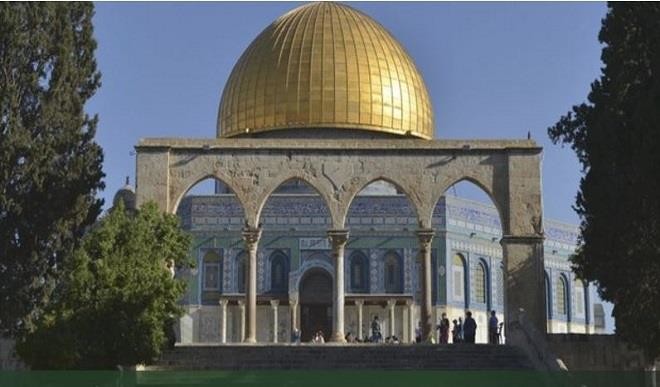

Plastic bags filled with some of the holiest dirt in the world are stacked about as high as two men nearby dutifully working a sift. Dust flies everywhere as they search the soil from Jerusalem’s Temple Mount for ancient fragments.
Since 2004, the Temple Mount Sifting Project has gone through about 70 per cent of roughly 350 truckloads of earth that in 1999 were removed from the holy site by Waqf, the Muslim trust that administers the mosque there, said Gabriel Barkay, director of the project.
"We have significant finds every day," he says. One after another, Barkay shows several artefacts found at the site, considered holy by Jews, Christians and Muslims alike.
Known as the Temple Mount to Jews and the Noble Sanctuary to Muslims, the site in Jerusalem includes the Wailing Wall, which is considered the only standing remnant of the complex that once housed the Jewish Biblical Temple. It is a retaining wall of the platform that today houses al-Aqsa Mosque and the Dome of the Rock shrine.
Under a status quo agreement, Muslims are allowed to pray on the platform, while Jews may only visit.
With their sieves, the workers seem to contradict a controversial resolution adopted this month by UNESCO that Israel said was an attempt to erase Jewish ties to the Jerusalem holy site.
"Temple denial is more serious than Holocaust denial," Barkay says.
The resolution’s language is critical of the Israeli government for its excavation projects in East Jerusalem and refers to several sites primarily by their Islamic names and largely ignores Jewish terms.
On Wednesday, UNESCO’s World Heritage Committee voted to adopt a resolution with similarly critical language at a meeting in Paris.
Thousands of kilometres away from the French capital, the Wailing Wall, also known as the Western Wall or Kotel, is relatively quiet after the end of a series of Jewish holidays this month.
According to Rabbi Shmuel Rabinowitz, who is in charge of the Western Wall at the base of Temple Mount, the millions of practicing Jews who had come over the course of the month was a response to the decision.
"The Jewish people do not need any legitimacy over our connection to this place," he says. "This past decision testifies, most of all, to what we’ve seen: that the UN does not make decisions based on what is the reality here."
The recent resolutions are hardly the first to cause a political stir. Since 2010, Israel has been at odds with the UN body over its heritage sites, and every time Israeli leaders have condemned the decisions by the United Nations.
"All of the discussion has been about the terminology of the decision," said Ofer Zalzberg, an analyst with the International Crisis Group. "But what is the substance of this decision?"
Zalzberg says at the heart of the resolution is Israel’s handling of the site under a status quo agreement with Palestinian officials and Jordan, the official custodian of al-Aqsa Mosque at Temple Mount.
Since 2011, UNESCO has recognized Palestine as a member. "UNESCO is one of the theatres where Palestinians can express themselves … away from the overriding Israeli military power and occupation," says Nazmi al-Jubeh, a professor at Birzeit University near Ramallah.
UNESCO’s decisions have touched a nerve because they take sides in the historical narrative of Jerusalem in which archaeology and history are politicized for modern-day causes, says Daniel Seidemann, from the non-governmental organization Terrestrial Jerusalem.
"Archaeology had always had its political dimension. Never has it been so politicized as in contemporary Jerusalem, where it’s just another weapon in the arsenal of national struggle," he says.
And the Temple Mount Sifting Project is no exception. As Haaretz newspaper recently reported, the project is supported by the right-leaning Ir David Foundation, which has been involved in Jewish settlements.
"Israeli archaeologists and foundations collected the earth in certain locations and began to sift it with the hope of finding any artefact that could be part of their claim [that Muslims are destroying the remains of the Jewish Temple at Temple Mount]" says al-Jubeh. "This is pure politicum." (DPA)