
US terror tag on Kwankwaso, Fulani groups draw scrutiny
Five United States lawmakers on Tuesday proposed a bill seeking to impose sanctions, including visa ban and asset freeze, on a former governor of Kano State and the national leader of the New Nigerian People’s Party (NNPP), Dr Rabiu Musa Kwankwaso, Miyetti Allah Cattle Breeders Association of Nigeria (MACBAN), and Miyetti Allah Kautal Hore, among […]
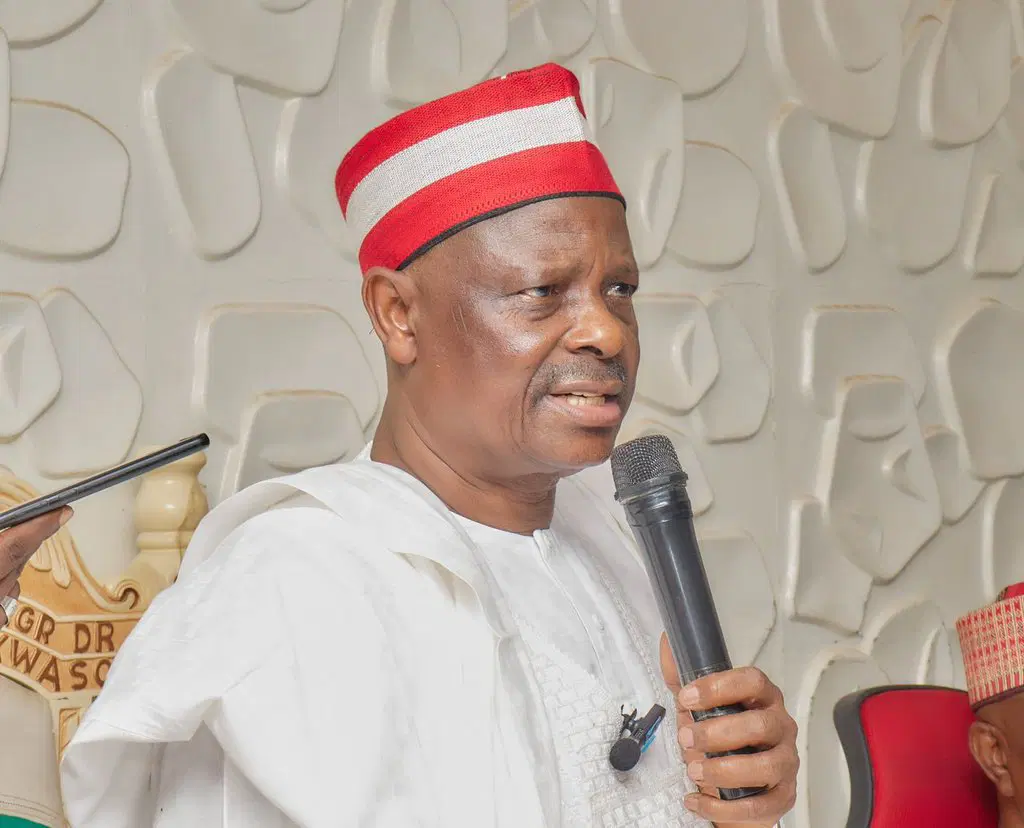
rabiu kwankwaso
Five United States lawmakers on Tuesday proposed a bill seeking to impose sanctions, including visa ban and asset freeze, on a former governor of Kano State and the national leader of the New Nigerian People’s Party (NNPP), Dr Rabiu Musa Kwankwaso, Miyetti Allah Cattle Breeders Association of Nigeria (MACBAN), and Miyetti Allah Kautal Hore, among others.
The lawmakers introduced the bill at the country’s House of Representatives to compel the Secretary of State to submit a “comprehensive report on US efforts to address the ongoing religious persecution and mass atrocities in Nigeria”.
The legislation titled ‘Nigeria Religious Freedom and Accountability Act of 2026’ was proposed by congressmen: Chris Smith, Riley Moore (bill author), Brian Mast, Mario Diaz-Balart, and Bill Huizenga.
The sponsors said President Donald Trump “acted justly” by redesignating Nigeria as a country of particular concern (CPC).
- Ratcliffe says ‘unpopular’ decisions starting to pay off at Man Utd
- NIGERIA DAILY: Living With Diabetes: Understanding The Condition And Its Management
According to them, the US should use “all available diplomatic, humanitarian, economic, and security tools to pressure the government of Nigeria to end impunity for perpetrators of mass atrocities and religious persecution and protect Christian communities, clergy, and other targeted religious minorities.”
Based on the provisions of the proposed legislation, the secretary of state is expected to determine whether “certain Fulani-ethnic militias in Nigeria qualify as a foreign terrorist organization.”
The bill reads in part: “The United States should deliver humanitarian assistance, co-funded by the Government of Nigeria, through trusted civil society organizations, including faith-based organisations, in Nigeria’s middle belt states.
“The Department of State and the Department of the Treasury should impose targeted sanctions, including visa bans and asset freezes under the Global Magnitsky Human Rights Accountability Act, on individuals or entities responsible for severe religious freedom violations, or report to Congress the reasons such sanctions have not been imposed, including:
“(A) Fulani-ethnic nomad militias in Nigeria;
“(B) Rabiu Musa Kwankwaso, former Kano State Governor;
‘(C) Miyetti Allah Cattle Breeders Association of Nigeria (MACBAN); and
“(D) Miyetti Allah Kautal Hore.”
The author of the bill, Moore, publicly claimed that Christian are systemically facing persecution in Nigeria.
Smith is a New Jersey Republican Representative and chairman of the House Foreign Affairs Africa Subcommittee; Cole is an Oklahoma Republican Representative and Chairman of the House Appropriations Committee; Moore is West Virginia Republican Representative and member of the Appropriations Committee; Mast is a Florida Republican Representative and Foreign Affairs Committee; Diaz-Balart is Florida Republican Representative and Appropriations Vice Chairman; and Huizenga is Michigan Representative and Chairman of House Foreign Affairs South and East Asia Subcommittee.
In pushing for the bill, Rep Smith said that the U.S. has a responsibility to follow Trump’s lead by pressuring the Nigerian government to take steps to “address and punish” systemic violence against Christians and non-radical Muslims by Islamist extremists.
“The Nigerian government’s blatant denial of the religious persecution occurring within its borders has only enabled the religious-based violence in the country to fester, with Christian deaths and church attacks reaching unprecedented numbers,” Smith said.
Background
In October 2025, former U.S. President Donald Trump designated Nigeria as a Country of Particular Concern (CPC), a classification that empowers the U.S. executive to deploy economic and diplomatic measures in response to alleged violations of religious freedom.
Following the designation, Trump pledged swift action against terrorist groups operating in Nigeria. This position was reflected in coordinated air strikes reportedly carried out on Christmas Day in collaboration with the Nigerian government as part of counterterrorism efforts.
The Nigerian government has consistently rejected allegations of targeted persecution of Christians, maintaining that insecurity in the country affects both Muslims and Christians alike. Officials argue that the violence is largely driven by criminality, banditry and terrorism, rather than religious motives.
In response to the CPC designation, the federal government dispatched a high-level delegation to the United States to engage American officials and provide clarification on Nigeria’s security landscape and ongoing efforts to tackle insurgency and other violent crimes.
As part of the diplomatic exchanges, some U.S. officials, including members of Congress, also visited Nigeria to assess the situation firsthand and hold discussions with government representatives and other stakeholders.
NNPP defends Kwankwaso, alleges int’l blackmail
The New Nigeria Peoples Party (NNPP) has defended its leader, Senator Rabiu Musa Kwankwaso, dismissing allegations linking him to religious freedom violations and describing the claims as hypocrisy and blackmail.
In a statement issued by its National Publicity Secretary, Ladipo Johnson, the party described the accusations as unfounded and politically motivated. He said Kwankwaso has no history of promoting religious extremism, noting that his public and private records reflect a commitment to national unity and peaceful coexistence.
Johnson recalled that Kwankwaso had earlier criticised the United States’ redesignation of Nigeria as a Country of Particular Concern over alleged religious persecution. According to him, the former Kano State governor had warned against oversimplifying Nigeria’s complex security challenges, stressing that the country faces threats from various criminal groups, rather than religious persecution.
The NNPP was reacting to comments reportedly made by US Congressman Riley Moore, who questioned Kwankwaso’s alleged role in the death of Christians and the introduction of Sharia law in Kano State. The party argued that Kano was not the only state to adopt Sharia, noting that several northern states implemented similar legal frameworks without their leaders facing similar accusations.
The party further questioned the fairness of singling out Kwankwaso, pointing out that the United States maintains diplomatic ties with countries operating under Sharia legal systems.
Johnson also highlighted Kwankwaso’s record in tackling insecurity, stating that Boko Haram activities were effectively curtailed in Kano during his tenure as governor. He added that the former governor maintained strong relationships with Christian leaders and demonstrated religious tolerance by supporting former President Olusegun Obasanjo and selecting Bishop Isaac Idahosa as his running mate in the 2023 presidential election.
The NNPP called on US lawmakers, particularly Reps. Moore and Chris Smith, to conduct a thorough and fair assessment of Kwankwaso’s record, urging them to avoid actions that could tarnish his reputation.