
Waiting for Buhari’s list
If President Buhari desires to leave a worthwhile legacy, he has to do things differently this time around. Having satisfied party and other interests during his first term, his focus now should be lasting legacies. He must quickly scout for technocrats and sectoral champions who can help drive his programmes. He, more than anyone else, […]
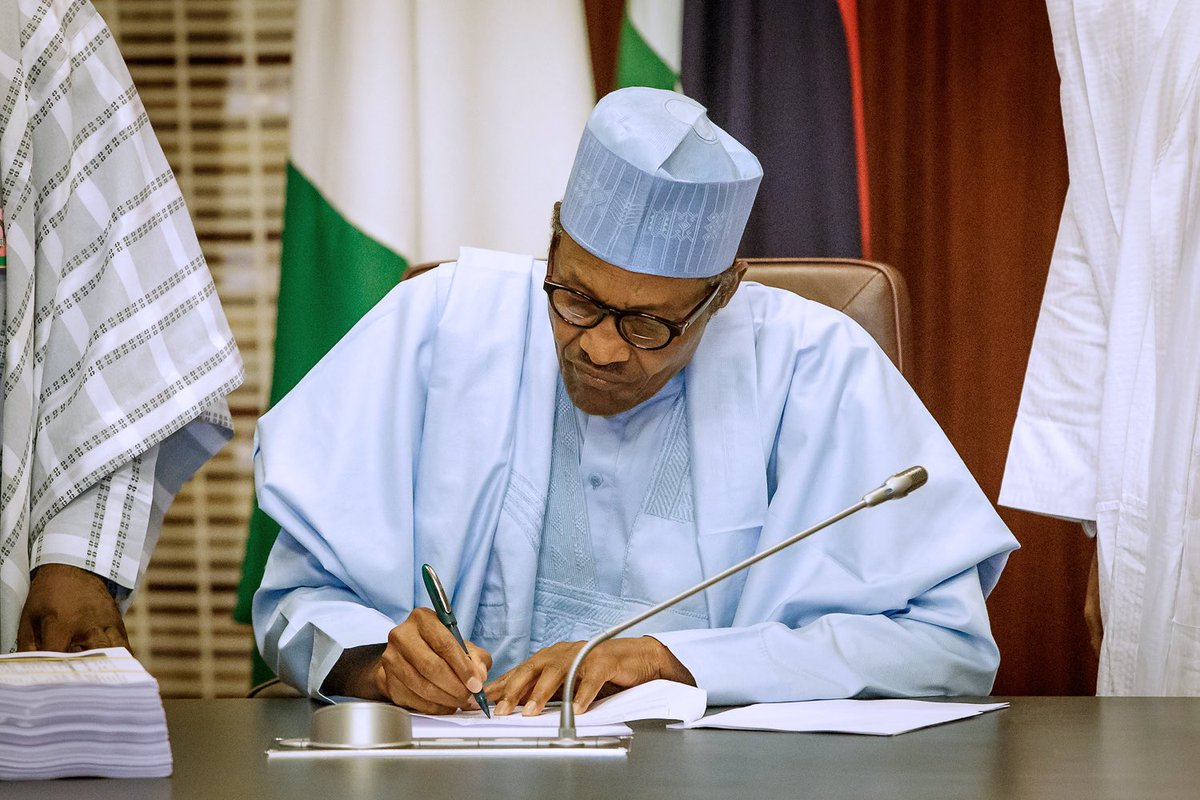
President Muhammadu Buhari
If President Buhari desires to leave a worthwhile legacy, he has to do things differently this time around. Having satisfied party and other interests during his first term, his focus now should be lasting legacies. He must quickly scout for technocrats and sectoral champions who can help drive his programmes. He, more than anyone else, knows that time is not on his side. A four-year tenure is not more than 48 racing months, as his first four-year term has shown.
Buhari tried three times to become president before Providence smiled on him. It would be a pity indeed, now that he is president, if all he has to offer is so fleeting that it would not outlast him and engrave his name on the positive side of history. The choice is his: to have an eye on history and set Nigeria on an irreversible path of sustainable growth and good governance, or just reign as our political potentate for four years and melt into anonymity. What Buhari does or refuses to do in the next 24 months will largely define his legacy. By 2021, the race for 2023 will take centerstage.
Get it straight: members of the APC will still constitute the bulk of the ministerial and MDA nominees, but the crucial areas of Economy and Security can’t be treated as ‘job for the boys’. If the president fails to make massive impact in those two areas — and God forbid — he may end up leaving Nigeria in a worse state than he met it.
Nigeria requires $20-25 billion annually over the next one or two decades for massive infrastructural development. We must attract foreign investment, which is impossible if we don’t have security, rule of law and a reliable economy. So the President must have a group of professionals — not politicians — to man and coordinate some critical positions that will build the foundation for the future and help him leave an enduring legacy.
As I’ve had cause to counsel before, the president’s appointments have to be based on the individual’s capability, patriotism, track record and exposure. For once, and to make the president’s work easier, the best people Nigeria has to offer should be saddled with the task of navigating our way out of our economic and security problems.
A cursory content analysis of online comments by Nigerians indicates that they are not convinced that the president’s security team appreciates the level of insecurity in the land. There has been an expansion of ungoverned spaces which have reduced Nigerians to hostages or refugees from Katsina to Zamfara to Ebonyi to Ondo to Delta. All these fears are palpably verifiable.
Going forward, the National Security Adviser must focus on national security not just regime security. Our focus in this area now should be on modern national security methods and the role of technology in national security. The country is being buffeted on every side by all manner of security challenges, not least of which is the unprecedented phenomenon on cross border bandits which, added to the Boko Haram terror, is a highly combustible mix.
The president needs a senior Adviser for coordination and implementation of the president’s next level change agenda so that his Chief of Staff can concentrate on managing the President’s daily affairs.
One of the most important appointments the president will make is that of the Chief Economic Adviser. In every country that wants to be taken seriously, such an appointee must have global corporate experience, demonstrate passion for his country and have the contacts and the credibility to win the best minds from around the world to support the country’s economic aspirations. He must have the international credibility to access required international capital. He must have the power to coordinate and drive the economy together with the vice president who chairs the economic council.
Last year, Foreign Direct Investment in Nigeria totalled just $2.2 billion, less than a third of the amounts South Africa and Egypt attracted. That Chief Economic Adviser must be tasked with reversing that trend.
Specialised agencies have to be manned by only qualified professionals. The Petroleum ministry and NNPC, for example, must be headed by tested and cerebral professionals who can catalyse and manage a turnaround. The petroleum chief must be globally credible with an outstanding track record to enable us take maximum advantage before the liquid gold goes out of fashion — as is bound to happen soon.
Nigeria’s ballooning population is a big problem. The United Nations expects it to double to 410 million by 2050, overtaking every country except India and China. Uncontrolled population threatens social and political stability as we are already witnessing. Much of the flak Nigeria has drawn with respect to having too many extremely poor people and ranking high on the world poverty index, is largely due to unplanned population growth.
So, this is not the time for politicians to turn the president to a Kabiyesi while they play their usual game for four miserable years. This is the time to help the president turn Nigeria around so that he can make the country better than he met it. Anyone who loves the president and wants this country to progress cannot but subscribe to doing things differently so that we can have a more glorious outcome.
We can borrow a leaf from sister nations. In Rwanda, underperforming ministers are fired before they do much damage. In South Africa, the ministerial list was rolled out last week with the number of ministries reduced from 36 to 28. Half of the team is female. All those linked to state capture were ditched.
As we await President Buhari’s list, we hope he will insist on doing things differently this time around — for our collective sakes!