
‘Water: greatest challenge to exclusive breastfeeding in Nigeria”
Nigeria may not achieve the global target for exclusive breastfeeding if mothers continue to give water to their babies, the United Nations Children’s Fund (UNICEF), has said. Speaking at a two-day media dialogue jointly organised by the Child Right Information Bureau (CRIB) of the Federal Ministry of Information and United Nations Children’s Fund (UNICEF) in […]
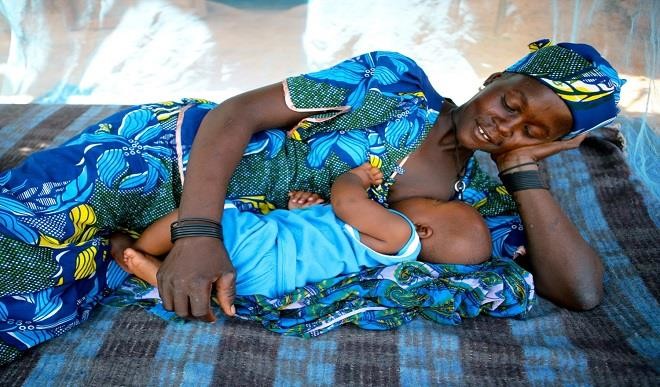

Nigeria may not achieve the global target for exclusive breastfeeding if mothers continue to give water to their babies, the United Nations Children’s Fund (UNICEF), has said.
Speaking at a two-day media dialogue jointly organised by the Child Right Information Bureau (CRIB) of the Federal Ministry of Information and United Nations Children’s Fund (UNICEF) in Ibadan on Thursday, UNICEF’s Nutrition specialist, Mrs. Ada Ezeogu during her presentation titled, ‘Exclusive Breastfeeding: Importance and Benefits to children said, exclusive breastfeeding is giving a baby breast milk without water or any other supplement in the first six months of birth from the first one hour of life.
She said although Nigerians mothers are breastfeeding but most of them add water with breast milk.
Ezeogu encouraged mothers to breastfeed exclusively without adding water or any other supplement because the breast milk contains all the nutrients the child needs to grow which include, 88.1 percent water, 3.8 percent fat, 0.9 percent protein, 7 percent lactose and 0.2 percent other nutrients.
"You can see that the beast milk has enough that the child needs. Exclusive breastfeeding is good for both the baby and the mothers. Except on some medical cases, the baby needs nothing than the breast milk especially in the first six months of life starting from one hour after the child is born."
She also said friendly government policies that would encourage mother to practise exclusive breastfeeding should be put in place in both States and federal level.
"The advocacy for extension of maternity leave to six months to allow mothers breastfeed their babies well will encourage working mothers to buy into the ideas."
UNICEF’s chief field officer, Tejinder Sadhu said, achieving the global initiative for exclusive breastfeeding is not a job to be left for mothers alone adding that mothers need to be supported by their husbands, governments, employers and everybody to give lives to their babies.
He said breastfeeding is one of the fastest investments a country can give for the development of her economy.
"An exclusively breastfed child has at least six times greater chance of survival in the early months than the non-breastfed child.”
Sadhu also said an exclusively breastfed child is 14 times less likely to die in the first six months than a non-breastfed child while adding that exclusive breastfeeding contributes 13 percent to reducing child’s mortality rate.
He added: "The value of breastfeeding in terms of life saving for the child, mother and the economy is enormous. It provides antibodies for children build their immunities, improves their intelligence quotient, improves survival and general development.
“On the part of the mother, it protects them from cancer, diabetes and other diseases. On the part of the country, a country with highly intelligence children will have a vibrant economy."