
We have governance without accountability, says El-Rufai
Former Kaduna State governor, Nasir El-Rufai, alleged that in Nigeria, there is governance without accountability. El-Rufai warned against what he described as a selective fight against corruption in Nigeria, saying the practice undermines democracy, weakens accountability and erodes public trust in government. He called for an end to detention without thorough investigation, warning that arbitrary […]
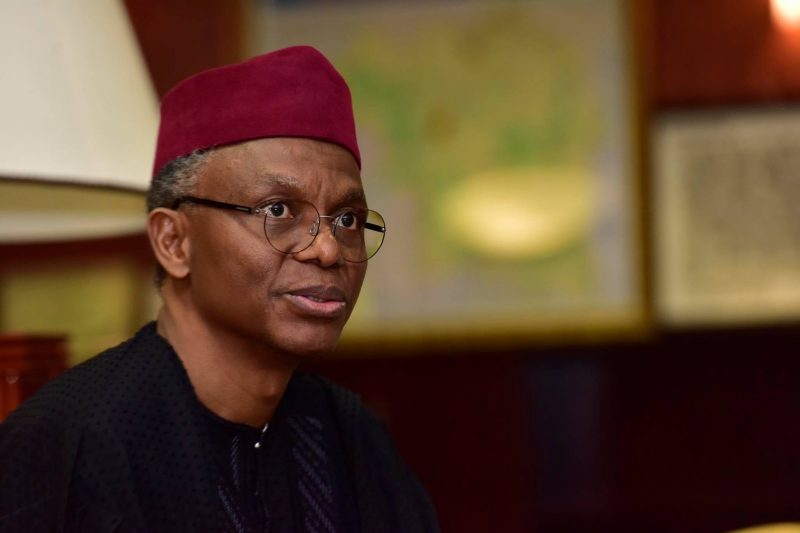
Kaduna State Governor, Nasir Ahmad el-Rufai
Former Kaduna State governor, Nasir El-Rufai, alleged that in Nigeria, there is governance without accountability.
El-Rufai warned against what he described as a selective fight against corruption in Nigeria, saying the practice undermines democracy, weakens accountability and erodes public trust in government.
He called for an end to detention without thorough investigation, warning that arbitrary arrests and prolonged detentions have become increasingly common and are being used as tools of intimidation rather than justice.
El-Rufai, who is currently out of the country on medical grounds, sent in a recorded video of his message and joined the dialogue virtually.
- Our democracy yet to translate to economic security – Nnenna Ukeje
- We don’t politicise security in Kaduna — Uba Sani
“Detention without probe must end,” he said, stressing that the law should exist to protect citizens, not to terrify them. According to him, when law enforcement agencies are deployed for political repression rather than public protection, they create a climate of fear that corrodes democratic norms.
El-Rufai expressed concern over what he described as selective prosecution, particularly of individuals perceived to be critical of or opposed to the government. Such practices, he said, violate fundamental human rights and steadily weaken the foundations of democracy.
“When law enforcement is weaponised against political competitors, democracy erodes quietly, but steadily,” he cautioned.
He argued that a credible anti-corruption drive must be rooted in transparency, due process and equal application of the law, insisting that arrests and prosecutions should be evidence-based rather than influenced by political affiliation.
“We must stop the organisation of security agencies for regime protection rather than for democratic preservation,” he said, calling for a return to principles that prioritise justice and accountability over political advantage.
The former governor also accused the government of shielding corrupt officials within the ruling elite, describing the current situation as “governance without accountability”. He said corruption allegations are often pursued aggressively against opposition figures, while those aligned with power are either ignored or allowed to negotiate their way out.
“We have governance without accountability. We conduct elections, create agencies and announce asset recoveries, but accountability through governance remains selective,” he said.
“Corruption has become dangerous for some who are in opposition, negotiable for others who are sitting on the fence and want to move to the APC, and invisible for those aligned with power. APC members are never accused of corruption,” he added.
El-Rufai argued that the consequences of selective enforcement are evident in everyday realities, including unpaid salaries, abandoned projects, decaying infrastructure and widespread public cynicism.
“When laws are enforced unevenly, deterrence collapses. And when deterrence collapses, trust evaporates, and this is what is happening in Nigeria,” he said.
He warned that the lack of accountability for those in power perpetuates a cycle of impunity, further weakening citizens’ confidence in state institutions and democratic governance.
Calling on political leaders, civil society groups and the wider public to push for reforms, El-Rufai said ending detention without proper investigation and enforcing anti-corruption laws impartially were both legal and moral imperatives.
“We seek a democracy that delivers, not one that survives through coercion and selective persecution,” he said.
While acknowledging the resilience of Nigeria’s democratic institutions since the return to civil rule, El-Rufai noted that endurance alone does not amount to progress, insisting that democracy must be judged by fairness, accountability and the rule of law.