
We need Electoral Offences Tribunal
In the Senate, a bill to establish a Commission for electoral offences has passed its second reading. Entitled “National Electoral Offences Commission and Other Related Matters, 2019,” the bill is being sponsored by Abubakar Kyari, representing Borno North Senatorial District. Aptly justifying the introduction of this bill, Senator Kyari argued that “electoral crimes help electoral […]
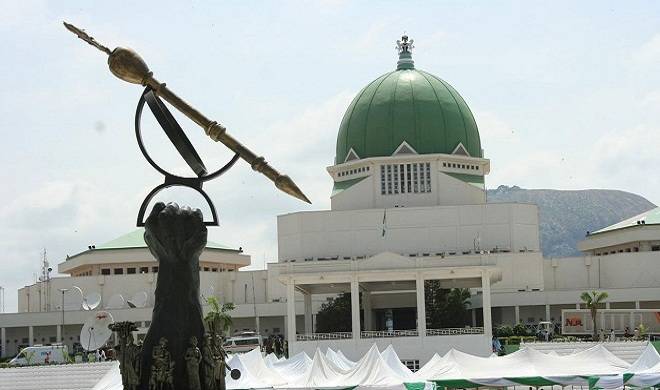
In the Senate, a bill to establish a Commission for electoral offences has passed its second reading. Entitled “National Electoral Offences Commission and Other Related Matters, 2019,” the bill is being sponsored by Abubakar Kyari, representing Borno North Senatorial District. Aptly justifying the introduction of this bill, Senator Kyari argued that “electoral crimes help electoral riggers and offenders take control of government against the democratic will of their electorate. It gives birth to electoral apathy and national insecurity. Rigged elections throw up political schemes that are not conducive for business.”
We support the introduction of this bill and align with arguments put forward by Senator Kyari. Since the beginning of the current political dispensation, electoral crimes have aided electoral victory for politicians who, ordinarily, would not have been elected into Executive or Legislative positions in Nigeria. The situation degenerated in the 2019 elections that saw brigandage, bloodshed, vote buying and outright suppression of rivals, but winners were declared in spite of glaring controversies and illegalities.
In April 2016, the Chairman of the Independent National Electoral Commission (INEC), Professor Mahmood Yakubu, decried electoral violence, saying: “More worrisome for INEC is the spectre of violence both in the course of political campaigns and against staff, materials and facilities of the Commission. Under such atmosphere, INEC is severely constrained. Where we can’t fully deploy staff or the staff are held hostage and processes disrupted, there can be no elections and where we manage to deploy, there can’t be a conclusive outcome”. As a result, the INEC boss, last week declared support for an electoral offences commission bill being debated in the House of Representatives.
To say that this piece of legislation is overdue is an understatement. It was recommended in an elaborate report on electoral reform submitted by Justice Mohammed Lawal Uwais committee in 2008. The committee had said such a commission should have the powers of “investigation, enforcement and prosecution of all electoral malpractices and offences.” It further recommended that “The Commission [shall be] responsible for the sensitisation, enlightenment and orientation of the public, the adoption of measures to prevent and eradicate the commission of electoral malpractices and the execution of such activities that are necessary or expedient for the full discharge of all or any of the functions conferred on it under the Bill.”
Justice Uwais panel wanted the Commission to be empowered to investigate and prosecute “any person suspected to have conspired to commit an electoral offence or has already committed one under [amended] Electoral Act.” It was supposed to have the powers to “issue summons to persons to appear in person or to produce documents that would help in the investigation or prosecution of an electoral offence,” and “to seize any property that is used or is suspected to have been used to commit an electoral offence.”
Apart from Justice Uwais Committee report, there was a similar report by Senator Ken Nnamani-led 24-man Constitution and Electoral Reform Committee, set up by the Buhari administration in 2015. The panel called for amendments to the Electoral Act, and specifically sought the establishment of Political Parties and Electoral Offences Commission.
From the foregoing, it is apparent that the mood of the nation is in support of an Electoral Offences Commission. However, we recommend that an Electoral Offences Tribunal should be established along with a Commission. The Commission could investigate and initiate prosecution, but it may not have the powers to penalize offenders. With our regular courts being overwhelmed by civil and criminal cases, justice on electoral offences would be delayed if such cases have to queue up in our regular courts. A tribunal dedicated to the trial of suspects of electoral offences would dispense justice faster. If electoral offenders are made to face the full wrath of the law, such punishments would deter others from engaging in similar electoral offences. We, therefore, advocate for the establishment of an Electoral Offences Commission and Electoral Offences Tribunal.