
We, who are afraid…
President Buhari’s return from a ten-day vacation was heralded by one of the most ferocious assaults from one of his spokespersons, Femi Adesina on “some reckless on-line media, irresponsible political opposition and other bilious groups and individuals” who he said had peddled rumours that the President was hospitalized and will not return at the end […]
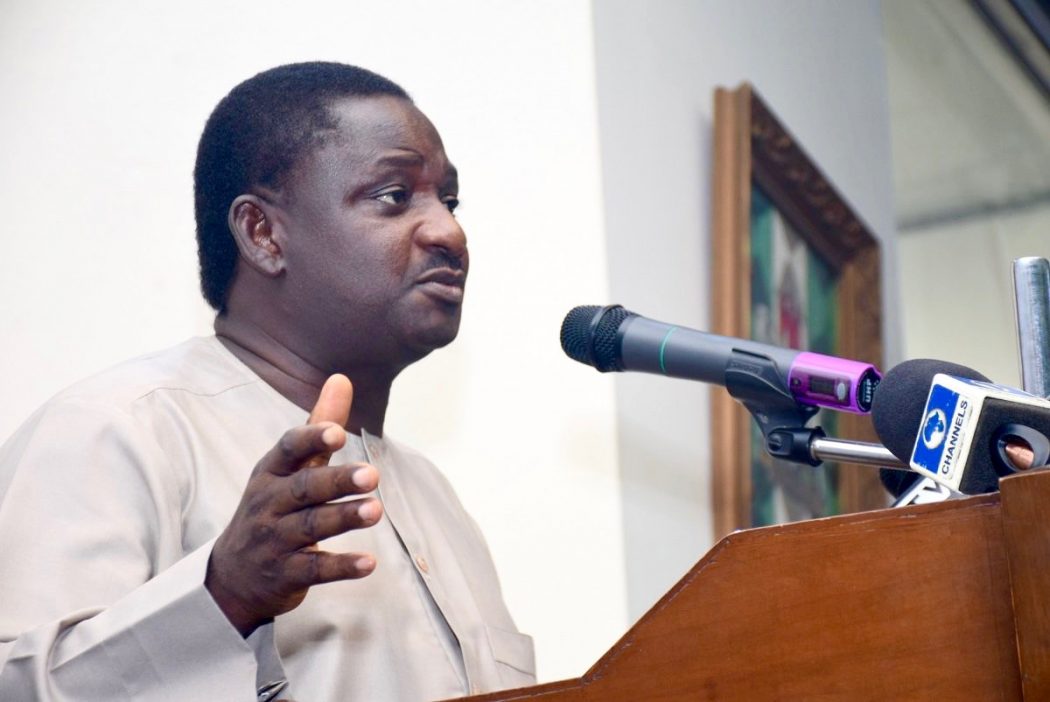
Presidential spokesperson, Femi Adesina
President Buhari’s return from a ten-day vacation was heralded by one of the most ferocious assaults from one of his spokespersons, Femi Adesina on “some reckless on-line media, irresponsible political opposition and other bilious groups and individuals” who he said had peddled rumours that the President was hospitalized and will not return at the end of his planned 10-day vacation. “Now that the President is back,” he thundered, “can these apostles of evil imaginations swallow their words?” In calmer times one would follow the trail of this anger to see what reactions it will generate. These are not calmer days, however, and we who are afraid wonder from which world Mr. Adesina found the indignation to defend the President with such choice language.
Could it be the case that Mr. Adesina was also vacationing with Mr President in the UK, and was therefore spared the national trauma over the kidnap of UBEC Chairman and his daughter and the killing of their driver at a time the improved security measures the IGP laid out were supposed to have made the Abuja-Kaduna highway more secure? Could he have been somehow insulated from the unprecedented national shock at the audacious kidnap of the Magajin Garin Daura, an in-law to both the President and his ADC? Perhaps the President’s spokesman has given up on reading newspapers that are awash with stories of atrocities by bandits, kidnappers and sundry criminals all over the country.
It should please the President that there are still loyalists that are paid enough to roll out colourful language in his defence these days. The truth is, much of this fancy language and angst against those who enjoy poking at the President is wasted on the population. It really does not matter much whether the President sat tight in the UK until the end of his vacation, or he extended it for other reasons. Nigerians are familiar with his medical travels and shifting of return days. What is new and confounding is that President Buhari chose to see through his vacation until days after a kidnapping that can only be seen as a personal affront against him. Parallels are often misleading, but it is difficult not to recall the daring attempt at the life of late Emir of Kano, Alhaji Ado Bayero by Boko Haram assassins in the heart of Kano city in February 2013. If it is possible to forgive Adesina’s “apostles of evil imagination”, this is where you could make the case that only an extreme and compelling personal reason would have prevented the President from flying back immediately, or a day or two after it became apparent that the Magajin Gari could not be rescued or ransomed within twenty four hours like the UBEC boss.
There does not appear to be a method to the confusing signals from all quarters. Adesina’s colleague, Malam Garba Shehu’s contribution to the depressing outrage was to say that kidnappers of the prominent Nigerian from the heart of the President’s hometown have shown that they have a level playing field when it comes to their choices for kidnap locations and victims. Presumably, citizens are expected to experience comfort from the knowledge that no one enjoys any privileged protection from an administration led by a president who says he belongs to no one, and he belongs to everyone. Now Nigerians know that neither the kidnappers nor the administration discriminate who falls victims to kidnappers.
Then the President flies in, looking healthy and relaxed. A nation that could not wait to hear from him what will be done about insecurity gasped when he smiled away a question on national security with a retort that he had seen the Inspector-General of Police losing weight, so he must be working very hard. Perhaps the President is referring to helicopters that now fly over Kaduna-Abuja trains, presumably to give privileged passengers a sense of security and ward off kidnappers who may be tempted to raid trains for really big kidnaps. Or he may have heard of the improved visibility of policemen on the highway and a token re-jigging of Police Commissioners. Clearly, he has not been briefed on villagers raising the number of IDPs in the region that gives him his biggest support, and the daily battles to fight bandits by over-stretched police and military personnel.
More discerning citizens would sit up with disclosure by the Chief of Army Staff that sinister forces with political motives within the country are involved in subversion by supporting a more potent convergence of hostile forces with local insurgencies, which could compound challenges of managing national security. For a nation that throws its military at every threat or conflict because basic policing has virtually collapsed, this alarm should worry an administration and a population that sees violent crimes rapidly eat-up its basic fabric. In this respect, it can only be hoped that the banning of motor cycles in some states where bandit activity and kidnapping have taken root is not a knee-jerk reaction.
Without a doubt, the Boko Haram insurgency and other violent crimes have ridden into the nation’s vulnerabilities substantially on two wheels. Yet the motorcycle is also the basic means of transportation in most of Nigeria’s rural areas. Banning its use, assuming it were possible, may curtail bandit activity and kidnapping, but it will also cause severe problems for rural populations. It may be a bit late in the day to ask for intelligence on the bandit’s sources of large numbers of motorcycles, regular supply of fuel, spare parts and maintenance and, while we are at it, seemingly unlimited sources of weapons and drugs. It is no longer a secret that the first casualty on the side of the Nigerian state was credible intelligence, but it is important to emphasize the fact that the multiple threats facing the nation cannot be addressed without a massive improvement in the capacity to acquire and use intelligence.
The population in the North is living with unprecedented fear. If the Emir of Katsina has to publicly beg President Buhari’s Minister to inform the President that farmers and herders have abandoned herds and farms out of fear of kidnappers and killers in his own State, no one needs to ask how isolated the administration is from northerners. We, who are afraid, now worry that things may only get worse.
Jamila Abubakar wrote this piece from Abujaa