
What Tinubu’s Executive Order means for oil & gas industry
President Bola Tinubu on Wednesday issued an executive order ending NNPC Limited’s retention of 30 percent of oil revenues as a management fee on oil and gas profit generated from production sharing contracts, profit sharing contracts, and risk service contracts. In a statement, Special Adviser to the President (Information and Strategy), Bayo Onanuga, said the […]
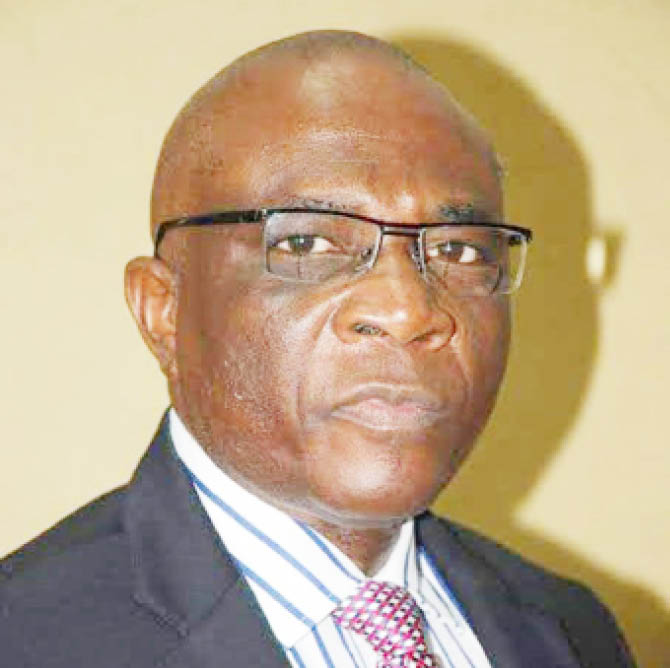
special adviser to the president on information and strategy bayo onanuga
President Bola Tinubu on Wednesday issued an executive order ending NNPC Limited’s retention of 30 percent of oil revenues as a management fee on oil and gas profit generated from production sharing contracts, profit sharing contracts, and risk service contracts.
In a statement, Special Adviser to the President (Information and Strategy), Bayo Onanuga, said the order will also affect the company’s 20 percent profits to cover working capital and future investments.
The statement noted that given the existing 20% retention, the additional 30% management fee is considered unjustified by the Federal Government, as the retained earnings are already sufficient to support the functions NNPCL performs under these contracts.
It also identified the Midstream and Downstream Gas Infrastructure Fund (MDGIF) under Section 52(7)(d) of PIA, funded by the collection of gas flaring penalties provided under Section 104.
It however said the fund is to be used for supporting environmental remediation and relief for host communities impacted by gas flaring but section 103 of the PIA has already established a dedicated Environmental Remediation Fund, administered by NUPRC, specifically designed to fund the rehabilitation of communities negatively impacted by upstream petroleum operations, including gas flaring. Furthermore, Section 103 already imposes a fee on lessees to contribute to this fund for precisely this purpose.
It added that all these deductions far exceed global norms and effectively divert more than two-thirds of potential remittances to the Federation Account.
It also blamed the deductions on decline in net oil revenue inflows that has fragmented oversight under the current PIA architecture.
“The Executive Order aims to resolve, among others, the duplicative 30 per cent deduction for Profit Sharing arrangements by addressing overlapping and redundant provisions across all relevant laws and regulatory instruments under the PIA framework and NNPC Limited’s governing structure. The objective is to eliminate unjustified multiple layers of deductions that erode revenues that ought to accrue to the Federation Account, enabling the three tiers of government to pursue critical national priorities.
Losers
According to the statement the NNPC Limited will no longer collect and manage the 30% Frontier Exploration Fund. NNPC Limited will ensure that the 30% profit from oil and gas from production sharing, profit sharing, and risk service contracts currently earmarked for the frontier exploration fund is henceforth transferred to the Federation Account.
“NNPC Limited will no longer be entitled to the 30% management fee on profit oil and profit gas revenues, which should go to the federation account. In the same vein, all operators/contractors of oil and gas assets held under a production sharing contract shall, from the date of the Executive Order, which is February 13, 2026, pay Royalty Oil, Tax Oil, Profit Oil, Profit Gas, and any other interest howsoever described which is due to the government of the federation directly to the Federation Account.”
The president also suspended payments of the Gas Flare Penalty into the Midstream and Downstream Gas Infrastructure Fund.
The Commission shall, from the date of the Executive Order, pay proceeds from all penalties imposed on operators for flaring gas into the Federation Account and cease payment of such proceeds into the Midstream and Downstream Gas Infrastructure Fund (MDGIF). All expenditure from the MDGIF shall be conducted in line with extant public procurement laws, policies and regulations.
This means that the NNPC will no longer rely on these deductions in payment of salaries, bonus and other emoluments its staff enjoy.
It also poses an issue on how it will fund some of its budget for 2026 with the order coming in the first quarter of the year.
This means the company will have to look for alternative funding or bear some expenses to meet up with the reality of reduced funding.
Also, this poses a challenge to the NNPC’s GCEO, Bashir Bayo Ojulari’s plans for the national oil company to retain the best of brains as it competes with other companies in the industry to have the best personnel in the sector.
Also, funds from the MDGIF have been instrumental in the construction of infrastructures inherent to the country achieving its aim of promoting use of cheap, clean energy like CNG and LNG.
Through the funds, the government has been able to fund conversion centres across the country and tertiary institutions to ameliorate the impact of removal of fuel subsidy. Also, the fund has been used to purchase tricycles and other vehicles that run on CNG for public transportation.
While there is no data on how much the NNPCL contributes to this fund from its own gas flaring, the impact of the national oil company’s fund withdrawal will be felt.
Winners
The federal, state and local governments are the ones to gain more from the order as the government had hinted in the statement that the deductions had resulted in a decline in oil revenue.
This means that the three tiers will have more money to share monthly after the Federal Account Allocation Committee (FAAC) meeting.
There won’t be risks to investors
Speaking with Daily Trust, an energy expert, Odion Omonfoman, said the order won’t pose any risk to investors.
He added that the order and proposed changes to the PIA only deal with sections of the PIA that allowed NNPCL to legally retain or deduct funds that should otherwise be paid to the Federation Account.
He said these changes would also affect provisions of the PIA that made NUPRC and NMDPRA gatekeepers of petroleum taxes, rather than direct payments of these taxes to the Federation Account.
“When the PIA was passed, I reckoned it was only a matter of time for the PIA provisions in this regard to be amended. Shocking that States and LGAs did not push to amend these provisions right away, given the negative fiscal impact.”
On his part, Professor Emeritus of Petroleum Economics and Executive Director of Emmanuel Egbogah Foundation, Prof. Wumi Iledare, said the order represents a significant fiscal intervention within Nigeria’s petroleum governance framework and signals a renewed effort to strengthen revenue transparency, reduce discretionary retention, and improve statutory remittances to the three tiers of government.
He acknowledged that the administration’s stated objectives — safeguarding public revenues, curbing inefficiencies, and enhancing fiscal discipline — particularly in a period of budgetary strain and debt sustainability concerns.
He added that strengthening remittance accountability and improving visibility of petroleum inflows to the Federation Account are legitimate public finance priorities.
“However, the initiative notes that certain aspects of the Executive Order intersect directly with provisions of the Petroleum Industry Act (PIA) 2021. The Frontier Exploration Fund, the Midstream and Downstream Gas Infrastructure Fund, and existing Production Sharing Contract (PSC) fiscal structures are statutory constructs established by the National Assembly. While executive authority under Section 5 of the Constitution empowers the President to implement and enforce laws, substantive alterations to statutory fiscal frameworks may require legislative amendment to ensure constitutional alignment and institutional certainty.”
On the question of direct remittance of royalty oil, tax oil, and profit oil to the Federation Account, he said there are potential benefits in enhancing transparency and reducing intermediation but implementation must be carefully sequenced to preserve contractual stability and avoid unintended legal or investor confidence challenges.
“The Initiative also observes that the structural dual role of NNPC Limited — as both commercial operator and concessionaire under certain arrangements — has long presented institutional tensions within the post-PIA framework. Any reform aimed at reinforcing NNPC’s commercial identity must be anchored in legal clarity and predictable governance mechanisms.”
He, therefore, called for prompt legislative consultation to ensure statutory coherence; transparent stakeholder engagement with operators and investors; clear implementation guidelines to safeguard contractual obligations and a sequenced reform approach that balances fiscal urgency with institutional stability.
“Nigeria’s petroleum sector remains central to national economic stability. Reforms that improve transparency and fiscal integrity are welcome. However, sustainable reform must align with constitutional processes, statutory frameworks, and investor predictability.”