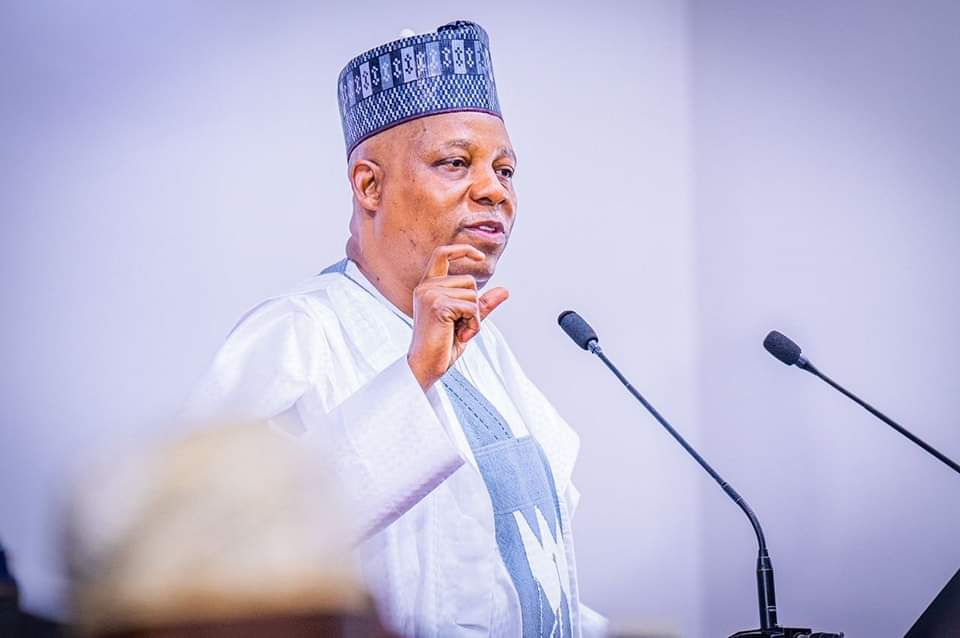
That the omission happened in Shettima’s backyard—his political home turf—made it even more suspicious. The defence from the presidency, cloaked in constitutional technicalities that the president alone reserves the right to nominate a running mate post-primary, did little to douse the growing flames. If anything, it added fuel, raising eyebrows over how such a tradition has been casually flouted in the past without consequence. Why the sudden caution now?
The very idea of Shettima being replaced has cracked open a national conversation, rich in perspectives and laced with passion. It’s no longer just political gossip; it has evolved into a fierce court of public opinion where emotions, predictions, and perceptions clash. In this heated atmosphere, every move is analysed for its potential cost, not just to politicians, but to the broader hopes of a nation yearning for good governance, competent leadership, and stability.
But what lies beneath these emotions is a deeper debate about Shettima’s actual impact. Some believe he hasn’t truly delivered for the Northeast or left any significant political footprint. Yet others argue that a vice president’s influence is often behind the scenes, manifesting through appointments and subtle power plays. In this, Shettima finds himself in a paradox. The same Muslim-Muslim ticket that propelled him into power also boxed him into a corner. The administration’s apparent effort to appease the Christian community—previously alarmed by the ticket—has meant more appointments flowing to Christians, limiting Shettima’s reach and leverage. Even CAN, once sceptical, has openly praised Tinubu’s inclusivity, inadvertently highlighting the VP’s constrained position.
Shettima’s perceived sidelining becomes more evident when whispers of Nuhu Ribadu’s growing influence and quiet loyalty among ministers’ surface. The removal of former Education Minister Prof. Tahir Mamman, allegedly for being too aligned with Shettima, fuels the theory of a power struggle. Some believe this entire dance is about recalibrating the Muslim-Muslim strategy, now deemed unnecessary since the ruling party has the advantage of incumbency. But changing a vice president based on religious balancing alone is a dangerous game. It risks alienating not just Shettima, but the bloc of loyal supporters who see this as a betrayal.
The question of where a potential running mate should come from also returns to the fore. Tinubu, a Yoruba Muslim from the Southwest, already stirred the pot with the 2023 ticket. Shettima’s removal could unravel the fragile regional balance that the current setup represents. The Middle Belt feels overdue for a taste of power—figures like Babachir Lawal and Yakubu Dogara have not hidden their discontent. Yet, history warns us that appeasement doesn’t always translate into electoral victory. Simon Lalong, despite being the DG of the Tinubu campaign, couldn’t deliver Plateau State in 2023.
This entire drama has also shone a spotlight on a growing pattern—only former governors seem to get picked for major offices these days. Vice President, Senate President, SGF, and APC chairman are all ex-governors. It begs the question: has Nigerian politics become a recycling machine, churning out familiar faces while fresh minds or even technocrats remain sidelined, as is the case with the likes of Prof Yemi Osinbajo and Atiku Abubakar, who didn’t serve as governor, senator and minister?
There’s even buzz around Governor Umar Bago of Niger State—a youthful, energetic, and visually appealing politician from a state that has consistently supported the APC since 2015. Many see in him a symbol of loyalty and untapped potential. Niger, despite its commitment, has remained in the shadows of national appointments. But critics say Bago is still green, lacking the experience needed for such a high-stakes position.
The question remains: will the APC choose shock and awe, or stability and loyalty? The answer could determine not just who stands beside Tinubu in 2027, but whether the ruling party still holds the reins after the vote is cast.
Bagudu Mohammed wrote via [email protected]