
Wheat production slumps as FG props rice
…less commitment to wheat, extra devotion to rice …when last did the minister speak about wheat? Despite the huge demand for wheat in Nigeria which stands at 4.2 million tonnes and cost the nation about $4.3 billion in foreign exchange annually, the produce has received little attention in the country. With local production dropping […]
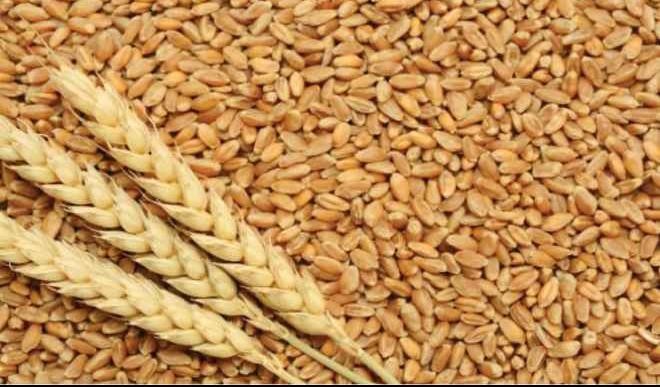
- …less commitment to wheat, extra devotion to rice
- …when last did the minister speak about wheat?
Despite the huge demand for wheat in Nigeria which stands at 4.2 million tonnes and cost the nation about $4.3 billion in foreign exchange annually, the produce has received little attention in the country.
With local production dropping from 600,000 tonnes to less than 400,000, the demand-supply gap is so wide that stakeholders are expressing worry.
Alhaji Salim Muhammad, National President of Wheat Farmers Association of Nigeria (WFAN) in an interview with Daily Trust, painted a pathetic picture of the nation’s wheat production.
“You see, the major challenge with wheat production is always the issue of the market – marketing and pricing. Our only off-takers are the Flour Millers Association of Nigeria and they dictate the price. They are comparing the cost of wheat they import and the cost of wheat we produce locally. But one thing we fail to understand is that production in Nigeria is largely drudgery, subsistent with poor mechanization material put into the cultivation. That’s why you can see our cost of production is higher than where they import wheat from.
“One critical thing that might surprise you is that I was opportune to know the cost of production along the valley of Mexico and some southern American countries. If you multiply it by the current rate of the dollar here in Nigeria, it is higher than the cost of production of local wheat in Nigeria. It is very amazing! But fortunately for them, their governments give them subsidies to encourage production and exportation to other countries.
“But here in Nigeria, there is no subsidy either at the beginning of production or at the end of production. So our farmers are left to buy inputs and materials locally at the local market prevailing prices, and sell their produce at the end of harvest also at the determination of market forces,” he lamented.
Alhaji Muhammad said the second challenge facing wheat farmers now is the issue of certified seeds, noting that most of the seeds farmers access now were not high-yielding varieties. He attributed this problem to poor funding of research institutes mandated to develop new varieties at least annually.
“I can tell you that since 2015 when the Lake Chad Institute released some varieties, it is the same seedling that we are using up to this moment. While in the actual scientific way, we are supposed to have new releases twice in a year or once every year as obtained in other countries so that we can have increase in yield and enhanced quality, This way, we can comfortably compete with the foreign wheat,” he stressed.
The national president of the wheat farmers said since the beginning of the CBN Anchor Borrowers’ programme, this was the only year that they accessed some funding for wheat production because of the poor uptake and lack of mechanisation.
This year, about 9,000 to 10,000 farmers are benefiting from the programme – a number he considered small because some of the farmers may opt to concentrate on rice or maize
He said: “Government must design a policy that will influence wheat production as it does to rice. You see the scenario is double: the Federal Government of President Muhammadu Buhari launched rice and wheat programmes at the same time, unfortunately, every time the government is talking it is about rice, rice, rice. It doesn’t talk about wheat.
“Even the minister who is saddled with the responsibility of agriculture, has forgotten the last day he spoke about wheat. We have been making consultations and making contact with people that we think can do something, yet nothing is happening.
“For the ABP, I gave a list of 30,000 farmers, unfortunately, after screening and validation, it was dropped; not even up to 10,000 because a lot of the farmers have taken the loan under the rice or maize project and they were unable to pay.
“The policy is that if you are unable to pay you cannot take another loan. So we propose that the CBN has to deal with these crops separately.”
As the season of production begins, the farmers are keying into three programmes: one is the CBN Anchor Borrower Programme which is conducted in about six states of the federation – Kano, Jigawa, Yobe, Kebbi, Kaduna and Katsina.
The second is the Transformation of Africa Agriculture Technology (TAAT) project in about three states – Kano, Jigawa and Kebbi – covering about 20,000 hectares; and another private programme in about three states.
This is expected to bring the area cultivated to about 50,000 or 60,000 hectares and productivity to a minimum of three tonnes per hectare.