
When darkness kills patients in our hospitals
Nigeria’s healthcare delivery has been fraught with so many shortcomings for decades but the recent incident at the Aminu Kano Teaching Hospital, Kano, brought to fore how precarious the situation is. According to the management of the hospital, three patients died due to power outage at the hospital. Hospital’s spokesperson, Hauwa Dutse, who confirmed the […]
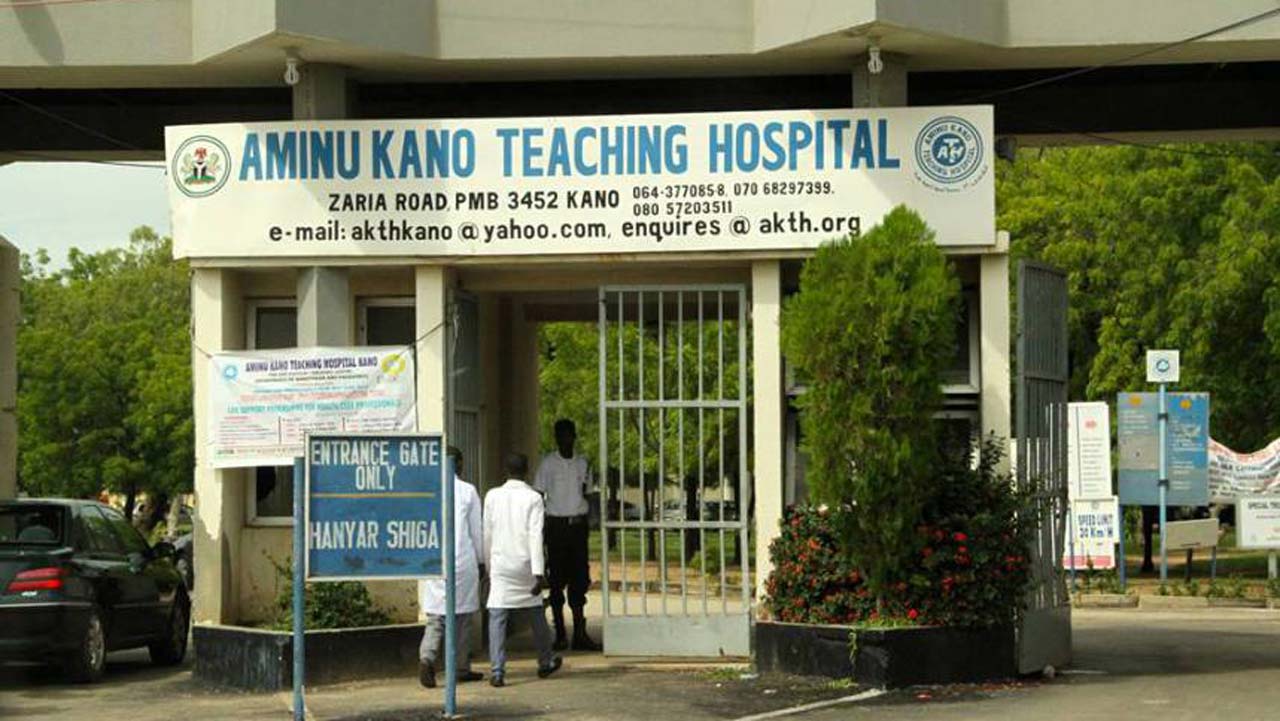
Aminu Kano Teaching Hospital (AKTH)
Nigeria’s healthcare delivery has been fraught with so many shortcomings for decades but the recent incident at the Aminu Kano Teaching Hospital, Kano, brought to fore how precarious the situation is.
According to the management of the hospital, three patients died due to power outage at the hospital. Hospital’s spokesperson, Hauwa Dutse, who confirmed the death in a statement on September 15, 2025, said four patients were on ventilator support in its Intensive Care Unit when power was cut, and three died.
Hauwa explained that the blackout had a direct impact on patients on life-support machines.
“On that very day, Friday, there were four patients on admission, and due to the power outage, three of them died,” she said.
- Ahead defection: Kwankwaso in talks with Nentawe
- Governor Mutfwang’s pragmatic approach in unifying Plateau
However, the management of the electricity distribution company, KEDCO, while confirming that it had cut power supply to a part of the hospital, attributed the action to mounting unpaid bills, adding that it had warned the hospital’s management before its action.
It said the hospital has an outstanding liability of ₦949,880,922.45, and the company had requested full settlement of the August bill of ₦108,957,582.29 within ten working days to avoid disconnection of the affected locations.
It is heart-warming that the issue was amicably resolved following the intervention of the Commissioner of Police, Kano Command. However, beyond this, it still leaves uncertainty in the minds of patients and their relatives who receive care at the hospital on whether there will not be a repeat of the incident.
Unfortunately, AKTH is not the first teaching hospital in Nigeria to have its lights disconnected for not paying accumulated electricity bills. Similar stories have emerged from Lagos University Teaching Hospital (LUTH). Nigeria’s premier teaching hospital, the University College Hospital (UCH) in Ibadan, had a blackout for months. Reports had it that patients had resorted to bringing in generators to our hospital to guard against power outage.
That our hospitals don’t have light is probably not surprising, because we all know the state of electricity in Nigeria. The national grid collapses more often than not.
There is no reason why our hospitals cannot operate at higher standards. No one goes to the hospital to relax. Electricity in hospitals is not just to power bulbs, fans, and ACs, but to keep lifesaving equipment like incubators, dialysis machines, ventilators, and operating theatres running. It should be available and stable, not epileptic.
At the same time, our power companies are also running a business and we can hardly blame them if they take action to recover huge amounts owed to them by numerous entities. In the process it may cost lives.
Sadly, we are not going to see the end of this in the foreseeable future given the shortage of funding many of them face. Many times such health facilities are left with no option than to raise the cost of services they render to patients, meaning there is a limit to which they can raise such costs given that most of those who patronise government owned hospitals are ordinary Nigerians who find it difficult to make ends meet.
We at the Daily Trust believe that there is an urgent need to revise our healthcare funding strategies and develop effective systems to ensure judicious use of scarce resources. This means going beyond paltry subsidies and ad-hoc government bailouts, toward sustainable financing models such as community-led health insurance schemes, public–private partnerships, and investment in renewable energy to reduce reliance on the fragile power grid.
Hospital managements also need to be more accountable and innovative in managing their facilities. This should include judicious use of resources and plugging all loopholes that drain the scarce fund available.
It is also time for the federal government to fast track its proposed project of providing alternative sources of electricity in some of its hospitals. We recall that the Federal Executive Council had at its meeting in July approved N68.7 billion for key electricity projects in universities and teaching hospitals. It is better to kick-start this vital project to save lives.
Our electricity distribution companies can also consider special tariffs for our health care facilities as part of their Corporate Social Responsibility.
Under no circumstances should we continue to experience the death of any Nigerian simply because the facility he goes to stay alive cannot afford its electricity bill.