
Where is the university of Abuja going?
Given the magnitude of the governance and management quagmire at the University of Abuja, it has become necessary to ask what has been achieved by the Federal Government’s unwarranted interference since February this year. Is it the resuscitation of sole administration by other means or the invention of a new leadership contraption unknown to existing […]
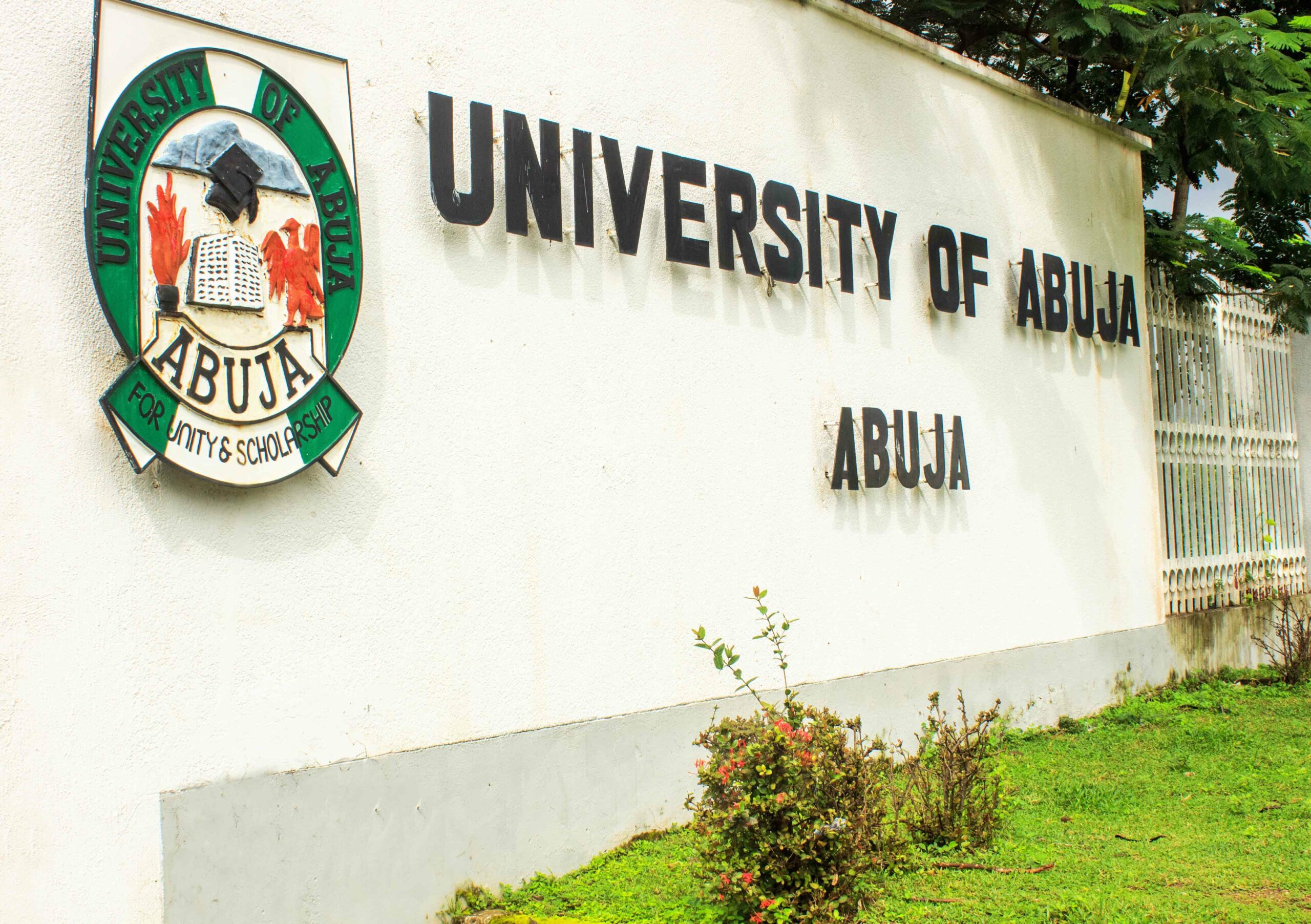
Given the magnitude of the governance and management quagmire at the University of Abuja, it has become necessary to ask what has been achieved by the Federal Government’s unwarranted interference since February this year. Is it the resuscitation of sole administration by other means or the invention of a new leadership contraption unknown to existing laws? Is it prolonged governance instability or peace of the graveyard? Is it a subversion of academic freedom in academia, or a promotion of subservience and erosion of university autonomy by the government? Several intriguing questions remain unanswered, as the leadership conundrum orchestrated by the Minister of Education, Dr. Tunji Alausa, persists at the University.
One is obliged to intervene at this critical juncture in the annals of my dear alma mater, considering that I am about to round up the study for the last of my three degrees at the University. As someone with a high stake in the development, and also familiar with the underlying issues behind its current trajectory, I believe that the continued silence of stakeholders in the face of the University’s contrived downslide cannot be golden. Hence, it is necessary to confront the pertinent questions raised above, as a means towards enabling my beloved University of Abuja to recover from the externally imposed logjam.
It stands to reason thatdecisions as unprecedented and earth-shaking as the unilateral dissolution of the Governing Council and the removal of the Vice-Chancellor—swiftly followed by the appointment of a new Pro-Chancellor and Chairman of what initially amounted to a one-man Governing Council, alongside the installation of an Acting Chief Executive at the University of Abuja on February 6, 2025—must, in all ramifications, be worthy of such gravity. Put differently, from policy conception to execution, there ought to be absolute clarity as to the necessity, rationale, trajectory, and anticipated outcomes of such extraordinary measures.
Due to the legal implications and attendant political consequences for the government, there should be no room for shenanigans, policy flip-flops, or trial and error, as harsh questions will be asked and inconvenient truths highlighted. Since such actions often approximate calculated risks, the undertakers must be prepared to deal with the political or other fallout. Any failure will be catastrophic for the government or the affected agency, or both, including the individual state actors involved.
Given the unsavoury situation at the University of Abuja, it is evident that the unwarranted intervention in its governance and affairs by the government has been a monumental policy fiasco. The decision was not only ill-conceived and lawless, but it also has zero chance of success. It is an evil plot hatched by yet unclear forces in the corridors of power to take over the University for their minions to dominate by hook or by crook. The Minister has simply been doing the bidding of these forces that are determined to leverage their privileged position and subvert the government machinery, including the law and due process, to realise their ultimate goal of ‘conquering’ the University.
It is for this reason that, out of the universities affected by the recent government actions, only the University of Abuja suffered in two respects. First, there was no effort made to establish the true position of things before the government intervened. And secondly, the entire Governing Council (both external and internal members) was dissolved, with the latter replaced by what has been aptly described as a one-man Council. It was intended and geared toward ensuring a clean sweep of the properly constituted governing institutions for the ‘takeover’ and ‘occupation’ of the University.
However, the forces intended to occupy the University of Abuja did not reckon with, or even underestimate, the resilience of the law and the context of their ill-fated bid. Being a strictly law-governed entity, the subjugation of a university will certainly be chaotic, nasty, and engender unexampled resistance, especially in the autonomy-driven era. At the same time, moving to do so under a civil-democratic dispensation can only be met with the incongruity and incompatibility that would require an escalation of chaos and instability to thrive. And that precisely is the case with the University of Abuja now.
With two imposed successive acting Vice-Chancellors presiding the affairs in a spate of six months, the University of Abuja now represents the face of a ‘conquered entity’ and its subjugation by the government is only symptomatic of the undue external interference banned, especially by the Universities (Miscellaneous Provisions) (Amendment) Act 2003, No 1 of 2007, otherwise known as the Autonomy Law. In particular, the powers of the University Senate and the Governing Council in the two acting appointments were usurped by the government, resulting in the engagement of outsiders, contrary to existing laws and due process. Consequently, the governance and administration of the University have been haphazard, unplanned, and without synergy among the constituent organs.
Contrary to pretentious claims and antics of those supporting the externally imposed administrations in the system, the University has lost its governing sanity, with key decisions often taken at the whims of those in charge, and no longer largely rule-based; in addition to implementation of the scripts of their external sponsors that may not relate or converge with the University’s peculiarities. This has also manifested in the erosion of the statutory role of the University Senate and Governing Council in affairs. At the same time, it allowed the imposed administrators to get away.
To buttress this point, despite claims by certain opportunists in the system that normalcy and sanity have been restored, no conscientious member of the university community has welcomed—or identified with—the following developments: the creation and appointment of the strange and short-lived Senior Special Assistants in place of Deputy Vice-Chancellors; the divisive appointment of new Deans and Directors; the placement of subordinate officers over their seniors in key departments; the so-called amnesty granted to several indicted and expelled students; the elevation of some indicted staff to new positions, including the head of administration in the Vice-Chancellor’s office; academic stagnation evident in the conclusion of the 2024/2025 academic session without the release of First Semester examination results; and, ultimately, the government’s appointment of a new Acting Vice-Chancellor in early August—while the Council remained in place but without the imprimatur of either the Senate or the Council.
It is a scenario of bizarre happenings in a community that remains bewildered and unhappy, yet helpless. If this is not a conquered university pro max, I do not know what else it is!
Against this backdrop, it is nothing short of laughable that anyone would contemplate engaging someone to defend what is patently an indefensible situation at the University of Abuja.
It is an open secret in the Registry—one I can attest to personally, given his brief and uninspiring stint as Administrative Secretary of the Postgraduate School.
Meanwhile, following growing public outcry and the reappointment of some members of the dissolved Council of the University of Abuja, which selected and appointed Professor Aisha Sani Maikudi, the removed 7th substantive Vice-Chancellor, the propriety or otherwise of the government’s unilateral actions appeared to have been finally settled. Incontestably, the government’s interference was both unwarranted and reversible. The government itself seems to be leading the way in this regard.
The reappointment of the erstwhile Pro-Chancellor and Chairman of the University of Abuja Governing Council, Air Vice Marshal Sadiq I. Kaita (rtd), to Bayero University, Kano, in the same capacity, and Professor Ralph Akinfeleye and Mrs. Dorcas Orbih as members of the Councils of other universities, is not only an eloquent approval of their previous stint, but also validated the appointment of Professor Maikudi by their Council. This followed the earlier reinstatement of the Vice-Chancellor of Alvan Ikoku Federal University of Education by the Minister of Education.
By the same token, what remains—if the principles of fair play, justice, and equal humanity, so powerfully championed by the legendary reggae icon Bob Marley, are to be upheld—is clear: the reinstatement of Professor Aisha Sani Maikudi; the reappointment of Alhaji Sabo Babayo Misau, the only external member from Bauchi State unjustly excluded; and the reinstatement of the internal members of Council duly appointed by the University Senate and Congregation.
This is not merely a matter of administrative correction; it is the inevitable and only viable path to restoring sanity, good governance, and the statutory autonomy of the University of Abuja. There can be no two ways about it.
We therefore humbly appeal to our father, His Excellency President Bola Ahmed Tinubu, GCFR, as Visitor to the University, to rise above the distractions of opportunists and intervene decisively. By ensuring the reinstatement of these legitimate appointments, Mr. President will reaffirm his commitment to justice, equity, fairness, and the rule of law, and in so doing, set a lasting example of leadership for the entire Nigerian university system.
Peter is of School of Postgraduate Studies, University of Abuja.