
Why capital market is critical to Nigeria’s N1trn economy – Shettima
Nigeria’s Vice President, Kashim Shettima, has said the country’s capital market is critical to achieving the N1 trillion economy target. He also stated that the sector has shown promising potential. Shettima made the disclosure on Wednesday at the 50th inaugural lecture series of the Nasarawa State University Keffi presented by Prof. Uche Uwaleke which had […]
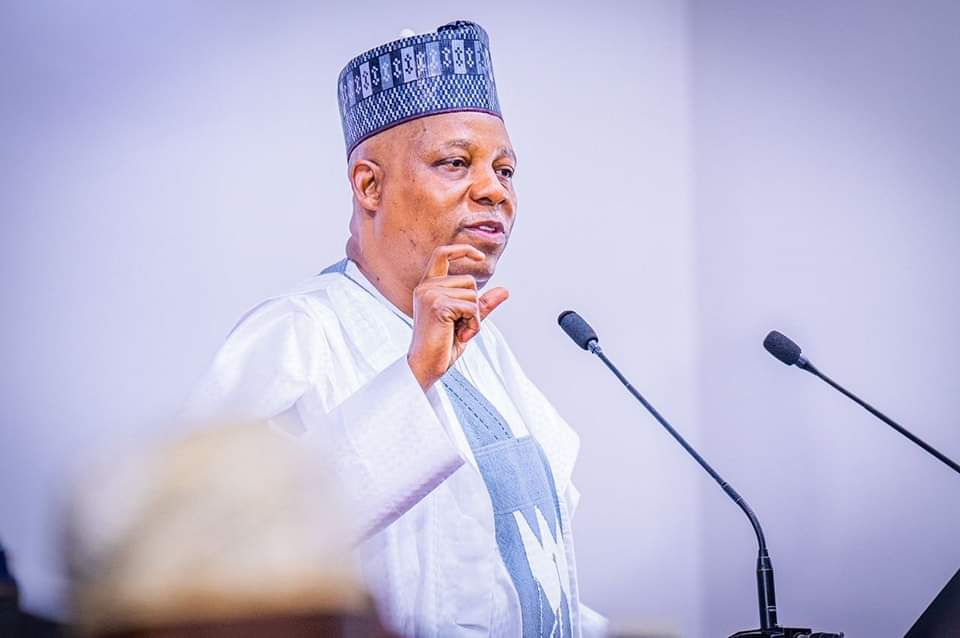
president kashim shettima
Nigeria’s Vice President, Kashim Shettima, has said the country’s capital market is critical to achieving the N1 trillion economy target.
He also stated that the sector has shown promising potential.
Shettima made the disclosure on Wednesday at the 50th inaugural lecture series of the Nasarawa State University Keffi presented by Prof. Uche Uwaleke which had the theme “Unlocking Wealth, and Leveraging Entrepreneurial Knowledge Ecosystems: Understanding Capital Harnessing Potentials.”
The vice president, represented by the Minister of Women Affairs, Hajiya Imaan Sulaiman-Ibrahim, said “Nigeria’s capital market is our ticket to economic stability. Its performance, despite global and domestic uncertainties, speaks volumes.
- NAFDAC deploys technology to combat fake drugs
- Nigeria’s reserve drops by $2.2bn as FG defends Naira
“In January 2025 alone, the market capitalisation of the Nigerian Exchange Limited (NGX) appreciated by N1.95 trillion, reflecting growing confidence in our economic trajectory.”
He added that “The current administration’s vision of a $1 trillion economy is not a distant dream; it is a deliberate destination. Through bold and strategic reforms, we have embarked on a journey to deepen our financial markets, strengthen investor confidence and unlock opportunities for sustainable growth.”
Also in his presentation, Prof. Uche Uwaleke noted that unlocking Nigeria’s hidden wealth through the capital market will involve leveraging the market’s potential to mobilise as well as optimisation of resources.
Through optimisation, he said, “The federal government and sub-nationals should utilise more of infrastructure bonds such as Sukuk and Green bonds when borrowing from the debt capital market to finance renewable energy projects, smart cities and environmentally sustainable developments.”
Citing instances, he said “Malaysia’s high-quality infrastructure has mainly been due to the government’s ability to leverage the capital market in the implementation of its five-year economic plans to execute man infrastructure projects. According to the World Bank, infrastructure bonds accounted for 26% of overall bond issuance between the years 1993-2019.”
He also advised the federal government to sell stakes in state-owned enterprises through the exchanges to raise funds for development.
In the academic setting, Prof. Uwaleke advised government to provide incentives for universities to access long-term funding through the issuance of bonds on a securities exchange, adding that “Some of the biggest US universities, including Harvard, Yale, MIT, Stanford and Princeton feature in the list of top borrowers in the US through capital markets.”