
Why egg price is rising
The cost of egg has continued to rise across many parts of the country since the beginning of the Ramadan fast. While some farmers blamed the rising price on increased demand, others blamed it on high cost of production, day-old chicks and point-of-lay birds. Our correspondents who spoke with farmers and customers across the states […]
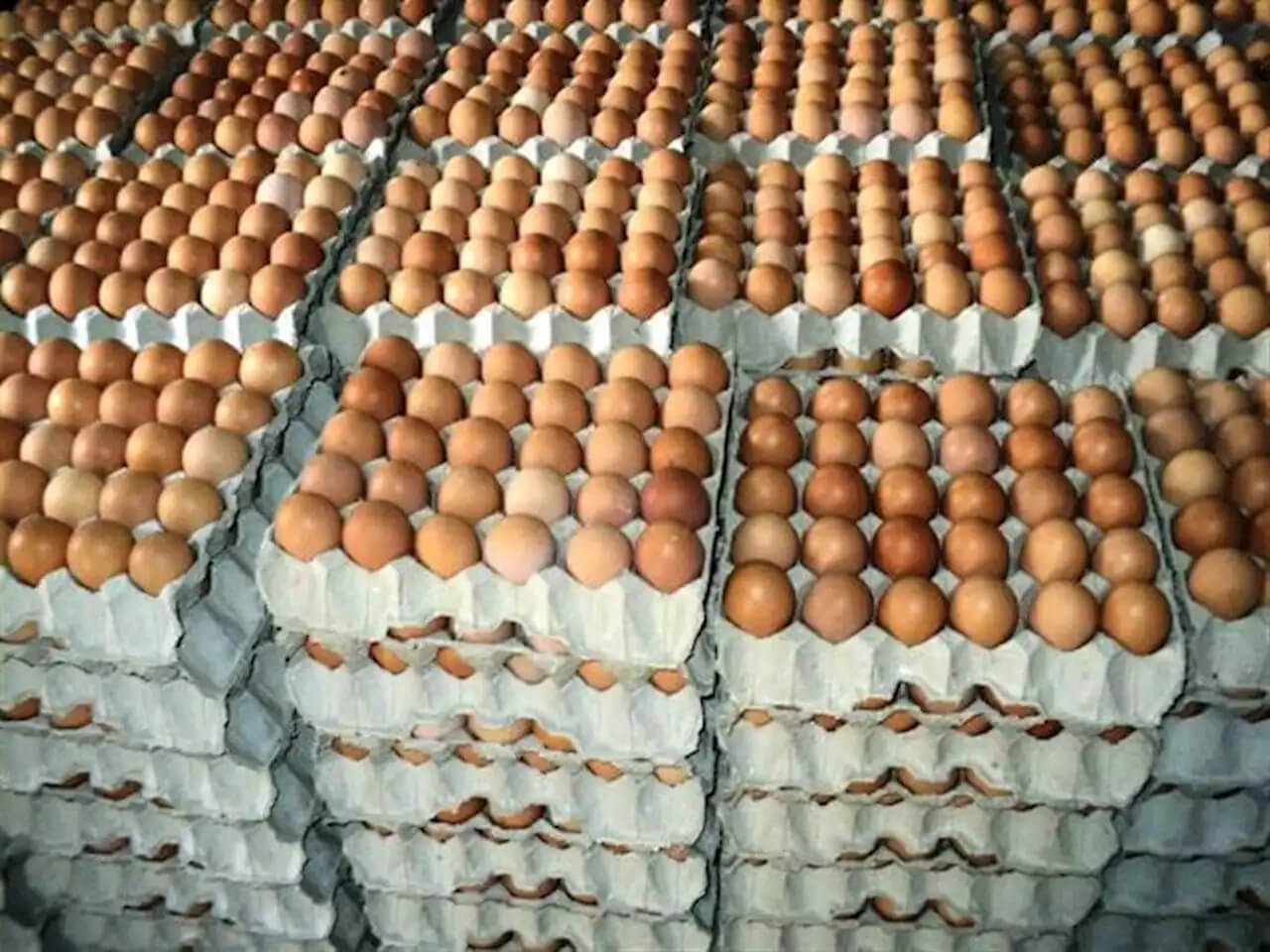
eggs
The cost of egg has continued to rise across many parts of the country since the beginning of the Ramadan fast.
While some farmers blamed the rising price on increased demand, others blamed it on high cost of production, day-old chicks and point-of-lay birds.
Our correspondents who spoke with farmers and customers across the states also noted scarcity of the commodity in some areas.
In Abuja, the Poultry Association of Nigeria (PAN) blamed the high cost of production, not only Ramadan, for the current increase in the price of eggs.
Currently, a crate of eggs sells above N6,000 in some retail stores in parts of the city.
In a statement signed by the secretary of the Poultry Association of Nigeria, FCT chapter, Musa Hakeem, the farmers said the cost of essential production inputs remained significantly high.
“Of particular concern is the sharp increase in the prices of day-old chicks and point-of-lay birds. Additionally, feed cost, veterinary medications, transportation, energy and other operational expenses have continued to exert pressure on poultry farmers,” Hakeem said.
In Kano, since the commencement of the Ramadan fast, the price of egg has increased due to scarcity created by increased demand.
Our correspondent in Kano State reports that before now, a crate of eggs sold at N5,500 but increased to N6,200 or N6,500, where available.
At a major egg dealer’s store, not a single crate was available when Adamu Isah, a customer went to buy.
Isah, a provision store owner, told our reporter that an egg supplier failed to deliver after several promises, leaving him with no option but to look elsewhere for the eggs because his customers kept coming to ask for eggs.
“I ran out of stock and the young woman who usually supplies me eggs promised to deliver on a few occasions but failed, which suggests egg scarcity. And dealers who have it took the advantage to hike the price,” he said.
Our reporter also enquired of eggs in another popular store but was told it was not available.
Yushau Karaye, a tea seller, said he bought eggs between N5,200 and N5,500 but now willing to buy at N6,200 because it is scarce, noting that the fasting period may have created an increase in demand.
“I just checked a store to buy but was told it’s not available. A poultry farmer I bought from at N5,200 no longer comes. It is scarce now,” he said.
The chairman of poultry farmers in Kano, Dr Usman Gwarzo, attributed the scarcity to demand and supply.
He said, “The factors are multifaceted, but largely unmatched demand for eggs, coupled with low layer stock availability.”
In Lafia, Nasarawa State, poultry farmers attributed the situation to the tough times they face due to the high cost of day-old chicks and feed. CEO of a poultry farm, Yusuf Zanwa, revealed.
Speaking with Weekend Trust on the challenges facing the industry, the chief executive officer of a poultry farm, Yusuf Zanwa, said the cost of day-old chicks skyrocketed, with prices ranging from N95,000 to N120,000 per carton, compared to N18,000 to N20,000 before the current administration.
He attributed the high cost of the commodity to the exorbitant price of feed, saying that companies are not passing on the benefits of reduced raw material cost to farmers.
“The prices of maize, suya beans and other materials used in making poultry feed have reduced by 85 per cent, but the feed price has only decreased by less than 5 per cent,” Zanwa lamented.
He said the situation was forcing farmers to sell their chickens and eggs at unprofitable prices, with 1kg of chicken selling between N4,000 and N4,500, and eggs priced between N5,100 and N6,000, depending on size.
Zanwa appealed to the federal and state governments to intervene and reduce the cost of feed, warning that many farmers may go out of business if the situation persists.
“We need the cost of feed to reduce; that’s our main challenge,” he said, adding that the industry is struggling to survive due to the high cost of inputs.
Poultry farmers in the state are calling for government’s intervention to address the numerous challenges facing the industry, the chairman of the Poultry Association, Nasarawa State chapter, Danladi Salihu Yakubu said.
He added, “Farmers are struggling with high cost of feeds, harsh weather conditions and limited access to vaccines, which have led to reduced egg production and increased mortality rate.”
Speaking on behalf of the farmers, Yakubu said, “The birds are no longer laying eggs as they used to. Harsh weather has contributed to low egg production.”
He explained that farmers also faced difficulties in storing eggs as the quality tends to reduce once they have aged. And they rely on day-old chicks from other states, which are often stressed during transportation.
In Niger State, farmers attributed the rise in the price of eggs per crate to low supply.
A former secretary of the Poultry Farmers Association in Niger State, Mohammed Audi Adamu, told Weekend Trust that the price of eggs per crate ranged between N5,000 and N5,500 directly from farms, while retailers resold at N6,000 and N6,500.
“Right now, there is so much demand for eggs. The demand has outweighed supply. The reason is that many farmers who previously closed down their farms when the cost of running the farms was very high have not reopened. The farm gate price of eggs now is N5,000 and N5,500.
“However, the major contributory factor is that although the price of maize dropped since last year, prices of feeds have remained high. I don’t envisage crash in the price of eggs anytime soon because last year, at a point there was clutch and a lot of farmers closed down their farms. And that has impacted supply. Although some farmers are beginning to reopen, the simple thing to do to crash the price is to crash the price of feeds.
“The feed millers are also our major problem because they are cashing in seriously. Maize constitutes over 50 per cent of the ingredients for feed production; and this year, maize was sold as low as N20,000 as against the N70,000 it was sold last year. And the price of feeds has not dropped significantly. So, there is a need for the government to come in with a policy to get the feed millers to sell at low prices,” he said.
Speaking with Weekend Trust, Tanimu Abubakar, a retailer, confirmed that a crate was sold at N6,500 in his shop. He, however, said consumers mostly bought in pieces rather than crates.
Mallam Kolo Idris told our correspondent that he could only buy one crate this Ramadan, which he manages with his family due to high cost.
However, the public relations officer of the Plateau State Poultry Association, Solomon John, told our correspondent in Jos that the price of eggs in the state was still considerable, in the sense that it remains the cheapest across the country despite its good quality.
According to him, a crate of eggs in Jos is still at N5,500, while in places like Nasarawa, Abuja, Kaduna and others, it is N6,000 upwards.
“Besides, the poultry sector is going through a lot of challenges and many people have quit the business. So, the few ones who are still operating are turning out lower quantities into the market; and there is high demand,” he added.