
Why farmers should adopt organic fertiliser- firm
An agricultural development firm, DeBranch has said that organic fertiliser application can increase yield and remains safer for profitable food production. The Chief Executive Officer and co-founder, DeBranch, Sandra Victor-Gwafan, said they have gone to communities to educate farmers on the importance of applying organic fertilisers to boost food production. Victor-Gwafan said that the impact […]
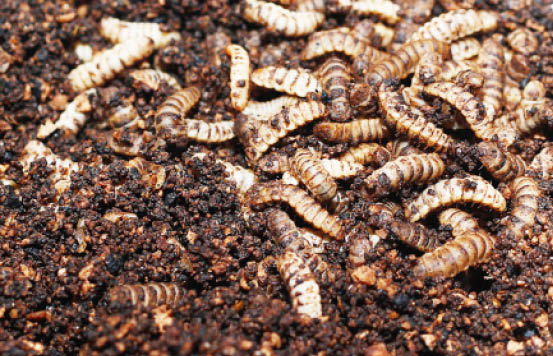
Black soldier fly larvae turn organic waste into organic fertilizer
An agricultural development firm, DeBranch has said that organic fertiliser application can increase yield and remains safer for profitable food production.
The Chief Executive Officer and co-founder, DeBranch, Sandra Victor-Gwafan, said they have gone to communities to educate farmers on the importance of applying organic fertilisers to boost food production.
Victor-Gwafan said that the impact of synthetic fertilisers have not been really good for the soil and had negatively contributed to climate change.
“The DeBranch as an organization is dedicated to agricultural development, food security, and empowering marginalized communities across Nigeria and Africa.
“We are passionate about sustainable agriculture and youth engagement in policy making, as we have actively contributed to regional and international dialogues on food systems and climate resilience.
“For sustainable agricultural practices is the use of organic fertilizers, which is to help reduce climate change impact that is why we give them a sustainable practice with use of organic fertilisers.
“Sustainable practices is by using organic fertilizers, and then when we are talking about organic fertilisers, we are not only saying that it has to be in a particular way. Even the droppings, dungs, rice brown, moringa leaves, compost manure are all organic fertilizers, which many farmers don’t really know about, and that is what Farmers are to do. It is more sustainable compared to synthetic fertiliser.
She called on the government to tackle insecurity in parts of the country, and also deploy incentives that would encourage farmers to boost food production and security to address hunger and reduce hardship.
The young farmer also called for ranches to be established across the country in order to reduce herder-farmer conflicts, and also to ensure that the youth are made to drive the sector.
DeBranch is playing a vital role in strengthening Nigeria’s rice value chain through a training programme with ECOWAS and GIZ, aimed at enhancing food security.
In 2025, she represented West Africa as the sole youth delegate at the Kampala Declaration Head of State Summit, contributing to shaping regional agricultural policies.
Through her work, she continues to advocate for inclusive and sustainable agricultural systems that empower smallholder farmers, especially women and youth.