
Why Katsina wants to establish teaching hospital
From Habibu Umar Aminu, Katsina Health indices of Katsina State are very gloomy and alarming like most states in the Northern part of the country. According to 2013 National Bureau of Statistics reports of every 1,000 child births 155 are lost in Katsina. This newly doubles the national average of 89 deaths/1000. Maternal death was […]

From Habibu Umar Aminu, Katsina
Health indices of Katsina State are very gloomy and alarming like most states in the Northern part of the country.
According to 2013 National Bureau of Statistics reports of every 1,000 child births 155 are lost in Katsina.
This newly doubles the national average of 89 deaths/1000. Maternal death was put at 1,026/100,000 according to MNCH2.
The state has over one million malnourished children being treated at over 15 centres, an average of 20 new malnourished children being admitted weekly across the state.
Some of the major barriers to the provision of essential health care services in the state can be attributed to lack of effective and functional facilities, acute shortage and inequitable distribution of the appropriate cadres of the health workforce to deliver the services where they are mostly needed across the state.
This is in addition to shortage of virtually all cadres of health care workers resulting in inappropriate utilization of hundreds of health facilities in the state for essential services, ranging from antenatal, delivery, postnatal, infant welfare, HIV, malaria, tuberculosis and other emergency health services.
Katsina, with close to eight million people, can only boast of two general hospitals. Residents have to cross over to neighbouring states of Kano, Zamfara, Kaduna, and Zinder in Niger Republic to access quality and effective health care. In all there are 1,698 health centres across the state with concentration of health workers in towns and cities.
Disturbed by these myriad challenges, the state government set out transformation of the health sector by getting the involvement of stakeholders comprising of consultants, doctors and administrators to look at the health sector with a view to coming up with short, medium and long term measures to revolutionise the sector.
Even though, the state has continued to invest in pre-service education of lower health cadres to address these shortages, it has become apparent that unless it takes decisive actions it will take decades for the state to reach the desired threshold of health workforce to deliver quality services.
According to the state governor Aminu Masari, “In an effort to address the dearth of qualified health personnel in government health facilities across the state, the government had employed 530 new staff that include medical doctors, nurses, laboratory technicians, hospital secretaries and other category of health personnel. They have since been posted to various hospitals for effective utilization.”
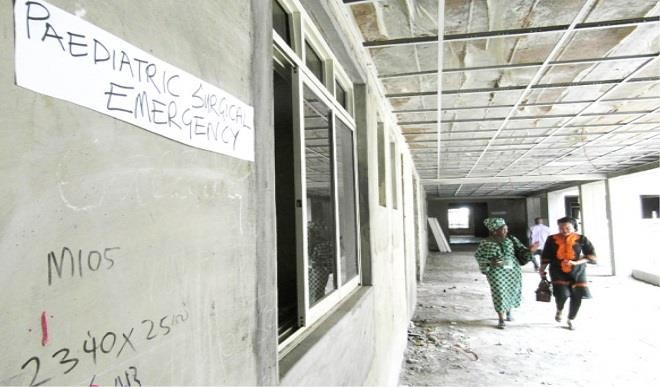
For the long term, the administration intends to establish its own teaching hospital that will in the future address all the challenges in the state health sector.
He said, “Taking into consideration the dilapidated nature of hospitals across the state, the state government had under the 2016 Budget concentrated more on the renovation and upgrade renovation and upgrade of General Hospital Kankia awarded at the cost of N251,552,416.71 and the College of Nursing and Midwifery at the total sum of N94,614,000.00. The renovation and upgrade of General Hospitals Katsina, Funtua and Daura, Phase I and II awarded at an estimated total cost of N857,039,787.70 have reached advanced stage of execution. In all the state has expended about N2 billion for the sector last year.”
The state government had earlier approached the Federal Ministry of Health to make use of its Federal Medical Centre which was turned down even though other states were allowed to use similar facilities. This also prompted the state government to look at its existing structures to see what it can come up with.
For the state Commissioner of Health, Mariatu Usman, there is the need for high level training health institution in the state which will address acute shortage of human resource for health particularly doctors and other mid-level health care cadres.
There is also difficulty in securing admission for Katsina State indigenes to study medicine and the previous government spent huge amounts of money by sponsoring students to study medicine in Jordan and Sudan. “Thus the establishment of Katsina State Teaching Hospital will give the state the opportunity to establish another school of nursing, a school of biomedical engineering, postgraduate residency programme, as well as bringing added tertiary level of care at our door steps,” she said.
Daily Trust gathered that already work on the administrative block of the proposed hospital will commence in the first quarter of this year just as several structures meant for the hospital will come into being at the end of this year.
Some of the major works included upgrade of some existing facilities like the state Eye Centre and others to be part of the new teaching hospital. The state owned Umaru Musa Yaradua University, will start processes for setting up a medical faculty that the hospital will be part of.
State Chairman of Nigeria Medical Association, Dr Suleiman Usman, said the zeal and determination shown by the administration to establish the medical school is commendable and will go a long way in fast trackling development in the sector.
“We know it has gone far, the establishment of the teaching hospital will not only just provide more specialised care to patients, but will accord the state the opportunity to train people in health, nurses and MBBS graduates at a higher level as what is obtained now,” he said.
“If you also look closely, just of recent we have seen the state government has continued to send doctors for further training which is improvement on the last regime, many have gone for residency training, to become fellows, this was stopped over time. This administration has reignited that, I know of about nine doctors, sent for residency training some of our senior colleagues sent for Master’s, Phd,’’ he added.
“I’m aware cardiology is an area the governor has looked at and has approved a candidate be sent for Phd. To improve health care service delivery, if you look into the hospitals properly you find out essential drugs are being provided, facility improved upon,’’ he said.