
Why President Tinubu must rethink 15% fuel tariff
Mr. President, Nigerians have endured subsidy removal, foreign exchange shocks, inflation that eats wages before payday, and reforms that have stretched household budgets to their breaking point. They did so because you asked for time — time to rebuild, to reform, to restore. Now, after this difficult year of sacrifice, the government has confirmed that […]
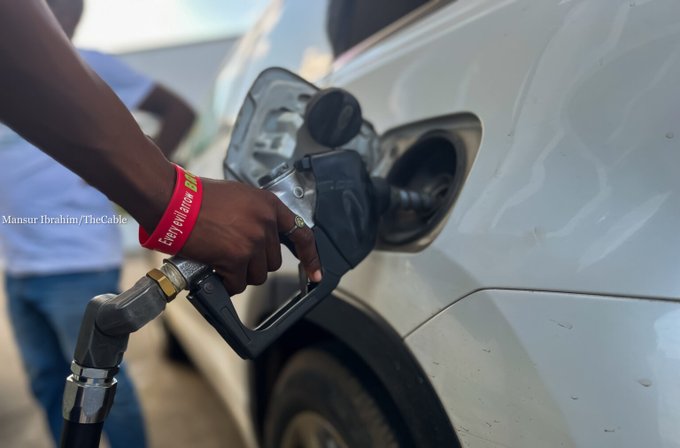
fuel
Mr. President, Nigerians have endured subsidy removal, foreign exchange shocks, inflation that eats wages before payday, and reforms that have stretched household budgets to their breaking point. They did so because you asked for time — time to rebuild, to reform, to restore.
Now, after this difficult year of sacrifice, the government has confirmed that it will introduce a 15 per cent import duty on petrol and diesel. Mr President, this decision risks turning faith into fatigue. It is not reform, it is relapse — and it could undo the fragile trust Nigerians have placed in your leadership.
A Policy Born of Misdirection
According to the leaked memorandum from the State House dated October 10, 2025, the new tariff is framed as a “market-responsive import framework” meant to “safeguard local refining capacity and stabilise the downstream market.” But Nigerians are not fooled by the language of protection when its result is punishment.
This tariff, applied to the Cost, Insurance, and Freight (CIF) value of imported fuel, will raise the landing cost of petrol by roughly N150–N175 per litre. That means the average pump price could surge toward N970 or more per litre, a direct hit to every household, every transport operator, every food vendor, every generator owner.
Inside that closed circle lies the new “fuel cabal,” a collection of powerful businessmen who have aligned themselves with the refinery to dictate who lifts petrol, who gets access, and at what price. The market, which deregulation was meant to free, is now being redesigned for control.
We are told this tariff will “stabilise the market.” But, as history teaches us, monopolies do not stabilise; they suffocate.
Every naira added to fuel prices ripples across the economy. Transport fares rise by 20–30%. Food prices follow. Inflation deepens. The middle class shrinks further. The poor lose what little dignity inflation has not already taken. And all this, in the name of protecting an investor who built a “state-of-the-art” refinery but cannot yet supply half the country’s needs.
Economic policy is not a courtroom for the powerful to plead for privilege. It is a covenant between the government and the people. And that covenant is broken when policy tilts toward a single enterprise.
When global oil markets faced deregulation, from the United States to South Korea, competition — not tariffs — built resilience. Local refiners had to innovate, not lobby for protection. In the 1980s, American refiners survived the global glut not because of tariffs, but because the market forced them to be efficient, invest, and adapt. South Korea’s chaebols, initially sheltered, became efficient only after the state opened competition and removed protectionist crutches.
Economics of Everyday Suffering
Mr. President, economic theory often hides its human cost. But behind every fuel price increase lies a family’s rationed meal, a trader’s collapsed margin, a farmer’s unaffordable transport. The sociology of hardship is cumulative — people can absorb one reform, perhaps two, but a third breaks faith.
Nigerians are patient, but patience is not infinite. Inflation, currency devaluation, and insecurity already weigh heavily. A 15 per cent tariff on fuel is not a correction — it is cruelty wearing the mask of economic reform.
An Appeal to Conscience and Common Sense
Mr President, Nigerians are not asking for perfection. They are asking for fairness. They are asking that your reform legacy not be hijacked by those who trade influence for policy.
You have often spoken of restoring Nigeria’s credibility in the eyes of investors, citizens, and the global community. That credibility depends not on who we protect, but on what we protect — fairness, transparency, and competition.
Viable alternatives exist to protect both the refinery and the community: Promote competition instead of protection by permitting multiple refiners, importers, and marketers to operate simultaneously. Increase transparency by making the cost structures and local refiners’ production capacities publicly accessible. Implement a phased approach, applying tariffs only when domestic supply exceeds dependency on imports. Conduct independent assessments, empowering the FCCPC and NMDPRA to verify if the refinery’s pricing aligns with global standards standards.
Mr President, every leader is tested by the counsel he keeps. Those urging this tariff are not protecting your legacy; they are protecting their leverage. They are not serving Nigeria; they are serving themselves.
You still have the chance to prove otherwise. The Nigeria you promised, open, competitive, compassionate, begins not with the policies we announce, but with the ones we refuse to endorse when they betray the people’s trust.
Rotimi Matthew, a Policy and Governance Analyst writes from Abuja