
Why Wagner’s exit poses grave consequences for Mali — Ex diplomat
The recent announcement by Russia’s Wagner mercenary group of its withdrawal from Mali has ignited fresh concerns about security, sovereignty, and humanitarian access across West Africa. The paramilitary force announced the move on June 6, claiming it had completed its mission against armed groups in the West African nation. Although the paramilitary group has announced […]
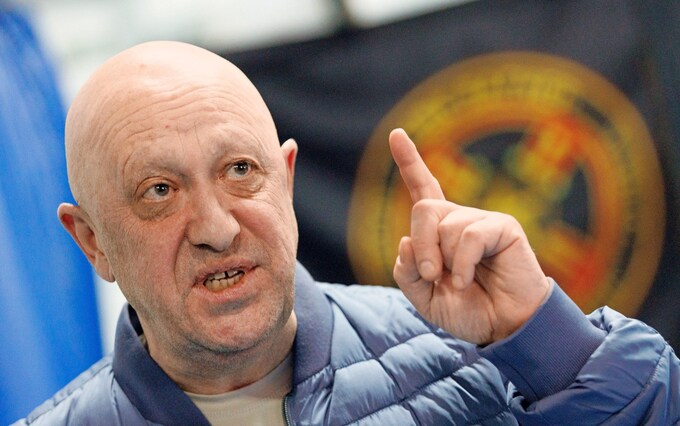
Yevgeny Prigozhin, Wagner Chief
The recent announcement by Russia’s Wagner mercenary group of its withdrawal from Mali has ignited fresh concerns about security, sovereignty, and humanitarian access across West Africa.
The paramilitary force announced the move on June 6, claiming it had completed its mission against armed groups in the West African nation.
Although the paramilitary group has announced its exit from Mali, Russian forces will still play an active role in the country’s security landscape.
Fighters from the Africa Corps – a rival Russian mercenary force intended to absorb Wagner’s activities on the continent – will remain in Mali.
- Philanthropist, 3 Others Remanded for Alleged Murder of Fintiri’s Aide
- ADC chieftain: Kachikwu’s is a mole, his threat against coalition baseless
Russia has an increasing military, political and economic influence in West and Central Africa.
After more than three years of operations in Mali, the paramilitary group claims it has fulfilled its mission by pushing out rebel forces and reinforcing control by the country’s military authorities. But analysts are far from reassured.
In an interview with Daily Trust, Ambassador Usman Sarki, former Deputy Permanent Representative of Nigeria to the United Nations and currently a senior analyst on international affairs, warned that Wagner’s exit is more tactical than conclusive.
He, however, called for earnest appraisal of regional dynamics and called on global institutions to respond with clarity and purpose while noting the dangers of overreliance on foreign security forces and the urgent need for African-led solutions.
Russian influence and regional sovereignty influx Ambassador Sarki likened Russia’s activities in West Africa to part of a larger geopolitical competition, where global powers seek strategic footholds.
He explained that France’s diminishing presence in the region — particularly in Mali, Burkina Faso, and Niger — has opened the door for Moscow to insert itself more aggressively, especially through Wagner and now the Africa Corps.
“Russia now sees opportunities for raising its profile in West Africa through infiltration and substitution of France in these countries,” the ambassador said.
He noted that security alliances and arms supply are central to this recalibration, particularly among members of the Alliance of Sahel States (AES), which includes Burkina Faso, Mali, and Niger.
While Russia’s economic footprint may be limited due to its own internal constraints and Western sanctions, it has capitalised on humanitarian gestures to extend its influence. “By offering grains and fertiliser, Russia managed to cushion some of the hardships caused by the war in Ukraine,” Sarki added, noting that these donations served not just as aid but as diplomatic currency.
However, questions linger about the true nature of Russia’s involvement. Wagner has operated across multiple African nations— Libya, Sudan, Central African Republic, Mali, and Burkina Faso— often with opaque mandates and controversial methods. “The Wagner Group is essentially a state-sponsored mercenary outfit.
“Its operations have followed the trail of mineral wealth, particularly gold, and it is perceived as the
exploitative arm of the Russian state in Africa.”
He pointed out that Wagner’s presence has been met with backlash due to allegations of human rights abuses and overreach. “Its presence is deemed a violation of sovereignty in the countries where it operates.
“Amid growing condemnation, Russia has reportedly created a new entity—Africa Corps—designed to replace Wagner while maintaining its influence. It may be a mere rebranding.
“Whether called Wagner or Africa Corps, the core issue remains the same: foreign powers maintaining armed contingents on African soil must be critically examined from a legal, political, and diplomatic lens,” Ambassador Sarki said.
The ambassador went further, urging African states to reflect deeply on the long-term implications of depending on external military solutions. “Africa has grappled with foreign deployments for decades — from French forces to the U.S. Africa Command. These trends must not be accepted uncritically. Our sovereignty is at stake.”
Security fallout and humanitarian consequences According to the ambassador, the security vacuum left by Wagner’s exit
from Mali could turn out to be even more destabilising than its presence.
He warned that armed groups and rebel factions are likely to ramp up attacks as the Malian government struggles to contain the fallout.
“Wagner’s exit will likely pave the way for scaling up attacks against government forces.
“Rebel factions and other contenders for power will attempt to reclaim influence, especially in northern regions like Timbuktu and Mopti,” he explained.
He stressed that Mali has been in a state of protracted instability since 2010, marked by the erosion of government capacity, deep-rooted insurgencies, and mounting social grievances.
“The country continues to experience severe insecurity, and Wagner’s departure will only exacerbate these challenges.”
Beyond security concerns, the ambassador highlighted an unsettling development of the humanitarian impact.
“The immediate consequence is an increase in internal displacement. Civilians, already suffering for years, may be forced to flee their homes yet again,” he said.
He explained that Wagner’s presence — though controversial — did offer a semblance of protection for aid distribution and relief logistics. “With their withdrawal, we could see more difficulty in delivering humanitarian assistance. There may no longer be a force strong enough to guarantee safety for civilians and relief workers,” Ambassador Sarki added.
He also pointed out another area of concern, which is the proliferation of unregulated exploitation of natural resources. “Illegal mining will spike, draining government revenues and intensifying conflict.
“This is particularly dangerous in regions where armed groups fund operations through mineral extraction.”
When asked whether Wagner’s exit signals a true disengagement or simply a tactical maneuver, the ambassador was cautious. “We don’t know if this retreat is a strategic repositioning or merely a moment of regrouping.
“The geopolitical stakes and access to resources make a full withdrawal highly unlikely,” he said.
He argued that Wagner’s evolution into the Africa Corps is a method of continuity. “I believe Wagner will metamorphose into the Africa Corps and merge into formal Russian deployments,” Sarki said, citing Moscow’s interest in maintaining influence while avoiding the internal risks posed by rogue mercenary forces.
“This prevents battle-hardened operatives from returning to Russia and becoming uncontrollable— something we saw with the Prigozhin rebellion,” he added, referencing the Wagner founder’s short-lived mutiny and subsequent death in a plane crash in 2023.
Ambassador Sarki also spoke on the question of accountability. With Wagner accused of human rights abuses in several countries, ensuring justice under a new security arrangement remains a complex challenge.
“It is difficult to speculate where non-state actors are involved.
“ButMaliandRussia,ascontracting parties, bear the responsibility to uphold international law and ensure human rights compliance.”
He called for adherence to conventions like the Hague and Geneva frameworks and urged international bodies to intervene more assertively.