
Zoning serves elites, not Nigerians – ADC aspirant, Hayatu-Deen
Presidential aspirant on the platform of the African Democratic Congress (ADC), Mohammed Hayatu-Deen, has dismissed Nigeria’s zoning arrangement as an elite-driven political practice that does little to address the country’s pressing governance and development challenges. He argued that the real measure of leadership should be service delivery, not regional rotation, insisting that Nigerians are more […]
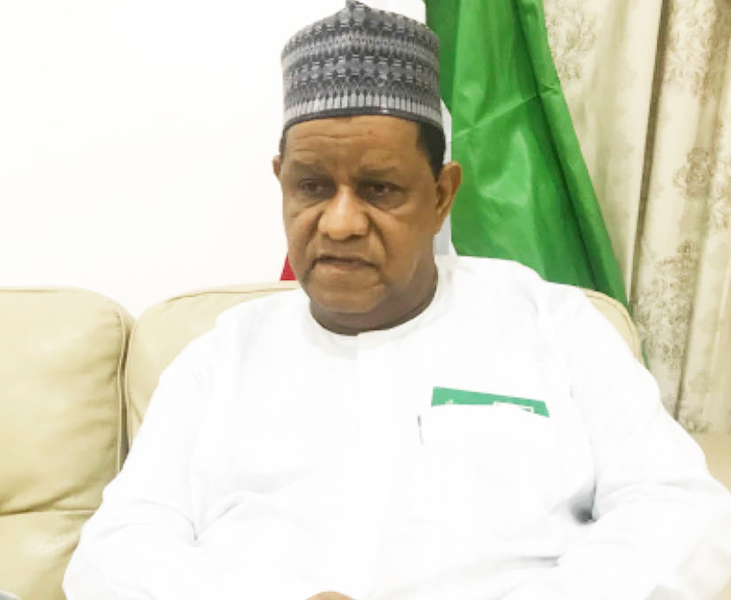
Presidential aspirant on the platform of the African Democratic Congress (ADC), Mohammed Hayatu-Deen, has dismissed Nigeria’s zoning arrangement as an elite-driven political practice that does little to address the country’s pressing governance and development challenges.
He argued that the real measure of leadership should be service delivery, not regional rotation, insisting that Nigerians are more concerned with food security, jobs, healthcare, education and economic stability than with where the president comes from.
Hayatu-Deen, an economist and former chairman of the Nigerian Economic Summit Group (NESG), made the remarks during an interview in Abuja, where he said governance must be judged strictly by its impact on citizens’ daily lives rather than ethnic or regional considerations.
He maintained that zoning has become a political instrument used by elites, warning that it distracts from urgent national priorities such as poverty reduction, inflation control and the provision of basic social services. He also stressed that leadership is a “sacred trust” that should be guided by competence, character and commitment to national development.
Beyond the zoning debate, the ADC aspirant expressed confidence in his party’s ability to compete in the 2027 general elections despite ongoing legal challenges, which he described as largely without merit. He said the party would overcome its internal and external hurdles by strengthening discipline, upholding party supremacy and rallying behind whoever emerges from its primaries. According to him, a united opposition front is necessary to mount a credible challenge against the ruling All Progressives Congress (APC), which he said currently wields significant institutional advantage.
Hayatu-Deen also called for stronger political awareness among citizens, warning that Nigeria risks weakening its democratic space if voters are not adequately empowered to hold leaders accountable. He urged Nigerians to focus on candidates who demonstrate capacity and commitment to national progress, rather than those who rely on identity-based politics.
Below are excerpts from the interview:
You withdrew from the 2022 presidential race over concerns about the monetisation of politics. Are you seeing any such signs now within the ADC?
I have made no contributions. Nothing has been collected from me. Nobody is collecting anything. If anything, the leadership is very resistant to taking money. That has been my personal experience. Apart from paying my party dues, nothing at all.
So, you are confident that the primaries will not be monetised?
How is it going to be monetised? Unless you go out into the field and party members begin collecting money from one ward or another. Otherwise, these things start from the top. Once the leadership sets standards and demonstrates them by personal example, everyone else falls in line. The ADC is amazing in that regard.
There is also talk about a possible consensus arrangement. Are other aspirants asking you to step down? And would you consider stepping down for anyone?
I will not step down, unless the person wins. Then I am behind that person.
The party will decide. When it says, “This is the person we have chosen,” based on very elaborate criteria, I will give my input. Then, in a closed session, they will deliberate and make a decision. Once they announce, “This is the person we have picked,” I will support that person.
You are a numbers person. What gives you confidence that the ADC, whoever emerges as candidate, stands a real chance in the next election, given Nigeria’s voting patterns and the legal challenges facing the party?
Life is full of opportunities and challenges. When you encounter both, you take action to maximise the opportunities and mitigate the challenges.
These legal challenges were not of our making. They were thrown at us, and in my humble opinion, most of them lack merit. They are designed to stop us. So far, we have been managing them well.
Secondly, we believe strongly in party supremacy, which distinguishes the ADC from many other parties. In the First Republic under Abubakar Tafawa Balewa, and in the Second Republic under Shehu Shagari, parties were supreme. The president subjected himself to party direction.
I recall that every Wednesday during the Shagari administration, the president would go to party headquarters. Adisa Akinloye would preside over meetings where party programmes were aligned with government actions. Decisions were taken, and the president implemented them.
Over time, party authority has eroded, and individuals now act with too much latitude.
For us in the ADC, once primaries are concluded and a candidate emerges, we will collectivise our energies, imagination and resources to support that candidate, in line with party values and policies, and prosecute a strong campaign.
Once in office, the party will hold its elected officials accountable to ensure they deliver on those policies. That does not mean rigidity. Policies can be adjusted based on feedback and changing realities.
At the same time, no governor or president will be deprived of constitutional powers. But no one should become a runaway dictator. There must be checks and balance. Charity begins at home.
There are concerns that the ADC may not even make it onto the ballot due to ongoing legal challenges. Also, there are reports suggesting possible collaboration between opposition parties ahead of 2027. What is your take?
I have not seen that particular comment, but 24 hours is a long time in politics. Anything is possible, and politicians make statements for different reasons. If such discussions are happening, they may well be taking place privately among party leaders.
What I will say is that the APC is strong, with control over many levers of power; the judiciary, the electoral body, and security and intelligence agencies.
For the opposition, the task is to build bridges and set aside individual ambitions in order to collaborate on shared goals. That is how to give the APC a competitive challenge. The Nigerian people deserve a choice. That is the essence of constitutional democracy; freedom of association and political participation.
Ultimately, power belongs to the people, ordinary Nigerians across the country. Unfortunately, political enlightenment remains low. Hunger is widespread, and many citizens do not fully appreciate the power they hold to elect, remove and hold leaders accountable.
Take Ghana, for example. Literacy levels are high, and you saw how John Mahama returned to power. Nigeria, in that regard, has taken significant steps backwards.
As a country that once championed democratic values across Africa, we are now witnessing a shrinking political space. Some of this is internal, but some is externally influenced.
If we tolerate these trends because they favour a particular government today, we may regret it tomorrow. Over time, democracy could become hollow, existing only in name, while in practice it resembles dictatorship.
On the issue of zoning or rotational presidency, both you and former Vice President Atiku Abubakar are from the North. If either of you emerges as the ADC candidate, how would you convince voters who believe the South should produce the next president?
I understand and respect that sentiment. But I have always believed that government exists to deliver value to the people and improve their quality of life.
People should have decent housing, access to food, jobs, and a stable economic environment with low inflation. Retirees should have security through pensions. Education and healthcare must be affordable. Even recreational facilities matter, they contribute to overall wellbeing.
That is what makes government relevant.
Now, consider a pregnant woman in distress, rushing to a hospital that lacks basic supplies. What does zoning mean to her in that moment?
Or a jobless citizen from the same region as someone in power, who has never met that person, how does zoning improve his situation?
Fundamentally, zoning is an elite construct, an elite’s game to grab power. When you take the oath of office, whether on the Bible or the Qur’an, you commit to serving all Nigerians. That is a sacred responsibility.
Olusegun Obasanjo served for eight years. He was energetic and delivered on many fronts. He had his shortcomings, including the third-term controversy, but if you look at the core performance, he delivered. That is what mattered, not where he came from.
It is important for informed voices to help Nigerians understand that divisive narratives are often driven by elite interests.
If someone like Peter Obi emerges and demonstrates leadership akin to figures like Gandhi or Abraham Lincoln, Nigerians will rally behind him. But if he becomes an ethnic jingoist, good luck to him, both here on earth and before God Almighty. Leadership is a sacred trust. You are not supposed to discriminate because people do not come from your area or do not share your religion.
Unfortunately, social media has amplified these divisions over the past 15 to 20 years. What Nigeria needs is the best and the brightest, leaders who understand governance and are deeply committed to putting the country on the global map. Those are the considerations that should guide voters.