
Aguocha, Agbedi voiced disapproval in House of Reps
In the House of Representatives, the ratification process also faced scrutiny. Rep Obi Aguocha (Abia, LP) raised a Point of Order, drawing attention to the need for a quorum as required by the Constitution before proceeding. Aguocha noted that Section 305(2) of the 1999 Constitution requires two-thirds of all members of the House to form […]
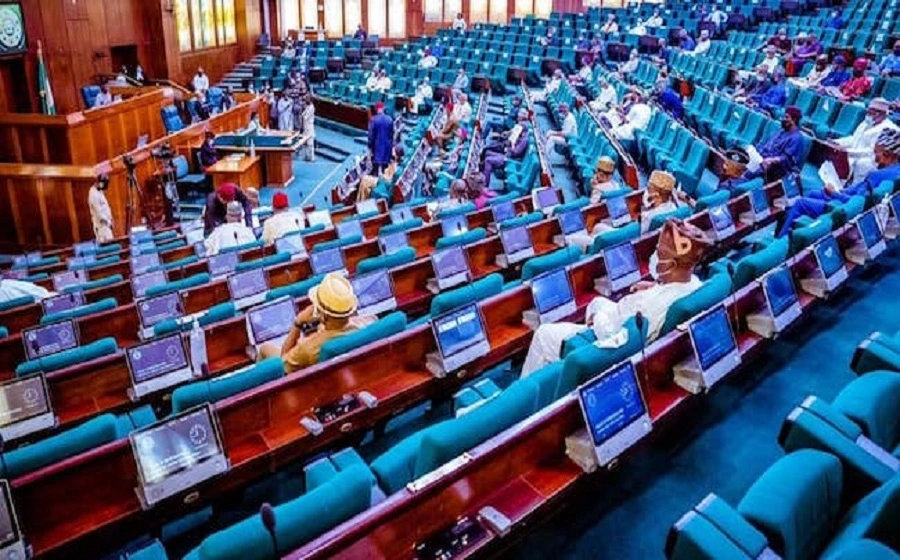
House of Reps
In the House of Representatives, the ratification process also faced scrutiny. Rep Obi Aguocha (Abia, LP) raised a Point of Order, drawing attention to the need for a quorum as required by the Constitution before proceeding.
Aguocha noted that Section 305(2) of the 1999 Constitution requires two-thirds of all members of the House to form a quorum and urged Speaker Tajudeen Abbas to conduct a headcount of lawmakers present. His intervention led to a shouting match and a rowdy session, with the Speaker urging calm.
Speaker Abbas assured lawmakers that the attendance register was being taken and that the quorum would be announced in due time. Rep Fred Agbedi (Bayelsa, PDP) also emphasised the need for transparency, stating: “Our constitution has prescribed what to do. It is in the integrity and interest of this House, Mr. Speaker, for you to announce the quorum as we are sitting, so that Nigerians will know that we are not circumventing the Constitution.”
But after adopting the proclamation request, Speaker Abbas announced that 243 members were present during the sitting, meeting the required two-thirds quorum.
- Alliance talks: Can SDP sustain momentum as third force?
- President Tinubu must reform Nigeria’s flawed visa reciprocity policy
A lawmaker, who asked not to be named, told Daily Trust that the announced figure of 243 members present during the plenary session might not accurately reflect the actual attendance. The lawmaker claimed that many members were absent, and the House Leader’s assertion that absent lawmakers had given their consent made it impossible to verify the authenticity of the announced figure.
According to another lawmaker, the events in the National Assembly were “meticulously planned” during a meeting between the president and the leadership of the National Assembly.
“What happened during plenary was carefully calculated and predetermined to fit the political projections for 2027,” the senator said.
“This is high-level politics at play. That’s why the president’s request was not met with stiff opposition,” he added.
Meanwhile, more condemnations from prominent Nigerians have trailed President Tinubu’s suspension of elected officials in Rivers State, with former President Goodluck Jonathan, Nobel Laureate Wole Soyinka and former Senate President Adolphus Wabara among the latest to express their opposition.
However, the presidency defended the move, describing it as a necessary action to prevent the state and the country from descending into chaos.
Speaking as chairman at the Haske Satumari Foundation Colloquium in Abuja on Saturday, Jonathan expressed disappointment over the removal of elected officials, stating that the move could tarnish the country’s image.
“These actions by key actors in the executive and legislative arms of government paint the country in a negative light,” he said.
Jonathan, who noted that it is uncommon for former presidents to comment on political issues to avoid heating up the polity, said he felt compelled to speak due to persistent calls from Nigerians, particularly as a prominent son of the Niger Delta.
“The situation in Rivers State is like an Indian proverb which says that if somebody is really sleeping, you can easily wake them up, but if the person is pretending to sleep, it will be difficult to wake them,” he said.
“The key actors in Nigeria, from the executive to the legislature and judiciary, know the correct thing to do. But they are refusing to do it. They are pretending to sleep, and waking such a person is extremely difficult because the person knows the right thing—a clear abuse of office and power cutting across all three arms of government.
“Why is it that our passport is not valued that much? Why is it that Nigerians are not given the kind of treatment we’re supposed to receive at international airports? Sometimes, we think it’s because of ‘yahoo’ boys or 419. Not only them; yes, they are part of the problem. But whatever happens in the country—decisions taken by the executive, parliament, and judiciary—affects everybody.
“For example, no businessman will bring his money to invest in a country where the judiciary is compromised; where government functionaries can dictate to judges what judgment they will give. No one brings their money to invest in such an economy because it is a big risk. So, whatever we do affects everybody, and if we want to build a nation where our children and grandchildren will live, no matter how painful it is, we must strive to do what is right.”