
Choose a path for our refineries
The recent clarification by the Nigerian National Petroleum Company Limited (NNPCL) that it has no plans to sell its four refineries has added to the company’s unstable reputation in the eyes of Nigerians. It has also deepened its trust deficit in the minds of Nigerians. This denial came after the company hinted at exploring options […]
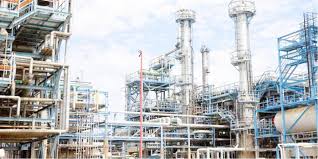
porth refinery
The recent clarification by the Nigerian National Petroleum Company Limited (NNPCL) that it has no plans to sell its four refineries has added to the company’s unstable reputation in the eyes of Nigerians. It has also deepened its trust deficit in the minds of Nigerians. This denial came after the company hinted at exploring options for the refineries, including a possible sale, sparking widespread debate and concern among stakeholders.
When the Group Chief Executive Officer Bashir Bayo Ojulari said “all options are on the table” regarding the refineries’ fate during an interview with a media organization in Vienna, Austria, Nigerians interpreted this as a likely plan to sale the refineries. This interpretation is understandable, given the intractable story of turn around maintenance of our refineries for more than two decades.
However, few days later in Abuja, Ojulari made a U-turn ruling out sale of the Port Harcourt Refining Company and those in Warri and Kaduna.
He reaffirmed the company’s commitment to completing high-graded rehabilitation and retention of the plants.
- Owo church attackers linked to Al-Shabaab – DSS
- FOMWAN celebrates 40 years of women’s empowerment in Kaduna
Ojulari said that his new position isn’t a shift but informed by ongoing detailed technical and financial reviews of the Port Harcourt, Kaduna and Warri refineries.
While progress is being made on all three, he said the emerging outlook calls for more advanced technical partnerships to make them work.
The gross ineptitude of successive managements has led to the refineries becoming symbols of incompetence and wastefulness. Many Nigerians welcomed the possibility of selling the refineries, not as a surprise, but as a long-overdue solution to the perennial problems plaguing the facilities. The refineries, which were once expected to be a cornerstone of Nigeria’s economic development, have instead become a liability, with recurring shortages of refined products and billions of dollars spent on repairs and maintenance.
Regrettably, those who have led the company have displayed moral failure in managing the assets. They oversaw the destruction of great national assets that could have lifted Nigeria to the ranks of prosperous oil and gas nations. Instead, the company’s leadership has been characterised by ineptitude, corruption, and a lack of transparency, leading to the current state of disrepair and dysfunction.
Consequently, Nigeria, until the coming of Dangote Refinery, was unable to produce refined products. The refineries have a combined capacity of 445,000 barrels per day, but recurring shortages of refined products became our global identity. We became a laughingstock in the eyes of our neighbours and earned an inglorious national accolade of those who have resources but cannot manage them. Most Nigerians believe they have had enough of NNPC and its shenanigans with regard to the refineries. They believe there is just no need to continue to plough money into refineries that have invariably become bottomless pits.
It is no longer news that Nigeria has lost billions of dollars on phony Turn-Around Maintenance programmes, which have consistently failed to deliver the expected results. For example, the federal government approved $1.5 billion for the Port Harcourt refinery’s renovation in March 2021. The government also approved $1.48 billion for the rehabilitation of the Warri and Kaduna refineries. However, despite the expiration of the completion time frame, there is still no production from the plants.
More disturbing is the fact that successive managements have continued to deceive Nigerians on the maintenance projects.
The truth remains that time and technological advances have reduced the value of the plants. The old Port Harcourt refinery was built in 1965, Kaduna in 1976, Warri in 1978, and New Port Harcourt in 1985. After 12 years of operation, the entire system of the plants typically requires recalibration. However, instead of investing in modernization and upgrading the facilities, the NNPC has continued to throw money at the problem, with little to show for it.
The lack of accountability and transparency in the NNPC’s management of the refineries has contributed significantly to the current state of affairs. The company’s leadership has failed to provide Nigerians with accurate information about the refineries’ performance and the challenges facing them. Instead, they have resorted to making promises and announcements that are often not fulfilled, further eroding the public’s trust.
As the NNPCL navigates the complex fate of its refineries, one thing is clear: the status quo is unsustainable. A radical transformation is needed to break the cycle of inefficiency and mistrust that has plagued these national assets for far too long. Nigerians deserve better than perpetual disappointment and waste. It’s time for bold decisions and a new path forward, prioritizing transparency, accountability, and the nation’s economic interests.