
Dangote refinery shouldn’t be undermined – Sanusi, Kukah, Others
Some leaders of thought yesterday weighed in on the industrial dispute involving the Dangote refinery and the Petroleum and Natural Gas Senior Staff Association of Nigeria (PENGASSAN), describing the refinery as an “audacious step forward” which should not be undermined but strengthened. This was contained in a joint statement signed by 12 leaders including Sarkin […]
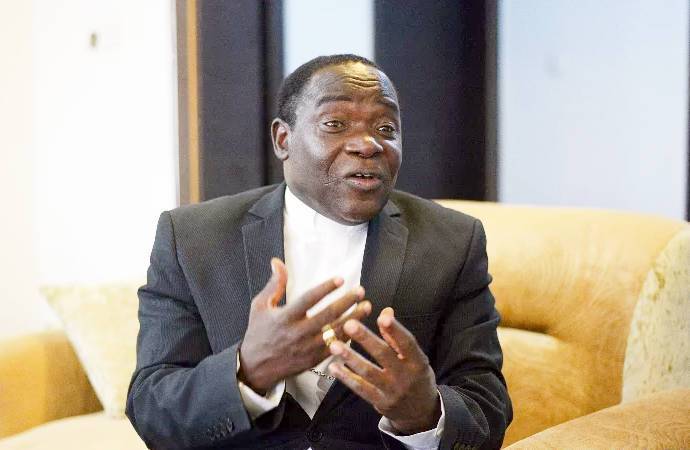
Bishop Matthew Kukah
Some leaders of thought yesterday weighed in on the industrial dispute involving the Dangote refinery and the Petroleum and Natural Gas Senior Staff Association of Nigeria (PENGASSAN), describing the refinery as an “audacious step forward” which should not be undermined but strengthened.
This was contained in a joint statement signed by 12 leaders including Sarkin Kano, Muhammad Sanusi II, Bishop Hassan Kukah and Atedo Peterside.
Others include, Osita Chidoka, Opeyemi Adamolekun, Ibrahim Dahiru Waziri, Abubakar Siddique Mohammed, Obonganwan Barbara Etim James, Senator Sola Akinyede, Dudu Mamman Manuga, Arunma Oteh and Dr. Salamatu Hussaini Suleiman.
In the statement, they expressed concern over the recent disputes and disruptions surrounding the Dangote Refinery, saying the episode raised important lessons for Nigeria’s economic future.
“For decades, Nigerians endured the collapse of government-owned refineries, the waste of trillions of naira in subsidies, and dependence on fuel imports. These failures left citizens exposed to scarcity, inflation, and insecurity. In this context, the Dangote Refinery represents
more than a private venture; it is a national symbol of what bold domestic investment can achieve.
“Already, the refinery has begun to ease supply pressures, with petrol prices in some parts of the country dropping from around ₦1,500 per litre to about ₦820 — a 55% reduction. This impact on transport costs and food prices offers Nigerians a glimpse of how local productivity can improve daily life. It also signals to investors at home and abroad that industry, rather than speculation, can still thrive in Nigeria,” they submitted.
According to them, the refinery is a national lifeline, with profound consequences for jobs, energy security, and inflation.
However, they emphasized that workers’ rights must be respected as the Constitution guarantees the right to organise and to demand fair treatment.
They maintained that no enterprise can succeed without motivated, fairly treated workers.
“Markets and productivity must be protected. The right to organise cannot become a license to hold the economy hostage. Productive enterprises that lower costs and create jobs must be safeguarded.
They urged that the spirit of constructive engagement become a template for the future.
“This crisis is not about a refinery or any other business. It is about the direction of our economy: whether we will continue in a cycle of scarcity and rent-seeking or build a future anchored on productivity, fairness, and shared prosperity. The Dangote refinery represents an audacious step forward. It should not be undermined but strengthened — as a signal to other industrialists that investing in Nigeria’s future is worthwhile,” they added.