
Dialogue, constructive engagement better than censorship, coercion – Reps Speaker
Speaker of the House of Representatives, Abbas Tajuddeen, has said dialogue, education and constructive engagement rather than censorship or coercion should drive the efforts to fight the challenges posed by misinformation, digital security threats, and the misuse of online platforms. He stated this in a keynote address at the ‘New Media Exchange 2025’ organised by […]
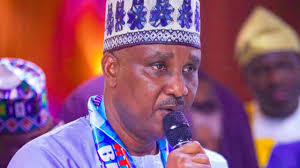
tajudddeen abbas
Speaker of the House of Representatives, Abbas Tajuddeen, has said dialogue, education and constructive engagement rather than censorship or coercion should drive the efforts to fight the challenges posed by misinformation, digital security threats, and the misuse of online platforms.
He stated this in a keynote address at the ‘New Media Exchange 2025’ organised by his office at the House of Representatives on Monday.
He said ‘New Media Exchange 2025’ was an unprecedented engagement designed to formalise dialogue between the Nigerian Parliament and the dynamic community of digital actors.
With the theme “Smart Cities and Ethical Media: Navigating the Role of Policy in National Development”, the event invites stakeholders for a critical reflection on the intersection of governance, innovation and responsible communication.
- 2027: INEC urges N/Assembly to expedite action on electoral legal framework
- PenCom to recover N1.3trn owed journalists by newspaper outfits
He said, “We are not unmindful of the challenges posed by misinformation, digital security threats, and the misuse of online platforms. Nonetheless, our approach shall remain rooted in dialogue, education and constructive engagement, rather than censorship or coercion.
“Our discussions will interrogate issues such as the legislative response to digital responsibility, strategies for countering disinformation, the promotion of national values within the digital space, and the role of public policy in shaping smart infrastructure and sports development.
“A highlight of this exchange will be the participation of a cross-section of young Nigerians in a simulated legislative process. Through this exercise, we intend to make the parliamentary process more transparent and relatable, affirming that governance must be both participatory and comprehensible.”
In a presentation titled, “Balancing Freedom of Speech Against National Interest”, the former Director-General, Bureau of Public Service Reforms, Dr Joe Abah, said that since independence, the 1960 Constitution guaranteed freedom of expression.
He added that it was reinforced in the 1979 Constitution, and Section 39(1) of the 1999 Constitution states that “Every person shall be entitled to freedom of expression, including freedom to hold opinions and to receive and impart ideas and information without interference.”
Dr Abah further added that freedom of expression in Nigeria had been reinforced by other instruments such as the African Charter on Human and Peoples’ Rights, the Universal Declaration of Human Rights and the International Covenant on Civil and Political Rights.