
Farmers warn of looming food crisis in Benue
Farmers in Benue State have raised the alarm over an imminent food crisis following soaring production costs and crashing market prices. Our correspondent reports that some farmers in the state decried their present predicament, noting that the situation has created a dangerous imbalance that could discourage future farming and endanger national food security. A farmer, […]
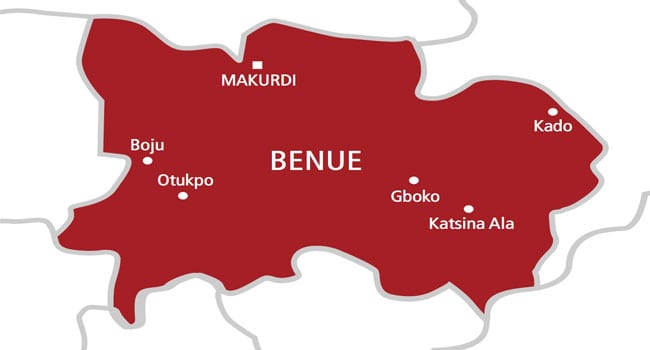
Farmers in Benue State have raised the alarm over an imminent food crisis following soaring production costs and crashing market prices.
Our correspondent reports that some farmers in the state decried their present predicament, noting that the situation has created a dangerous imbalance that could discourage future farming and endanger national food security.
A farmer, Ernest Atoje, described this year’s harvest as “worrisome and fearful.”
He said farmers are selling their crops at giveaway prices that cannot offset the cost of inputs.
- Disability commission unveils national accessibility certificates to promote inclusion for PWDs
- Suspected child thief set ablaze in Delta
“A bag of golden fertiliser went for N60,000, yet millet sells for less than N30,000 per bag. Groundnut is N20,000 per bag, while cassava for garri is just less than N10,000 per basin compared to over N50,000 before. How will farmers pay for labour or loans?” he asked.
Atoje blames the crisis on the reopening of borders for previously banned food imports and the influx of genetically modified produce, which he said are driving down prices.
“The government must intervene now. At least 50 percent subsidy or a commodity board to stabilise prices will give farmers hope to keep producing,” he said.
Similarly, Ekoja Elijah, another farmer lamented that his cassava was already wasting in the farm because of the crash in price which could in no way pay for the cost of conveying the harvest alone to the market.
“It was better left in the farm to rot because as we speak the transport cost for a tricycle to bring the harvest to the market is far higher than what it would be sold for. So what happens to labour and input cost? Right now I’m done with farming unless the situation improves,” Elijah posited.
For Vitalis Tarnongu, Chairman of the Federation of Agricultural Commodities Association of Nigeria (FACAN) in Benue, the situation is even more dire. After touring farms and markets, he found farmers openly declaring they may not return to the fields next season.
“Imagine a bag of millet is now N30,000, compared to N100,000 last year. Even 100 bags cannot cover the cost of cultivating one hectare today,” Tarnongu lamented.
He noted that across all crops such as maize, beans and cassava, the pattern is the same with skyrocketing input costs and falling produce prices.
“A tractor plow costs N50,000 per hectare, harrowing N45,000, fertiliser N65,000 per litre, and insecticides over N8,000 per litre, multiplied by the required number and cost of production per hectare. Farming is no longer business, it is loss-making,” he explained.
The FACAN chairman insisted that subsidies are the only way out as he pointed to countries where governments heavily subsidise farmers to keep them in business, warning that without similar measures in Nigeria, “the danger ahead is grave. Many farmers will abandon agriculture, and food security will be at risk.”
Tarnongu added that with September harvests already proving unprofitable, both farmers and coordinators want urgent government action before December, stressing that without intervention, Benue’s farmlands, the so-called food basket of the nation, may soon turn into fallow fields, leaving millions at the mercy of hunger and food inflations.