
Is Nigeria not gravitating towards a one-party state?
Nigeria’s political big guns, who belong to political parties other than the ruling APC, are leaving their political parties in droves for the APC. It is the modish, expedient, and convenient thing for them to do, as joining the APC will serve their personal and political interests. That tendency to defect to the APC, which […]
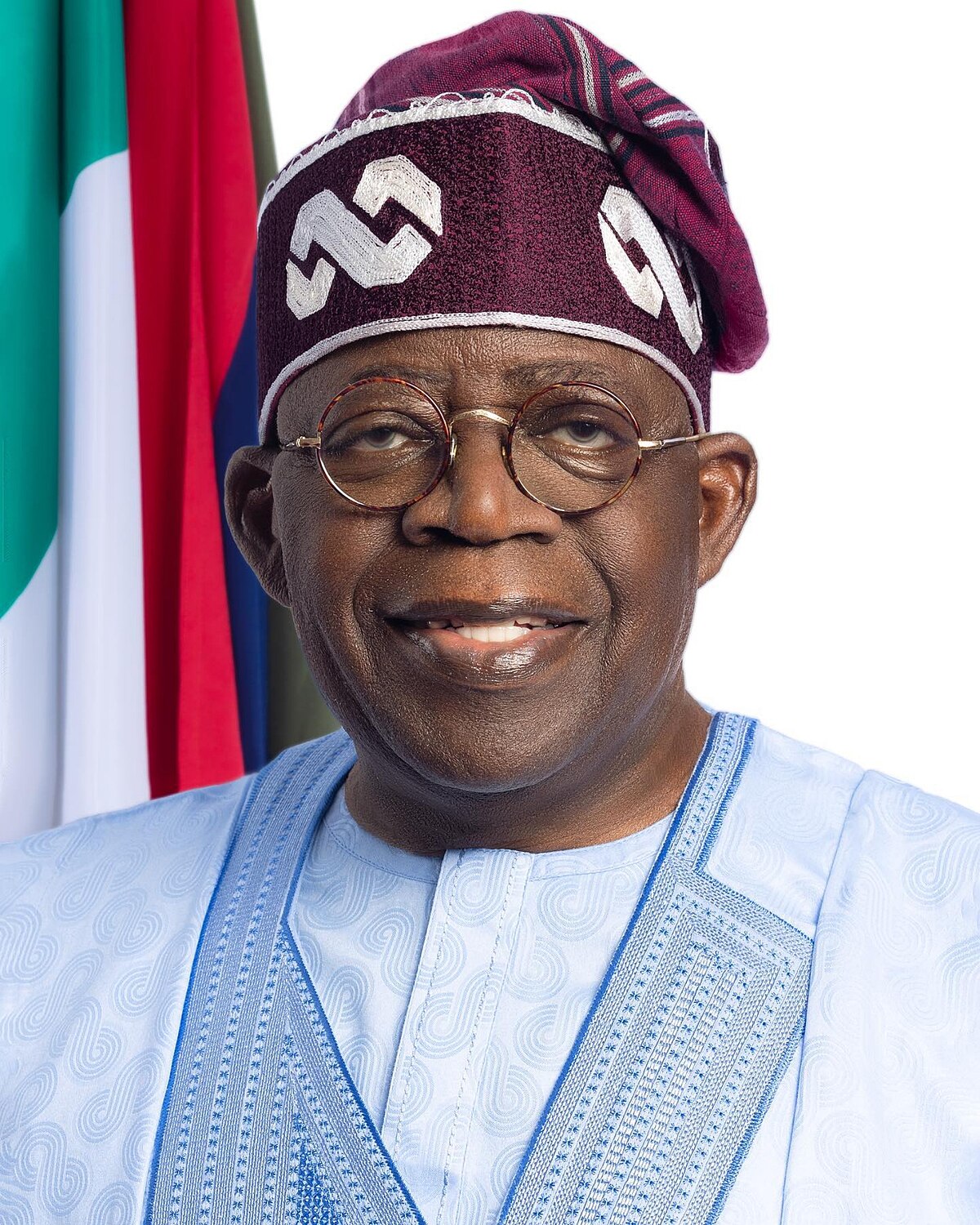
President Bola Ahmed Tinubu
Nigeria’s political big guns, who belong to political parties other than the ruling APC, are leaving their political parties in droves for the APC. It is the modish, expedient, and convenient thing for them to do, as joining the APC will serve their personal and political interests. That tendency to defect to the APC, which exists among non-APC members, is indicative of the fact that Nigeria risks becoming a one-party state.
But it was not like this in the past. Since the formation of political parties started in Nigeria in 1922, Nigeria has always practised a multi-party system in the true sense of the word. Even in the colonial era, when the country was in political ferment, owing to our freedom fighters’ agitation for Nigeria’s political emancipation, we had such political parties as Action Group, the Northern People’s Congress, Northern Elements Progressive Union (NEPU), the National Council of Nigeria and Cameroons, United Middle Belt Congress, and others.
The aforementioned political parties, whose ideological frameworks made them distinct from one another, presented candidates who vied for elective posts. Those political parties had charismatic, flamboyant, erudite, and morally upright leaders whose leadership of their political parties were in accord with their parties’ ideologies.
So, not surprisingly, when Chief Obafemi Awolowo, a revered lawyer and mystic, became the premier of the Western Region, he implemented welfarist policies, which were in accord with the Action Group’s socialist ideologies. His implementation of the Action Group’s welfarist policies offered many people from poor homes the opportunity to acquire tertiary education. His leadership of the region was undergirded by his strict adherence to the Action Group’s socialist tendencies and principles.
- Soldiers raid bandits’ camp in Plateau, kill 1
- Joseph Akaagerger, a “symbol of integrity, wisdom and courage”
But our political culture has evolved, fundamentally and radically, with time. Although we are practising a multi-party system, all the political parties in the fourth republic are much of a muchness. The ones that lay claims to being rightist have the same characteristics or features as those that pretend to be leftist. They are all ideologically hollow. And our politicians are wont to change political parties at the drop of a hat to achieve their political goals.
The incontrovertible fact is that our politicians perceive political parties as platforms for solely winning political posts at different governmental strata. So, nowadays, Nigerian politicians do not care a hoot about political ideologies and economic theories, which they would abide by and execute to expedite our national development.
As a result, since the inception of the fourth republic, not a few well-known Nigerian politicians have become political journeymen. Their political peregrination has become legendary because they move from one political party to another in the same way as cattle herders herd their cattle from one grassland to another. The former Vice-President of Nigeria, Alhaji Atiku Abubakar, switched political parties several times in his bid to achieve his lofty goal of becoming the president of Nigeria. And the charismatic Mr. Peter Obi, whose popularity with the masses is soaring, jumped ship and berthed on the shores of the Labour Party.
So, not surprisingly, some past critics of President Tinubu have joined APC, the ruling party, not minding the fact that their criticisms of President Tinubu are archived electronically and well-documented in an analogue way. They are still fresh in our memories, too.
Consequently, today, the main opposition party in Nigeria, the PDP, is hobbled by Tsunami-like defections, which have benefited the APC. But it is not only the top members of PDP that had migrated to APC. Some top politicians from other political parties had jumped ship and berthed on the shores of the APC, too. But the defection of the sitting governor of Delta state, Gov. Sheriff Oborevwori, alongside his predecessor in office, Dr. Ifeanyi Okowa, was an earth-shaking political defection that shook the political foundation and landscape of Nigeria for its grave implications.
So, Nigeria is inevitably tending towards embracing the practice of one-party system. Unless and until the mass defection of politicians from other political parties to the ruling APC is halted, Nigeria will, inevitably, become a one-party state. And as a one-party state, we will contend with the dictatorship of the president.
Chiedu Uche Okoye, wrote from Uruowulu-Obosi, Anambra State