
N10bn budget for Aso Rock solar power?
An enormous N10 billion budget for the provision of solar power for Aso Rock Villa, hidden in the 2025 budget, was not just a design to redeem the seat of power from epileptic, constantly collapsing and unreliable national grid, but a secret admittance that President Bola Ahmed Tinubu’s electricity roadmap is a hopeless route to […]
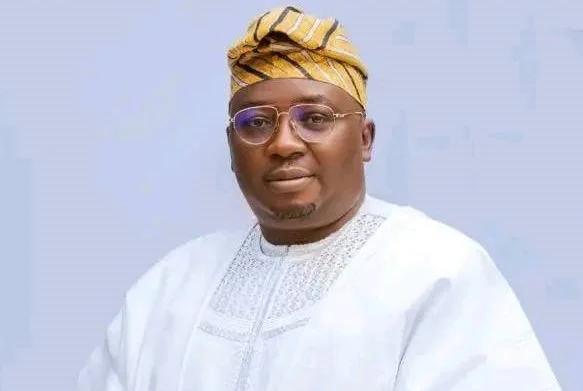
adebayo adelabu
An enormous N10 billion budget for the provision of solar power for Aso Rock Villa, hidden in the 2025 budget, was not just a design to redeem the seat of power from epileptic, constantly collapsing and unreliable national grid, but a secret admittance that President Bola Ahmed Tinubu’s electricity roadmap is a hopeless route to reliable electricity in Nigeria.
The Ministry of Power under Adebayo Adelabu seems to be uncoordinated, making its policy measures, at best, very awkward, as if the sector has been trapped in a quagmire.
Two years into this government’s four-year tenure, fundamental questions about electricity are yet to be answered: What is the roadmap for providing electricity to Nigerians? Why the constant grid collapse despite the ‘quick-win’ transmission line deal with Siemens? What is being done about the trade mistrust between Power Generation Companies (Gencos) and Power Distribution Companies (Discos)? What is the status of the Nigerian Bulk Electricity Trading Plc (NBET)? What are the timelines of this government to redeem Nigerians from darkness to light in four years? What boxes have been ticked in achieving identified objectives?
One of the quick but wrong steps by the Tinubu government was that it hurriedly signed the Nigerian Electricity (amendment) Act 2023 on December 14, 2023. The Act, most importantly, empowers the 36 states to regulate electricity generation, transmission and distribution within their territories, reducing reliance on the federal government.
On paper, the amendment was eloquent, but in reality, it is nothing other than a document about a long-term desire, not an immediate response to the need to provide electricity to more than 100 million Nigerian households who live in darkness. Perhaps, it was even an attempt by this government to abdicate responsibility for making electricity available to the people. How many states have a ministry of power? How many states have signed effective power generation and distribution agreements with Gencos and Discos? How many states understand the dynamics of the sector to determine appropriate pricing of electricity?
Another effort at reducing the federal governmet’s exposure to market risks and enforce full privatisation of the power generation and distribution sector through what is called the Bilateral Power Purchase Agreement between Gencos and Discos under the Nigeria Electricity Supply Industry (NESI) framework has not been successful. It makes electricity business a contract between electricity producers and buyers and defines the tariff structure, payment schedules and penalties for non-compliance; it specifies the amount of electricity to be supplied and the conditions under which it must be delivered, and addresses risks-related to fuel supply, transmission losses and regulatory changes.
This has not worked because the role of the NBET in helping to reduce financial risks for power producers by guaranteeing payments, making the sector more attractive to investors, has been reduced. The sectors had not been nurtured to a point where a genuine and meaningful competition, as envisaged by the policy, can be commenced. The July 2025 date for the full implementation of this policy is around the corner but no significant progress has been made as many Discos are not creditworthy to pay for the supplied electricity.
Initially, it was assumed that the deal between Siemens and the federal government, first signed in 2019 and reinforced in 2023 when Tinubu visited Germany, was a master strategy for cleaning up the transmission lines. It was expected to initially increase the Transmission Company of Nigeria’s (TCN) operational capacity to 7,000 megawatts, then to 11,000 megawatts in Phase 2, and 23,000 megawatts as a long-term plan. However, this elaborate plan seems to be untrue as Siemens may have just been contracted to deliver ‘crucial equipment worth over 63 million Euros,’ including mobile substations and transformers, which are being installed across Nigeria.
A pointer to this is the establishment of what the minister has called FGN Power Company, a federal government special purpose vehicle (SPV) that recently signed a multimillion-dollar deal with a Chinese company, China Machinery Engineering Corporation (CMEC), for the rehabilitation and construction of transmission lines. Why sign a transmission deal with a Chinese company when there is a subsisting contract with Siemens?
Such a policy shift may be responsible for the chaos in the sector. For ordinary Nigerians, the most important segment in the electricity sector should be the metering of households so that many more can access electricity. It will enable both Gencos and Discos to have more customers who will pay for electricity. At the time the sector was privatised in 2013, only 12 million Nigerians were said to have meters. Today, the number is put at 13 million. The burden of paying for generated and distributed electricity is being borne by this number.
The operators, experiencing poor revenue, call for higher but unaffordable electricity tariffs. If more and more Nigerians were metered, the Gencos and Discos would enjoy the economies of scale by selling electricity to over 100 million households and thousands of small and medium scale enterprises (SMSE) rather than to just about 13 million customers.
The least this government should do is to deepen the metering project instead of dissipating energy on a corruption-laden renewable energy project. The World Bank, realising the significance of metering to the electricity value chain in Nigeria, supported the federal government with as much as $500 million for metering households in 2021. Mr Shubham Chaudhuri, World Bank country director, was on point when he stated that “improving access and reliability of power is key to reducing poverty and unlocking economic growth in the aftermath of the global COVID-19 pandemic.”
In a recent report, it was revealed that households and businesses in states like Kano, Jigawa and Katsina were supplied with less than two hours of electricity every day. The psychological, financial and economic implications of this can only be better imagined.
There are two more years for this administration. The answer to the country’s electricity predicament does not lie in increasing the electricity tariff; the solution cannot be found in just telling states to engage in the electricity business; it is not in throwing Nigerians to the sharks that have infested the renewable energy business. This government must first show commitment to metering Nigerian households to boost the consumer market for Discos; it must challenge the TCN to work hard to renew obsolete transmission lines; it must make gas available to power generation companies as it has become evident that 80 per cent of electricity is generated from gas. Electricity is central to improved living conditions of Nigerians and their businesses; Tinubu cannot abandon it to fate.