
NEC approves new development plan, tasks partners on polio eradication
The National Economic Council (NEC) on Thursday approved a new medium-term National Development Plan (2026–2030) while also charging development partners in the fight against polio to deploy technology in routine immunization programmes across the country. Briefing State House correspondents after the NEC meeting chaired by Vice President Kashim Shettima, Minister of Budget and Economic Planning, […]
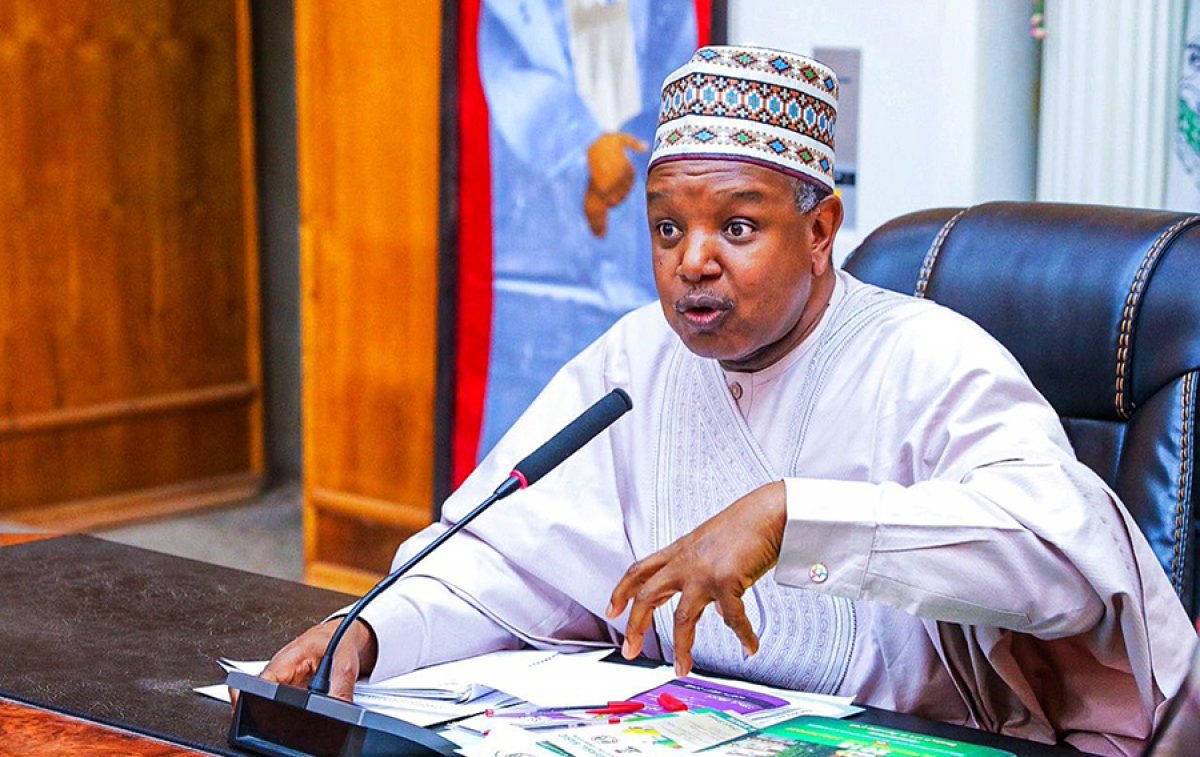
Atiku Bagudu
The National Economic Council (NEC) on Thursday approved a new medium-term National Development Plan (2026–2030) while also charging development partners in the fight against polio to deploy technology in routine immunization programmes across the country.
Briefing State House correspondents after the NEC meeting chaired by Vice President Kashim Shettima, Minister of Budget and Economic Planning, Atiku Bagudu, said the new plan—tagged the Renewed Hope Plan 2026–2030—is designed to consolidate ongoing reforms, ensure policy continuity, and respond to emerging socioeconomic challenges.
He explained that the current medium-term plan (2021–2025) will expire in December, hence the need for a successor framework that aligns with the country’s long-term Agenda 2050.
He said the plan will prioritize job creation, human capital development, sustainable infrastructure, food security, and social protection.
- NEC approves new development plan, tasks partners on polio eradication
- 2027: I’m not leaving NNPP but open to talks – Kwankwaso
“The process of developing this plan will be participatory, involving the three tiers of government, the private sector, political parties, civil society, traditional institutions, labour, youth, and student organizations,” Bagudu said.
He added that three governance structures—the National Steering Committee, a Central Working Group, and Technical Working Groups—will guide its preparation, with governors representing the six geopolitical zones.
The plan is expected to be launched before the end of the year.
Meanwhile, the Council also reviewed the country’s ongoing efforts to eradicate polio.
Chairman of the NEC Ad-Hoc Committee on Polio Eradication and Gombe State Governor, Muhammad Inuwa Yahaya, said the committee was set up to tackle the spread of circulating poliovirus type 2 variant (cVPV2) in six high-risk states—Kano, Katsina, Kebbi, Sokoto, Zamfara, and Gombe.
He noted that the use of surveillance technology and geo-tracking has improved outcomes, with vaccination coverage rising from 81% in April to 84% in June.
The governor disclosed that during the first round of In-Between Round Activities (IBRA) across 11 high-risk states, 2.7 million children were vaccinated, reaching 83% of the target, while integrated services such as routine immunization, nutrition support, micronutrient supplements for pregnant women, and antimalarials were also delivered.
A second round of IBRA is scheduled for September 11–14, while in October, a nationwide integrated campaign for children aged 0–14 will be rolled out.
This campaign will combine measles-rubella and polio vaccines with malaria prevention and interventions against neglected tropical diseases.
The Accountant-General of the Federation was directed to expedite the release of funds for the next immunization round to ensure a seamless exercise.