
Nigeria’s visa woes and the imperative of strategic diplomacy
The latest visa developments from two of Nigeria’s most crucial international partners, the United States and the United Arab Emirates, cast a long and troubling shadow over our nation’s global standing and its socio-economic aspirations. Within two days, Nigeria, the “Giant of Africa,” suffered major blows in its relationship with the two countries, and as […]
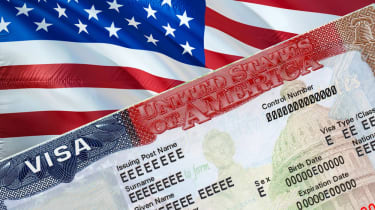
U.S visa
The latest visa developments from two of Nigeria’s most crucial international partners, the United States and the United Arab Emirates, cast a long and troubling shadow over our nation’s global standing and its socio-economic aspirations. Within two days, Nigeria, the “Giant of Africa,” suffered major blows in its relationship with the two countries, and as of July 9, 2025, a new reality has set in—one that demands a critical reassessment of our foreign policy and a robust leveraging of our economic might.
The U.S. move to restrict most non-immigrant visas for Nigerians to a mere three-month, single-entry validity is a slap in the face. While framed as “reciprocity”—an implication that Nigeria’s own visa policies for Americans are equally restrictive—it ignores the stark power imbalance and the vastly different motivations for travel between our two nations.
For countless Nigerians, a U.S. visa represents access to education, specialised medical care, crucial business partnerships, and opportunities to connect with family. For an American, a Nigerian visa, while important for specific engagements, rarely holds the same breadth of life-altering potential. This policy, citing “security benchmarks” and “overstay management,” effectively treats Nigerian travellers with a broad brush of suspicion, imposing undue financial and logistical burdens on legitimate pursuits.
Even more perplexing and potentially damaging are the renewed restrictions from the UAE. Barely a year after lifting their 21-month visa ban, Dubai immigration authorities have slammed the door shut on transit visas for Nigerians and imposed draconian conditions on tourist visas. Imagine the young entrepreneur, aged 18-45, who can no longer travel independently to source goods or attend conferences. Consider the established trader, over 45, now required to show a staggering $10,000 minimum bank balance for six consecutive months—a figure far beyond the reach of many hardworking Nigerians. This isn’t just a hurdle; it’s a barrier walling off economic opportunity and social mobility.
The social and economic impacts of these policies are profound. Beyond the direct impact on travel and tourism, these restrictions act as formidable non-tariff barriers to trade and investment. Nigeria and the UAE share a robust non-oil trade relationship worth over $2.4 billion in 2022, with Nigeria even enjoying a trade surplus. How can business relationships flourish when face-to-face meetings are curtailed? How do entrepreneurs source products, attend trade fairs, or finalise deals when mobility is severely restricted? The vibrant informal trade networks, a lifeline for many, will be choked.
While visa restrictions aim to curb “undesirable” migration, they often boomerang. They incentivise those with genuine skills and resources to seek permanent emigration rather than temporary visits, leading to a further loss of critical human capital. Students, researchers, and professionals will increasingly look for opportunities in countries with more welcoming visa regimes.
However, the social impact of these policies is what is worrying for those with families abroad or even those seeking healthcare. The implication of the new policy is that families will struggle to reunite. Those seeking specialised medical treatment abroad will face insurmountable obstacles. Considering the state of healthcare in Nigeria and our increasing propensity for medical tourism, the potential harm these policies can have will be detrimental. The psychological toll of being treated as second-class citizens, repeatedly subjected to arbitrary policy shifts, is immeasurable. It chips away at national pride and fosters deep frustration. And God knows that Nigeria’s pride has suffered a lot.
Nigeria’s pride, though, is not the only thing cruising for a bruising here. These unilateral and restrictive measures, especially after a period of seemingly improved relations (with the UAE), erode trust and strain diplomatic ties. They suggest a lack of respect for Nigeria’s sovereignty and its citizens.
Contrary to what impressions these policies suggest, Nigeria is not a small, inconsequential nation. Nigeria is Africa’s largest economy, its most populous country, and a significant player in regional and continental affairs. It possesses considerable economic leverage that, if deployed strategically, can influence these unfavourable visa policies. The problem, I must confess, is our failure to harness this economic leverage at our disposal.
Our visa policy in relation to the US has, as most things Nigerian have been, dodgy. Only recently, the US increased its visa validity for Nigeria from two years’ multiple entry to five years’ multiple entry. We have all been inundated by the actions of Nigerian immigration officials and embassy staff when it comes to issuing visas to foreigners seeking to enter the country. On his Facebook page, the brilliant Dr Shamsuddeen Sani shared the story of how Nigerian immigration officials have been frustrating his foreign colleagues over visa issuance, resulting in one paying $160 twice for a single visa application, which eventually did not come through. In the end, this colleague had to bribe an immigration officer with $60 to get a visa. Such actions, of course, have consequences not only on our image but also on how countries structure their visa policies towards Nigeria, as we have seen this week.
As bad as the situation looks, Nigeria can take a series of measures to address the situation. First, if the U.S. cites reciprocity, Nigeria must conduct a thorough review of its own visa policies for American citizens. While a tit-for-tat ban might be counterproductive given the power imbalance, smart reciprocity means aligning our policies more closely to theirs in a way that opens a dialogue on why their assessment of reciprocity is as it is.
Secondly, Nigeria is a massive market. Our imports from the UAE, for instance, were over $1.15 billion in 2023, largely consisting of refined petroleum, cars, and other manufactured goods. The U.S. trade with Nigeria reached nearly $13 billion in 2024. Can we, as a nation, not send a clear message that ease of doing business, which includes ease of travel, is reciprocal? Dialogue must emphasise that unhindered trade requires unhindered movement of people.
Thirdly, we must also look inward. A long-term solution lies in significantly improving our internal systems. The U.S. points to “secure travel documents” and “overstay management.” Nigeria must show demonstrable and verifiable progress in these areas. This means robust passport issuance and verification, efficient immigration services, and effective data-sharing mechanisms with international partners that inspire confidence.
This moment underscores the need to diversify our international partnerships beyond traditional Western allies. Strengthening ties with Asian, South American, and other African nations that offer more streamlined visa processes is crucial. As a country, Nigeria must champion a united African front within ECOWAS and the African Union to advocate for fairer visa policies for all African citizens globally, leveraging collective bargaining power.
Our diplomatic missions abroad must be at the forefront of economic diplomacy, actively engaging with host governments and business communities. They need to understand the concerns leading to these restrictions and present proactive solutions, highlighting Nigeria’s efforts to regularise migration and ensure security. This is a battle that cannot be fought with outdated bureaucratic processes such as the one we are quite fond of wielding.
The latest visa restrictions are not just a bureaucratic inconvenience; they are a direct challenge to Nigeria’s economic growth, social fabric, and national dignity. It is time for Nigeria to move beyond mere statements and implement a proactive, strategic foreign policy that leverages our significant trade relations to ensure that Nigerian citizens can move, trade, and thrive on the global stage with the respect they deserve. The short leash on our citizens must be loosened, and Nigeria has the means to pull its weight. We should do better.