
No more excuses, FCT teachers deserve their dues
Teachers’ welfare, which basic elements include adequate remuneration as well as prompt payment of salaries, is not only crucial to the quality of teaching in schools but also to the general output of teachers. Prompt payment of salaries to teachers is one of the strong motivating factors that inspire them to perform better. This is […]
Teachers’ welfare, which basic elements include adequate remuneration as well as prompt payment of salaries, is not only crucial to the quality of teaching in schools but also to the general output of teachers. Prompt payment of salaries to teachers is one of the strong motivating factors that inspire them to perform better. This is why the non-payment of teachers’ salaries by the six Area Councils in the Federal Capital Territory (FCT) has damning consequences on the entire education sector.
The teachers’ strike started in 2022 over non-implementation of the N30,000 minimum wage arrears by the six area council chairmen, which was approved by the administration of former President Muhammadu Buhari in 2019. The union had said then that its members were owed arrears of 25 months. After much struggle without positive response from the area council chairmen over the arrears, the teachers in January 2022 went on an indefinite strike for eight weeks after which a committee was set up to look into their grievances and come up with a solution and a template was arrived at as to how to go about its implementation.
The union and the six area council chairmen agreed after the meeting that the template would be taken to the FCT Joint Account Allocation Committee (JAAC) meeting so that N30 million would be deducted from the coffers of each area council and paid to the teachers through their respective Local Education Authority (LEA) every month until the debt is liquidated. This prompted the union to suspend the strike. But when the chairmen reneged on the agreed template, the teachers resumed the strike in September 2023.
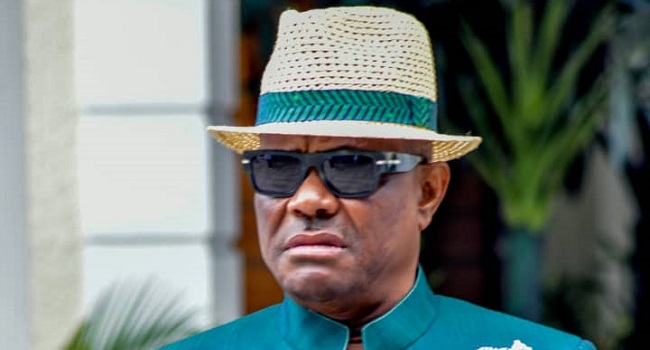
This drew the attention of the FCT Minister, Nyesom Wike, who immediately invited the union and the six area council chairmen for discussion. Wike set up a six-man committee headed by the Minister of State, Hajiya Mariya Mahmoud, to resolve the issues and get the teachers back to their classes. The committee resolved that the six area council chairmen should continue with the payment of 25 months minimum wage arrears as agreed in the earlier signed template, while the issue of the peculiar allowance and minimum wage arrears would be looked into by the FCT minister.
- Air Force: Bauchi gov petitions Senate over inclusion of non-indigenes in state’s slots
- Tanker explodes at sports festival venue in Ogun
Based on that, the teachers again suspended the strike. The six area council chairmen all agreed to that. But while the minister paid 40 per cent of the arrears as he promised, the chairmen again reneged on their promise, and the teachers again embarked on another round of strike on January 15, 2024. The minister again waded in, but the chairmen refused to pay their own 60 per cent, and the union, again for the third time, embarked on another strike, which started on September 18, 2024, a few days after the resumption of schools for a fresh academic session. It was later suspended after some intervention. The strike was called off on February 21, 2025, only to resume on March 24, 2025, because the council chairmen refused to fulfil their own part of the bargain.
Though some of the councils’ chairmen have started the implementation of the new wage with the affected workers confirming receiving the new wage, but the workers, through their leaders, had vowed not to resume until their other allowances are paid.
Daily Trust commends the FCT minister for taking a bold step by engaging with the chairmen to know why they were unable to pay and directing that funds be released.
We also commend him for setting up a committee to ensure that the teachers are paid directly as funds are released.
However, as laudable as this intervention is, more pressure must be exerted on the council chairmen to ensure that they take the primary level of education seriously.
We urge the teachers’ union to continue to take the path of dialogue so as to get back to class and for the benefit of their pupils and the future of education in the FCT.
The council chairmen must understand that government is a continuum. They are under obligation to continue with the implementation of agreements their predecessors entered into. They must never allow education in the FCT to die under their watch.
One fact that should not be lost is that a basic level of education is critical to the success of others. The neglect or inability of all stakeholders to separately and collectively give basic education the attention it deserves is a sure pathway to ruining the entire education system. Teachers’ welfare is not just central to achieving the philosophy as well as broad objectives of education as outlined in the country’s National Policy on Education, but it also remains the only practical way of retaining qualified teachers on the job.