
No to ASUU strikes
The Academic Staff Union of Universities (ASUU) unsettled many families when it announced a warning industrial action over persistent delays in the payment of salaries to its members. Coming at a time when Nigerians assumed that strike by academic staff of tertiary institutions had become a thing of the past, the irregularity in the payment […]
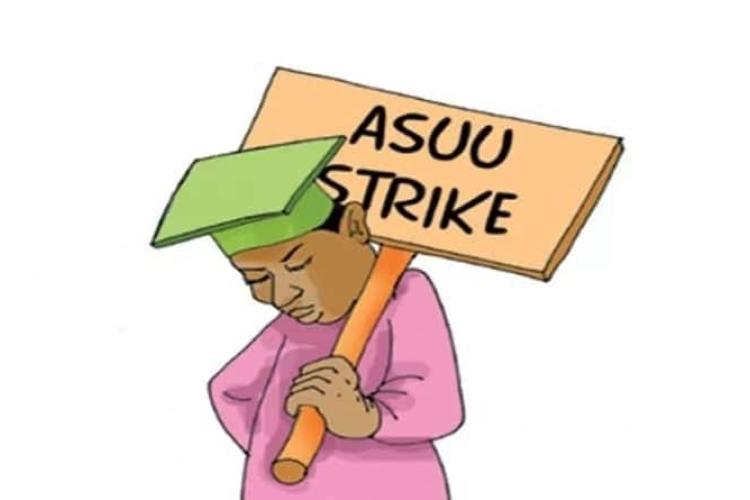
The Academic Staff Union of Universities (ASUU) unsettled many families when it announced a warning industrial action over persistent delays in the payment of salaries to its members. Coming at a time when Nigerians assumed that strike by academic staff of tertiary institutions had become a thing of the past, the irregularity in the payment of salaries and other allowances to university lecturers is a manifestation of the sluggishness among the country’s civil servants.
The National President of ASUU, Prof. Chris Piwuna, explained to the media that the delay in payment of salaries, since the federal government moved university payrolls from the Integrated Personnel Payroll and Information System (IPPIS) to the Government Integrated Financial Management Information System (GIFMIS), caused its members recurring hardship. He observed that the salary delays were not due to technical issues with the GIFMIS platform, but rather a deliberate act of negligence by the Office of the Accountant General of the Federation.
Prof. Piwuna said, “Our members are experiencing hardship. Salaries are often delayed by a week or more. At NEC, we agreed that if salaries are not paid within three days of a new month, members should withdraw their services. [We noticed that] when funds are eventually released, there are no complaints of underpayment or technical failure. The system works; it’s the handlers who are stalling. We believe this delay is intentional.”
The Minister of Education, Dr Maruf Olatunji Alausa, dismissed the strike, despite clear evidence that the academic staff at the University of Abuja and the University of Jos had abandoned their lecture halls in response to the union’s call. The minister had urged the “public to disregard any misinformation suggesting that ASUU is on strike”.
- NEDC supports 3,000 in Yobe to rebuild destroyed houses
- Our businesses cannot survive on double digits’ interest rate – Entrepreneurs
Instead of playing the ostrich about the complaint raised by ASUU, the minister and the Office of the Accountant-General of the Federation must put in place a mechanism for seamless processing and payment of academic staff salaries and allowances without delay. For those who depend on their monthly earnings for their family upkeep, any disruption in the schedule of payment could destabilise them emotionally. The global best practice remains the use of technology to facilitate payment, a strategy that private and public institutions across the world have adopted.
Another era of the disruption of the academic calendar does not augur well for the country. In the last two years, there seemed to have been an understanding between ASUU and the government of President Bola Ahmed Tinubu. Over this period, the government has paid up N40 billion out of the contentious N50 billion Earned Academic Allowances owed lecturers for about a decade. Also, the government’s decision to remove the payment of university lecturers’ salaries and allowances from the controversial and contentious IPPIS to GIFMIS was a demonstration of mutual understanding between the government and ASUU. This relationship must not be contaminated by the ineffectiveness of civil servants in the Accountant-General of the Federation’s office.
We must reiterate that tertiary education students in Nigeria deserve a strike-free academic experience, like their counterparts in other parts of the world. A seamless academic calendar gives students the opportunity to concentrate on their studies, complete their syllabi, and gain adequate knowledge and skills, as against disruptions that frustrate and discourage teaching and learning. In the last three or four decades, tertiary education students have been subjected to emotional torture caused by industrial action by the academic staff of our universities. Academic programmes that should have been completed in four years were punctuated, almost annually, and made to drag on for as long as six or seven years. In order to avoid such delays, parents who could afford the cost have taken their children and wards to universities abroad, some of them to neighbouring countries where the standard of teaching and learning is far below what is obtainable in Nigeria. Worse still, constant strikes by academic staff of our tertiary institutions give the impression outside the shores of this country that Nigerian graduates are half-baked; that they could not compete favourably with their peers who graduate from universities in other countries. This may not be true, but constant strikes by ASUU provide anecdotes that enrich such bias.
We encourage the Federal Ministry of Education and all government agencies to investigate all the issues raised by ASUU and ensure that the delay in the payment of salaries is brought to an end. Additionally, the Federal Government must ensure that the outstanding earned allowance of N10 billion is paid as soon as possible, to prevent it from being used as an excuse for another strike. On its part, the National Assembly’s committees on Education must come together to devise the best approaches to funding our tertiary institutions, ensuring that lecturers focus on their work and think beyond their salaries and allowances. Our universities must become centres for research and innovation, not just where lecturers perform routine tasks in anticipation of mere monthly wages.