
Presidency, Miyetti Allah parley to address cattle roaming in Abuja city centres
The Presidency and the Miyetti Allah Cattle Breeders Association of Nigeria (MACBAN) have held a dialogue to find lasting solution to cows roaming the streets of the city centre of Abuja. The dialogue which held at the National Mosque in Abuja over the weekend, was convened by the Chairman of the Board of Trustees of […]
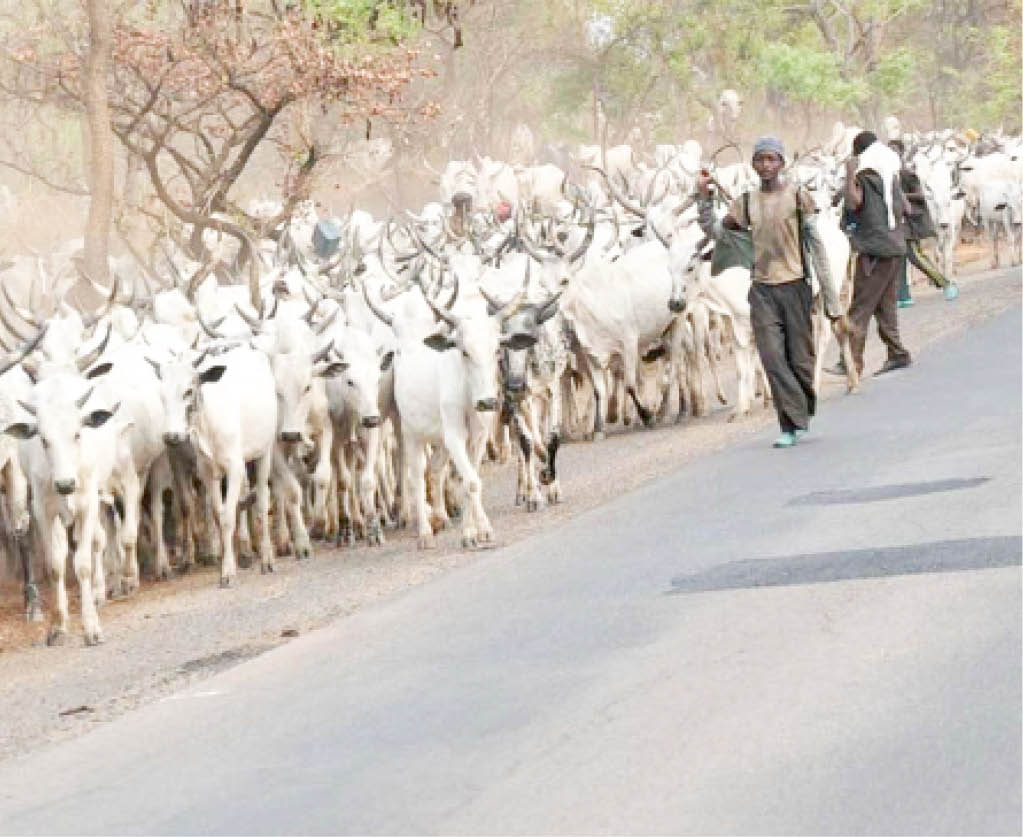
herdsmen with their cattle
The Presidency and the Miyetti Allah Cattle Breeders Association of Nigeria (MACBAN) have held a dialogue to find lasting solution to cows roaming the streets of the city centre of Abuja.
The dialogue which held at the National Mosque in Abuja over the weekend, was convened by the Chairman of the Board of Trustees of MACBAN, Sultan of Sokoto, Alhaji Sa’ad Abubakar III, and the Minister of Livestock Development, Idi Maiha.
Speaking at the forum which had leaders of pastoralists across the FCT area councils in attendance, the Senior Special Assistant to the President on Livestock Development, Idris Abiola-Ajimobi, emphasised the commitment of President Bola Tinubu’s administration to finding lasting solutions to the challenges bedevilling pastoralists in the country.
He said: “We are here for a stakeholders’ engagements meeting. It’s a gathering to dialogue with the livestock stakeholders to let them understand the efforts that are being made by the administration of President Tinubu.
“We are working together with the Ministry of Livestock Development and other relevant agencies to address the root causes of the problems.
”The issue of livestock moving around the streets of Abuja. We must first solve the issue of grazing reserves; we are working on ranches, and we are working on the Special Agro Industrial Processing Zone.
“We are also working on reviving the grazing reserves, providing feeds and ranches whereby pastoralists can find a safe zone to operate in to leave and coexist as well as have all the basic social amenities they need like feeds, water, the healthcare system, veterinary clinics and other essential services,” Abiola-Ajimobi said.
On his part, the Special Assistant to the Minister of Education on Almajiri and Out-of-School-Children Education, Dr Balarabe Kakale, the meeting also looked at the all-inclusive efforts of the Federal Ministry of Education in addressing challenges facing pastoralists including out-of-school crisis.
“The meeting interacted with all the stakeholders and leaders, mainly of MACBAN, in Abuja and surrounding states and unanimously came up with one very important resolution.
“They are ready to partner with the sustainable grazing solutions of the Federal Ministry of Livestock Development, for which education is the key component.
”And they were ready to move to the grazing reserves of Abuja. So far, the required amenities are all provided there, and of course, they are about the nomadic schools, veterinary and medical clinics, electricity, water, mini dams, among others.
”And they are all ready to key into the all-inclusive education transformative agenda of this administration to get every child into functional education and learning,” he said.
On his part, the National President of MACBAN, Alhaji Baba Othman-Ngelzarma, said the meeting was organised to address the concerns of cows roaming the city centre.
”And to also address the issue of education, particularly the issue of out-of-school children, of which the pastoralist children are the majority.
”Out of about 20 million out-of-school children in Nigeria, we believe 80 per cent of them belong to the pastoralist children.
”So, the issues of concern were raised and addressed here.You can see the congregation; we want to make Abuja a model. We want to start practising it here and see how it is going to work for us.
”You can see we have invited all the stakeholders, the leadership of MACBAN from the six Area Councils of the FCT, and those families whose cows are roaming the streets of the city centre.
“We all invited them to hear from them. Let’s know what the process is that is bringing them into the city, and how can we stop it?” he said.
Othman-Ngelzarma disclosed that a committee would be set up to find a lasting solution that would stop cows from roaming the city centre.
Also speaking, the Chief Executive Officer of the National Commission for Nomadic Education (NCNE), Prof Bashir Usman, lamented that rapid urbanisation was worsening Nigeria’s out-of-school crisis among pastoralist children, displacing families and shutting many children out of specialised nomadic schools.
He said: “Urbanisation has moved them into a tight corner. Many of their cattle are gone, and with it, their way of life.
“For the children, most of the nomadic schools have been converted into conventional schools, despite their unique curriculum needs. A large number of our children are out of school, roaming around in town.”
The NCNE boss noted that parents often keep children at home due to the distance of conventional schools, while adolescents between 15 and 25 are increasingly idle and vulnerable.
“It is disheartening to see many of them hanging around, making all sorts of hairs and carrying all sorts of things,” he said.
To tackle the crisis, the commission, he said, has begun enumerating nomadic children nationwide, with six states already covered.
The goal according to him, is to bring every child back to school and provide adolescents with vocational training opportunities.
He also disclosed that the Minister of Education has approved a flexible staffing model that will allow qualified locals to serve as community-based “facilitators” instead of conventional teachers, ensuring continuity even when families migrate.
“Parents must understand that if you can herd your cattle, you can herd your children to school,” he urged.
The NCNE emphasised that whatever model stakeholders adopt — whether mobile schools, grazing-route centres, or permanent structures — the commission will implement it to ensure inclusive education for pastoralist communities.
“Education remains the strongest foundation for peace and prosperity,” he said.