
Prof Usman Yusuf: Unyielding government critic
I only became acquainted with Professor Usman Yusuf a few years ago, and since then, I have been fascinated by the consistency of his advocacy. We met on committees, here and there, at a time when banditry in the North West was taking its toll. At that time, he had just come away from a successful […]
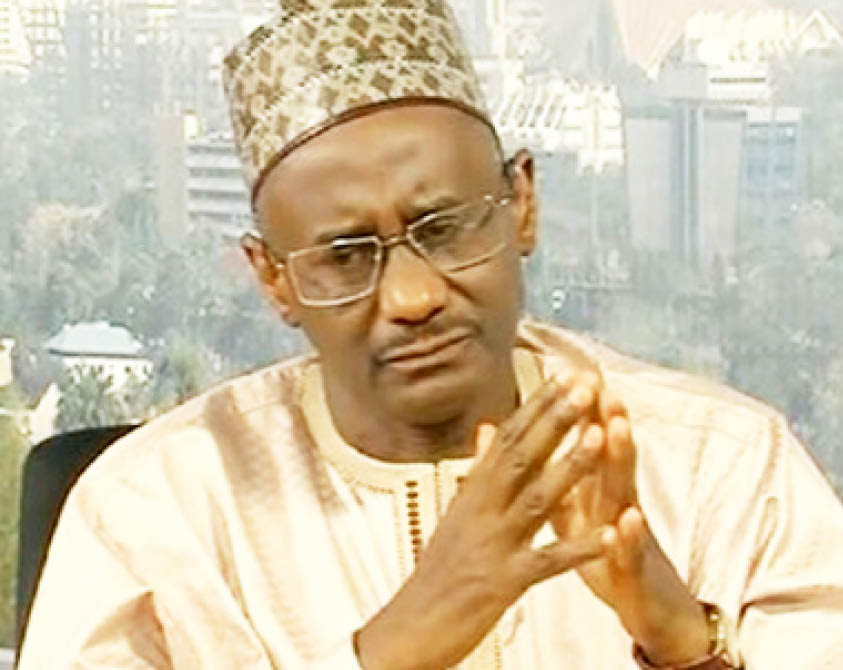
Former Executive Secretary, NHIA, Prof. Usman Yusuf
I only became acquainted with Professor Usman Yusuf a few years ago, and since then, I have been fascinated by the consistency of his advocacy. We met on committees, here and there, at a time when banditry in the North West was taking its toll. At that time, he had just come away from a successful outing where he was directly involved in negotiations with bandits as the secretary of the Chief of Defence Staff (CDS) seven-man committee tasked with freeing victims of the Abuja-Kaduna rail kidnapping episode. He thought there were good lessons from that successful encounter, where kinetic and (more of) non-kinetic measures combined to a resounding success.
All his further efforts to make the government see reason and continue along that path failed. When the boundaries of banditry activities expanded from the North West to the North Central zones, and the government of Muhammadu Buhari was just wringing its hands, feigning helplessness, Professor Yusuf piled up the pressure. He was everywhere in the media and became a relentless critic till the end of their tenure.
Those who thought that Prof. Yusuf would tone down the tempo of his activism with the coming of the Tinubu administration were severely disappointed. He saw no distinguishing features between the Buhari and the new Tinubu administration. The professor just revved up his activism. There were good reasons for that. Actually, things had worsened.
The Tinubu administration had removed the subsidy on petrol and floated the national currency. Prices of food and all other commodities shot up, leading to inflation, hunger and widespread dissatisfaction. With increasing insecurity, the national malaise became more desperate, and Prof Yusuf’s criticisms became more truculent.
- Weeks to common entrance exams, FCT teachers’ strike lingers
- We’re taming kidnapping in FCT council – Hunters’ commandant
As these criticisms became more irritating to the ears of the government, the regime dredged up some of the old charges against the professor, dating back some years to his National Health Insurance Scheme (NHIS) days when he had a running battle with the government of the day over what he perceived as corrupt practices.
The Tinubu government, now then, in a commando fashion, got him arrested and, in a rigmarole procedure, got him before the court on charges of corruption. He was kept in the EFCC office before his appearance in court.
The court denied him bail and incarcerated him in Kuje prison for 24 days before he gained freedom on bail. Typical of Prof Yusuf, he has made the days he spent in Kuje prison something to celebrate. He was unrepentant and was on all the famed talk shows, Trust TV, Arise, Channels, etc, saying so. He also sent out a two-part piece titled ‘Standing Firm for What Is Right’, written in both English and Hausa, which was widely circulated. I have been on his mailing list for a long time, so when my copy dropped into my mailbox, I made an assiduous study of it.
The second part of the missive is what interested me most. That was where he gave a graphic picture of his 24-day stay in Kuje prison, and I guess what he observed, with what I presume is his clinical mind, should be of keen interest to the government to bring changes in the prisons. He said, even for him, ‘My 24 days in Kuje Prison were a blessing and an education I would never have gotten in any classroom. I was well received by the inmates, 99 per cent of whom were youths with an average age of 23 years. The prison, which was originally built for 560 inmates, now houses 960.’
In the first few days in Kuje, he visited various sections of the prison, in particular the clinic and the kitchen. At the prison clinic, he found that basic medications were lacking, and ‘prisoners had to pay out of their pockets to buy them from outside’. The kitchen he met was no better. He wrote: ‘The meals were inadequate, poor quality, and tasteless. Those who can afford them either buy, cook, or get families to deliver.’
His most disturbing find was the number of inmates awaiting trial. He wrote: ‘What I found very troubling was the number of inmates awaiting trial, some for over 10 years. I interacted with some Shi’ite inmates who have been in prison awaiting trial for up to 14 years. Reliable data nationally reveals that 80 per cent of inmates in Nigerian prisons are awaiting trial. This is a classic case of justice delayed is justice denied.’
The professor also discovered a troubling number of inmates locked up for minor offences or inability to pay a small fine. But these are not new findings. Anybody who has been to the prisons in any part of the country, either as a visitor or an inmate, would come back with the same sob story. Prof. Yusuf has added his own to the same old story. It is a yeoman’s job from an unyielding critic, but I hope the government would be liberal enough to absorb his observations.