
Security: ECOWAS finalises training blueprint for 5,000-troop regional force
The West African regional bloc ECOWAS has begun the final move to put a standby force in place to combat insecurity in West Africa with the commencement of deliberations on the training policy to be adopted for the force. At the meeting in Abuja were security experts and technocrats from 12 ECOWAS member states. The […]
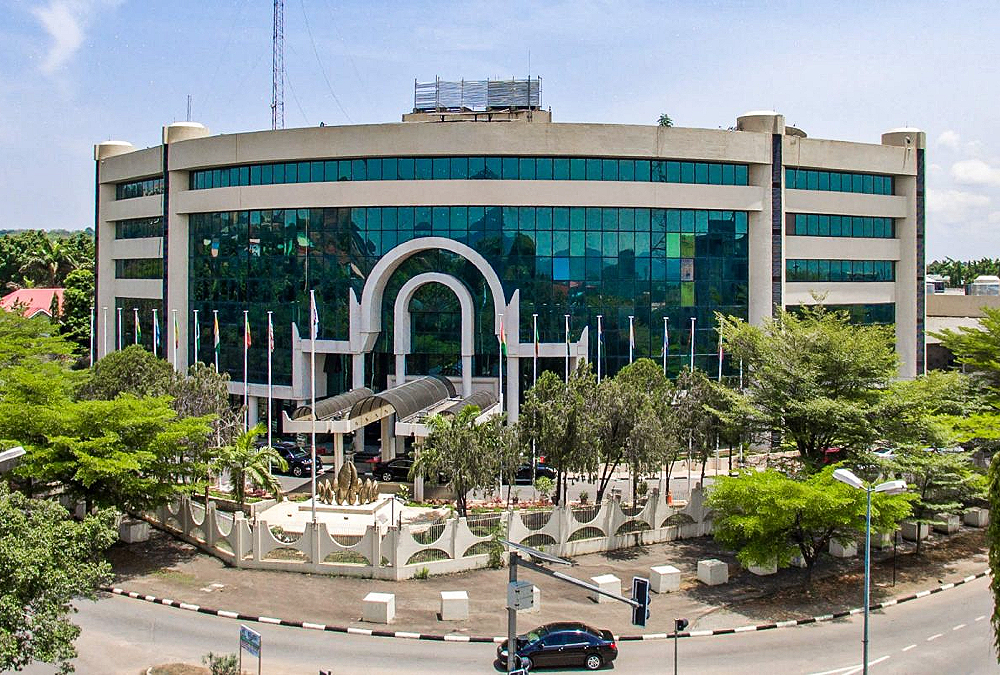
ECOWAS HQ
The West African regional bloc ECOWAS has begun the final move to put a standby force in place to combat insecurity in West Africa with the commencement of deliberations on the training policy to be adopted for the force.
At the meeting in Abuja were security experts and technocrats from 12 ECOWAS member states.
The ECOWAS standby force which was activated to address the rising insecurity in the sub-region is yet to be fully active, though it has already established a depot for deployment of soldiers for peace support operations.
The regional force, which is expected to comprise 5,000 troops, is part of a broader regional security strategy to also curb terrorism and cross-border crimes.
- 147 died in Gombe, Edo road crashes in 6 months — FRSC
- Nigeria, Zambia set for fiery WAFCON quarter-final
Speaking at the opening of the government experts’ validation meeting on the ECOWAS standby force training policy for peace support operations, the Acting Director of Peacekeeping and Regional Security, Dr. Sani Adamu, said the rapidly changing nature of threats and conflicts has necessitated a dynamic and adaptive approach to training.
He said the training policy aims to emphasise not only the combat readiness but also conflict prevention, civilian protection, human rights observance, and post-conflict rehabilitation.
He added that, “Today, as we focus our attention on the development implementation of the ECOWAS Standby force training policy, we recognise the significance of this initiative in addressing the complex, dynamic challenges of peacekeeping in West Africa.
“This policy is not only a guide but a comprehensive framework designed to enhance the skills, coordination, and readiness of our standby force, ensuring they are trained adequately to manage and resolve conflicts.”
He stressed that, “ As we refine the operational readiness and effectiveness of the EST, we must recognise that true security is not only about arms and strategy, but it is also about leveraging our collective strengths and resources to foster a sustainable peace and security.”
On the draft validation, he appealed to the experts to “actively participate, share your perspectives, and help refine this policy to ensure that it meets the high standards we envisioned. Our commitment today will pave the way for actionable strategies and tangible outcomes in the field.”
By effecting ECOWAS standby force, therefore, we continue to support not just immediate crisis response, but also long-term peace-building initiatives, creating the conditions necessary for economic development and social progress across our region.
“This is an investment in our future, a future where the next generation can continue to grow up in a world free from fear of conflict.”
In his remarks, Coordinator, Peace Support Operations, Nigeria’s Ministry of Defence, Major General Umar Abubakar, said that the session was designed to bring about experts to discuss the training policy, which will set the stage for the activation of ECOWAS’ standby force by member states.
He said, “The main aim of this training policy was to ensure a consistent and effective training of the troops that will form up the ECOWAS’ standby force.
“This training comprises both education training, individual training and collective training and military exercise.”
He noted that at the end of the two-day draft session, the meeting is expected to validate the training policy draft for peace support operations in the region.
Abubakar said, “Essentially, at the end of this meeting, we are expected to validate the draft training policy, which, like I said earlier, will set the stage for the activation and operationalisation of the ECOWAS’ standby force.”
Representative of Deutsche Gesellschaft für Internationale Zusammenarbeit (GIZ), a German development agency, Mrs. Yvonne Akpasom, stressed the importance of a well crafted training policy for ECOWAS peacekeeping personnel.
Akpasom said, “A well-crafted training policy is essential because it ensures that ECOWAS’ personnel are adequately prepared to respond effectively to the conflict, security, and challenges that affect the region. It provides a clear framework for training, peace, programme design, delivery, and continuous personnel development, which are all crucial for operational readiness and rapid deployment of the standby policy on the ground.”
She stressed that the ECOWAS’ Peace, Security and Governance Project funded by the German agency for development, GIZ, primarily focuses on five key areas, including conflict prevention and crisis management, strengthening a secure, democratic, and human rights-based environment within the context of security sectors reform and governance, electoral support and democratic transition, women, youth, peace, and security, and strengthening ECOWAS’ training infrastructure.
Nigeria’s call for hasty action
Last month, President Bola Ahmed Tinubu urged West African leaders to urgently activate the ECOWAS Standby Force to confront terrorism and transnational threats across the region.
Speaking at the 67th Ordinary Session of the ECOWAS Authority of Heads of State and Government, Tinubu warned that the force must “move from concept to operational reality,” expressing concern over the slow pace of its activation.
“I am a little bit worried about the slow pace of its activation, which is taking longer than desired,” he said.
“Threats confronting the region are transnational, driven by agile and dangerous networks that respect nobody’s border. No single nation can, therefore, address these challenges alone.
“We must strengthen coordination, amplify political will, and prioritise a collective approach to secure it.”
The force is part of a broader regional security strategy, especially as the Sahel region remains the global epicentre of terrorism, accounting for over half of terror-related deaths worldwide.
However, security analysts say the force’s deployment faces significant hurdles citing the withdrawal of Burkina Faso, Mali and Niger from ECOWAS in January 2025 has complicated troop mobilisation and coordination. These countries, now part of the Alliance of Sahel States (AES), were initially expected to contribute to the standby force.