
Time to make CNG initiative work
Soon after his May 29, 2023 announcement of a total removal of subsidy on petroleum products, especially Petroleum Motor Spirit (PMS), popularly called petrol, President Bola Ahmed Tinubu went ahead to announce various measures aimed at cushioning the devastating effect of the decision on Nigerians. Among others, he announced that his administration would pursue the […]
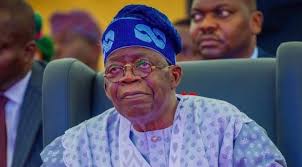
Tinubu
Soon after his May 29, 2023 announcement of a total removal of subsidy on petroleum products, especially Petroleum Motor Spirit (PMS), popularly called petrol, President Bola Ahmed Tinubu went ahead to announce various measures aimed at cushioning the devastating effect of the decision on Nigerians.
Among others, he announced that his administration would pursue the use of Compressed Natural Gas (CNG), as an alternative to PMS. Under the programme, the government promised to see to the creation of conversion centres to enable vehicle owners to convert their petrol used vehicles to CNG. He also promised the deployment of CNG-powered buses to major cities in the country for mass transit. Under the programme, the government also engaged various road transport worker’s unions to facilitate the conversion of their vehicles to enable them use CNG. This is aimed to reduce cost of transportation to the public.
Sadly, nearly two years after the programme is still largely in its infancy. So far, according to the website of the Presidential Committee on Compressed Natural Gas Initiative, conversion centres are available in only 13 states of the federation and the FCT. More than 90 per cent of them are in the southern part of the country.
Worst still, the cost of conversion is still high sometime as high as N1 million. This is a big disincentive to majority of vehicle owners who are struggling to put food on the table. Its planned programme of giving credit to interested public servants who wish to convert their vehicles is yet to take-off.
- Taraba traditional ruler warns fishermen against use of chemicals, explosives
- Minister tasks community health practitioners on professionalism
But the most disturbing issue is the shortage of refilling stations across the country. Motorists are often forced to stay long hours on the queue to refill their vehicles. Those who wish to embark on long journey are often forced to revert to the use of PMS as a full tank covers just a little more than a hundred kilometres.
An investigation recently by this newspaper revealed that some motorists in Lagos and Abuja spend days before they could refill their vehicles at the very few filling stations available. With this experience, it is difficult for most commercial drivers to continue to patronise CNG. The paper also reported that the government has so far commissioned only six refuelling station in July 2024 to serve motorists in Lagos and Abuja.
All these serve as disincentives to the public to accept and convert to the use of CNG as alternative. The implication is that the much taunted government’s effort to cushion the effect of its removal of fuel subsidy is all but in name.
Officials of the PCNGI are, however, optimistic that the project is on course. In a statement at the weekend signed by Kenechukwu Chukwu, TA, Stakeholder Management and Public Engagement said it would commission distribution refuelling stations in Enugu, Federal Capital Territory, FCT, Lokoja in Kogi State, the Rivers State capital, Port Harcourt, Ado Ekiti in Ekiti and in Abia State.
The PCNGI also announced April 4, 2025 for the signing of Arete Mini-LNG Project Investment of $6 million to drive expansion of CNG to the North.
The Project Director of PCGNI, Michael Oluwagbemi said more refuelling stations were being developed across the country, with at least 125-150 expected to be operational in 18 states within the next year.
He highlighted the significant expansion in refuelling infrastructure, noting that while there were only 11 functional stations in January 2024, the country now has 54 licensed stations across 10 states.
He further disclosed that an additional 85 stations are under construction by private investors, including NNPCL, NIPCO, Bovas, Matrix and AY Shafa.
“We expect at least 125-150 refueling stations to be operational in 18 states in the next 12 months at the current pace of development,” he said.
He said the programme is designed to be private sector driven and the committee is making efforts to ensure private sector participation.
Daily Trust believes that government has to do more if it wants this project to succeed. It must recognise it as one of those important initiatives that could bring succour to majority of Nigerians since it is apparent the cost of PMS will never come down to the level that will enable significant reduction in cost of living.
Nigerians have been waiting for the government to fulfil its various promises it has been making on this initiative. We recall its predecessor had at various time promised to make CNG available to Nigerians. Yet those promises remained what they were. It is sad if this continues under this administration.
For this important project, government must take the lead in providing the infrastructure and incentives to the private sector to key in. It must also take the lead in its implementation. If only government can direct that 50 per cent of official vehicles should run on CNG, it will help in ensuring its availability and will give ordinary Nigerians that confidence that the initiative is for real.
Until then, this initiative like many others would continue to drag.