
Why Nigeria’s food crisis is everyone’s problem
In the first six months of 2025, at least 652 Nigerian children have died from malnutrition in Katsina State alone, according to Médecins Sans Frontières (MSF). This is a damning figure for only one state in the country. In states like Borno, with significant displaced persons, it is not uncommon for mothers to skip breakfast […]
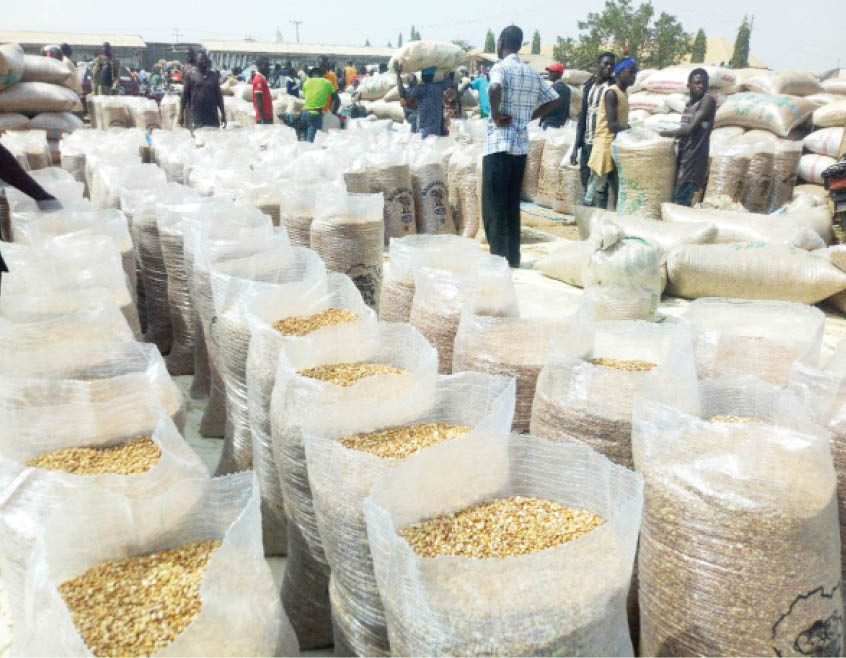
prices of foodstuffs have gone up in the market
In the first six months of 2025, at least 652 Nigerian children have died from malnutrition in Katsina State alone, according to Médecins Sans Frontières (MSF). This is a damning figure for only one state in the country. In states like Borno, with significant displaced persons, it is not uncommon for mothers to skip breakfast and lunch so their children can find sustenance in a watery bowl of soup to keep body and soul together. Across Nigeria, over 31 million people now face acute food insecurity, according to the United Nations.
These numbers would be typical of a war-torn country, conjuring images of the unfortunate food queues in Gaza that have turned into killing fields as the world watches a genocide unfold. These figures are for Nigeria, a country once touted as the “Giant of Africa,” where today millions go to bed hungry, not from laziness or poor choices, but from a system that is failing to feed its own.
This is not just about rising prices. This is not even merely about poverty. This is about a national emergency hiding in plain sight—and one that threatens the very foundation of our society.
The food crisis we are facing today is a convergence of three phenomena: inflation, insecurity, and indifference.
As of today, food inflation in Nigeria is hovering near 35 per cent, according to the National Bureau of Statistics. The price of staples like garri, rice, and yams has more than doubled in many markets. A bag of maize that sold for N18,000 a year ago now goes for N42,000. Tomatoes, onions, and eggs have become occasional luxuries for the average household. Many Nigerians can’t remember the last time they had eggs as part of their meals.
This inflation has been exacerbated by multiple social and economic crises. The removal of fuel subsidies and a weakened naira have driven up transportation and input costs for farmers and traders. On the other hand, banditry, kidnapping, and insurgency have pushed thousands of farmers off their land in Zamfara, Kaduna, Benue, and the Northeast. Food crops have been destroyed on the farmlands, and often courageous farmers still actively working are levied by bandits to access their crops on the farms.
While we have mostly been lucky with natural disasters, climate shocks like the devastating Mokwa floods have destroyed crops and eroded livelihoods. These annual flooding are avoidable with careful management.
While all this is going on, the World Food Programme (WFP) is being forced to cut aid due to declining donor support, shutting down 150 nutrition clinics in Borno State and leaving 700,000 displaced persons at risk of losing food assistance.
It is a perfect storm, and the poorest Nigerians are paying the price.
A visit to any market in Kano, Lafia, or Makurdi will reveal local traders telling you how prices seem to be balanced on knife edges. They could shift with the winds or be blown off scale by any event, incident, or policy proclamation. Farmers complain of soaring fertiliser costs. Fishermen speak of insecurity in rivers and lakes. The entire food value chain is under incredible stress.
Deep down, the crisis is not just economic; there is an oft-neglected moral dimension. Merchants themselves have contributed to food scarcity through hoarding crops and grains, creating artificial demand that drives up prices. While this practice is not new, it has taken on an extra layer of desperation. Yet while millions go hungry, policy elites debate GDP growth targets. While hospitals close down due to shortages of staff, equipment, and medical supplies, and infant mortality and malnutrition remain significant challenges in the country, the federal response has been to issue press releases about “agricultural transformation”.
We have built a national budget that is more interested in debt servicing than food security. Our strategic grain reserves are underfunded and understocked. Our agricultural extension workers are underpaid and outnumbered. Our emergency responses are reactive, not preventive.
When carefully analysed, the truth is that poverty and food insecurity in Nigeria are political. Politicians announce farming initiatives during campaigns but abandon them upon implementation. This same narrative is repeated at every election cycle to the point that political manifestos have lost their significance. Subsidies are politicised. Allocations are skewed. And while we keep debating whether to close borders or open them, local farmers are getting neither protection nor productivity from the government.
Our preeminent response to the crisis seems to be a reliance on international aid to feed displaced citizens when we should be building local food systems. If the World Food Programme can’t keep up with the demand, who will? This onus rests squarely with the government. And while the federal government recently announced a ₦200 billion food intervention, optimism has remained low. This is because Nigerians have heard such announcements before. What we need is targeted relief, clear monitoring, and coordination with local actors, not the political optics that often do not extend beyond the curious eyes of TV cameras.
There are five interventions that the federal government could initiate to curb the problem. The first is to scale up emergency feeding to address immediate food scarcity. This could entail using verified local NGOs and religious institutions to distribute food directly to those in need, especially in IDP camps and flood-affected areas.
Second, there is an urgent need to protect farmers from insecurity. I and other columnists have written warnings about the implications of increasing insecurity on food security. Those warnings were not heeded, and now here we are. The government must, as a matter of urgency, prioritise securing farming communities across the country. No food policy can succeed if people are too afraid to plant or harvest. This logic is simple enough.
Third, the government must stabilise the food market. While we are desperate to cut out subsidies, the government must consider short- or medium-term transport subsidies for food goods, remove bottlenecks at checkpoints, and release grains from strategic reserves where possible. This will go a long way in creating stability in food prices and increasing affordability.
Fourth, the government needs to support smallholder farmers across the country. There needs to be strategic investment in access to inputs (fertiliser, irrigation, seedlings) and the revival of agricultural extension services.
Finally, we must develop a national food security plan. This must not be another slogan to be bandied about but a concrete, coordinated framework that brings together the ministries of agriculture, livestock, health, finance, and humanitarian affairs.
We can chant all the political mantras we want as a people, but the reality is that a nation that cannot feed its people cannot fulfil its promise. We cannot preach patriotism on empty stomachs. We cannot speak of economic recovery when over 100 million Nigerians cannot afford a basic plate of food.
If we continue down this path, the cost won’t just be nutritional—it will be social, political, and existential. Hunger breeds despair. Despair breeds unrest. The time to act is now—not with another announcement, but with food, with dignity, and with urgency.